
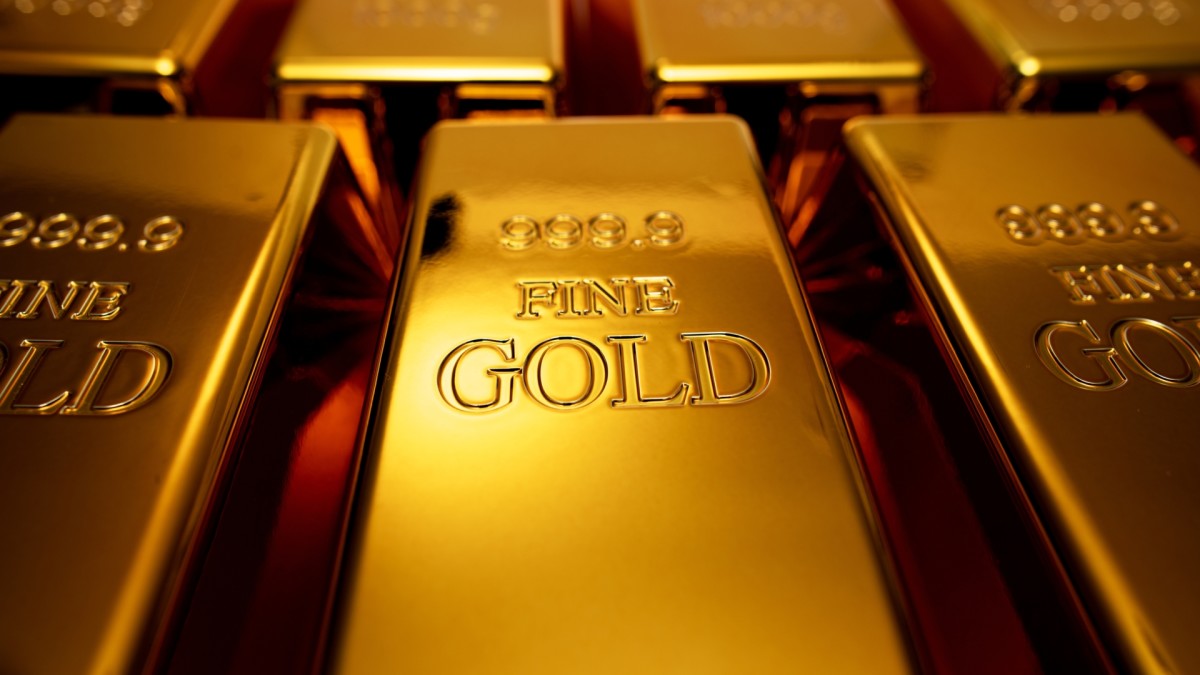
Gold just had one of its sharpest single-session drops in months, and Wall Street is largely shrugging it off.
A historic run took the metal from about $2,624 per ounce a year ago to an all-time high of $5,589 in January, CBS News reported. Then gold pulled back sharply in early March and is now trading around $5,350.
For anyone who bought in during the frenzy, it stings. But analysts who have watched gold through multiple cycles are calling this exactly what it looks like: a healthy correction inside a bull market that is far from over.
The bigger question is not whether the dip hurts. It is whether the forces that drove gold to record highs are still intact. Most evidence says they are.
What triggered the gold sell-off
The March pullback was not driven by any single crisis. It was the kind of profit-taking that tends to happen after a relentless rally.
A brief rebound in the U.S. dollar put pressure on gold prices, since the two tend to move in opposite directions. Investors who had been sitting on massive gains from gold’s more than 100% surge over the past 12 months took the opportunity to lock in profits.
More Gold:
- Gold, silver surge after record drop flashes technical signal
- Silver and gold tumble triggers major reset for mining stocks
- J.P. Morgan revises gold price target for 2026
Hiren Chandaria, managing director at Monetary Metals, was not caught off guard. “Given the strength of the recent rally and positioning in the market, I would not be surprised to see a steep pullback in the near term,” he said, according to CBS News.
“When macro and structural drivers are this powerful, dips tend to attract fresh buying, and the broader upward trend resumes.”
Darius Dale, founder and CEO of 42 Macro, echoed that view. The macro backdrop remains supportive, he told CBS News, with global liquidity trending higher, the dollar outlook softening, and the geopolitically driven supply and demand imbalance in Treasury markets still unresolved.
Why analysts are calling this a gold buying opportunity
Gold bull markets do not go straight up. They breathe. And historically, the corrections that scare retail investors out of positions are the same ones that institutional buyers use to load up.
The technical picture backs that view. Gold is still trading above its 50-day and 200-day moving averages, which analysts treat as the key measures of whether a trend is intact.
EBC Financial Group noted that as long as gold holds above the $5,298 level, the path of least resistance remains higher, with the next targets sitting at $5,380 and then $5,419 to $5,450.
Momentum indicators have also cooled from overbought readings, which is actually a positive sign. When RSI drops from extreme levels back to neutral territory, it clears the way for the next leg higher without the overhang of excessive speculation.
Key reasons analysts see the gold dip as temporary:
- Gold remains above both the 50-day and 200-day moving averages, keeping the longer-term uptrend intact.
- The World Gold Council reported net central bank demand of 230 tonnes in Q4 2025 alone, with buying expected to continue through 2026.
- Real yields remain negative, meaning inflation-adjusted returns on bonds are still low enough to make gold competitive.
- Global gold ETFs saw $77 billion in inflows this year, adding more than 700 tonnes to holdings, with plenty of room to grow versus prior bull cycles.
- Fed rate-cut odds for September remain elevated, which historically supports non-yielding assets such as gold.
Central banks are not flinching
One of the most important pillars of this gold rally has nothing to do with retail investors or ETF flows. Central banks around the world have been buying gold at a pace not seen in decades, and a short-term price dip is not changing their strategy.
The World Gold Council projects central bank demand for 2026 will again fall between 750 and 900 tonnes, continuing the structural shift away from dollar-dominated reserves that has been building since 2022.
China, Russia, India, Turkey, and Poland have all been adding to their gold holdings in recent quarters, with purchases increasingly bypassing Western exchanges entirely.
This matters because central bank buying creates a persistent floor under prices. When sovereign buyers step in during dips, it limits how far gold can fall before fresh demand absorbs the selling.
Shutterstock
Where the big banks see gold going from here
Wall Street has not pulled back its bullish targets. If anything, the recent correction has prompted some banks to reframe the dip as an entry point.
Current year-end gold price targets from major institutions:
- JPMorgan:$6,300 per ounce by year-end
- Goldman Sachs:$5,400 year-end target, with risks skewed to the upside
- Wells Fargo:$6,100 to $6,300, dramatically upgraded from a prior target of $4,500 to $4,700
- UBS:$6,200 base case, with an upside scenario of $7,200 if geopolitical risks intensify
- Deutsche Bank:$6,000 per ounce, citing persistent investment demand tied to de-dollarization trends
UBS also laid out a downside scenario of $4,600 if monetary policy tightens sharply, but that outcome is considered unlikely, given the Fed’s current posture.
The risks that could make the gold correction more than a dip
No one should ignore the possibility that this correction goes deeper. Gold has had several false starts over the years, and the current rally has been unusually steep.
Goldman Sachs acknowledged the risks in its own forecast. Analysts there noted that easing global policy uncertainty or a hawkish Fed pivot could cool private-sector demand and put pressure on prices. UBS similarly flagged a hawkish Fed as the single biggest downside risk to its bullish thesis.
The consensus from USAGOLD puts the realistic trading range for much of 2026 between $5,000 and $6,000, which still implies meaningful upside from current levels but also acknowledges that sharp swings in either direction are possible in a market this stretched.
If gold loses the $5,160 level on a daily closing basis, EBC Financial Group warns the downside risk becomes more serious and could signal something beyond a normal pullback.
What gold investors should do now
For investors sitting on the sidelines watching this dip, the calculus is straightforward according to most analysts: The structural drivers behind gold’s rally have not changed, and corrections of this kind have historically presented better buying opportunities rather than reasons to sell.
Dollar-cost averaging, buying in smaller increments rather than timing a single bottom, remains the approach most advisors recommend for investors who believe gold belongs in their portfolio but do not want to guess exactly where the floor is.
The forces behind this rally — central bank buying, negative real yields, geopolitical risk, and a softening dollar — were not created by a single news cycle. They will not disappear in one, either.
For patient investors, that is probably the only reassurance that matters right now.
Related: Bank of America revamps gold stock price target for 2026
#Analysts #message #investors #gold #price #drop