
You can also listen to this podcast on iono.fm here.
SIMON BROWN: I’m chatting with Philip Short, global fund manager at Flagship Asset Management. Philip, appreciate the time. A bit of a rarity that we’ve seen over the last year and a bit perhaps, a stronger rand. I was thinking back over the last couple of decades – it really has happened a few times, but it’s not something that I think most South African investors are used to seeing.
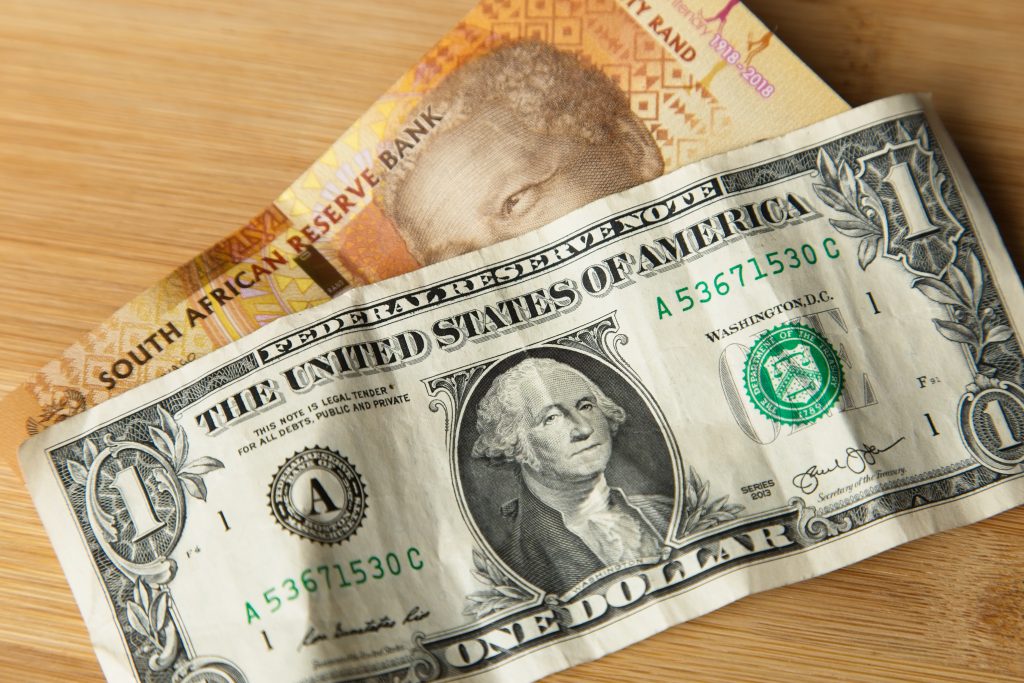
PHILIP SHORT: Hi, Simon. Yes, I think it has actually been more than a year and a half. I was looking at the chart this morning, and it was in about May 2023 that we were sitting at R19.82/dollar. So it has been about three years of rand strength. And it has mainly been on the back of high mineral prices or resource prices. We export a lot of that, about R500 billion worth of resources. That means a lot of people then buy rands, buy the commodities – and that then strengthens their rand.
SIMON BROWN: Absolutely. And we’ve seen, before, big strengths in the currency. I remember the one in the early 2000s. It was commodity based.
You are global fund managers. What do you do in your team at flagship? How do you think around managing this currency trend? If you are an offshore investor it’s going to take some shine off that return.
PHILIP SHORT: Yes, it does. We do not try to forecast the currency. We do however accept that the rand structurally and over the longer term will depreciate against the dollar. And that’s just a fact of flows of money and the differential in inflation rates, and that structurally long term we’re comfortable having money offshore. What we would say to people is in the current state, where we do have the rand strengthening, especially after a three-year period, it is cheaper to allocate your money offshore.
SIMON BROWN: I get your point on that, because that’s what I was thinking. We love a stronger rand. It makes us feel better. It’s like when the Springboks beat the All Blacks and it just fills us with joy. But it’s always going to be a short-term situation. Structurally it’s going to go weaker. It’s the old cliché – right now we get more units in a sense, and we may be using this opportunity to externalise.
PHILIP SHORT: Yes. And if you try to think about it as scientifically as possible – which is quite difficult – we’ve been in a sweet spot of exporting all our resources, and all those commodity prices for the different types of commodities have been increasing, and then coincidentally the one that we do import – which is oil and refined petroleum – that has actually been decreasing. We’re buying cheap and we’re exporting high, so that’s been a sweet spot.
Read: South Africa stocks in sweet spot as gold, rand gain, BofA says
But now we’ve seen oil. Looking at Brent, for example, Brent oil was at about $60/barrel a few weeks ago and we now sitting at $72/barrel. So if we continue to see oil go up, that could present the case for the rand not strengthening any further at the very least.
Read: Godongwana sounds alarm over oil spike
SIMON BROWN: Actually I hadn’t thought of that. Of course, oil is in some ways our big risk and we’ve benefitted from a significant strengthening. But again, that’s not always going to be one-way traffic either. I was actually chatting with someone recently – and it’s more or less what I do – they just do, I think, quarterly externalising of some currency offshore. They’re basically doing rand cost averaging. In this case it’s USD cost averaging. Their argument is: ‘We don’t mind what the rand is; we want to get some offshore exposure.’ And that’s a strong way to think about it as well.
PHILIP SHORT: Yes. I think that’s probably a good way of thinking about it, given the fact that you can’t predict it. So you sort of average your cost in.
And then from our point of view the way we see ourselves being global investment managers is not just the structural decline of the rand over time, given that inflation differential, but also the fact that there are much greater opportunities in number and in quality overseas.
In South Africa you have about 60 to 70 stocks that are investable – that you can invest in – and globally you have over 10 000. And then you also have couple of sectors like semiconductors and good biotech companies, for example, which you just don’t get on the JSE.
So those are the two starting points we think of when we invest – the opportunity set is bigger, and the rand will get weaker over time.
SIMON BROWN: That’s a great point. There is just so much more. And it’s not just that there’s more scope. As you said, there are sectors that we simply do not have any exposure for on our JSE.
In short, it comes back, I suppose, to the two sort of core tenets of investing. Don’t panic – that never works – and kind of have a plan and stick to it almost regardless, because in the short term things are going to happen and in the long term those trends are structural.
PHILIP SHORT: 100% I think you hit the nail on the head there. Just don’t panic. You can’t. Not everything is foreseeable. So expect the unexpected and don’t panic.
SIMON BROWN: Yes. Panic has never worked.
We’ll leave it there. Philip Short, global fund manager at Flagship Asset Management, always appreciate the time.
Listen to the full MoneywebNOW podcast every weekday morning here.
#rand #strength #money #offshore