
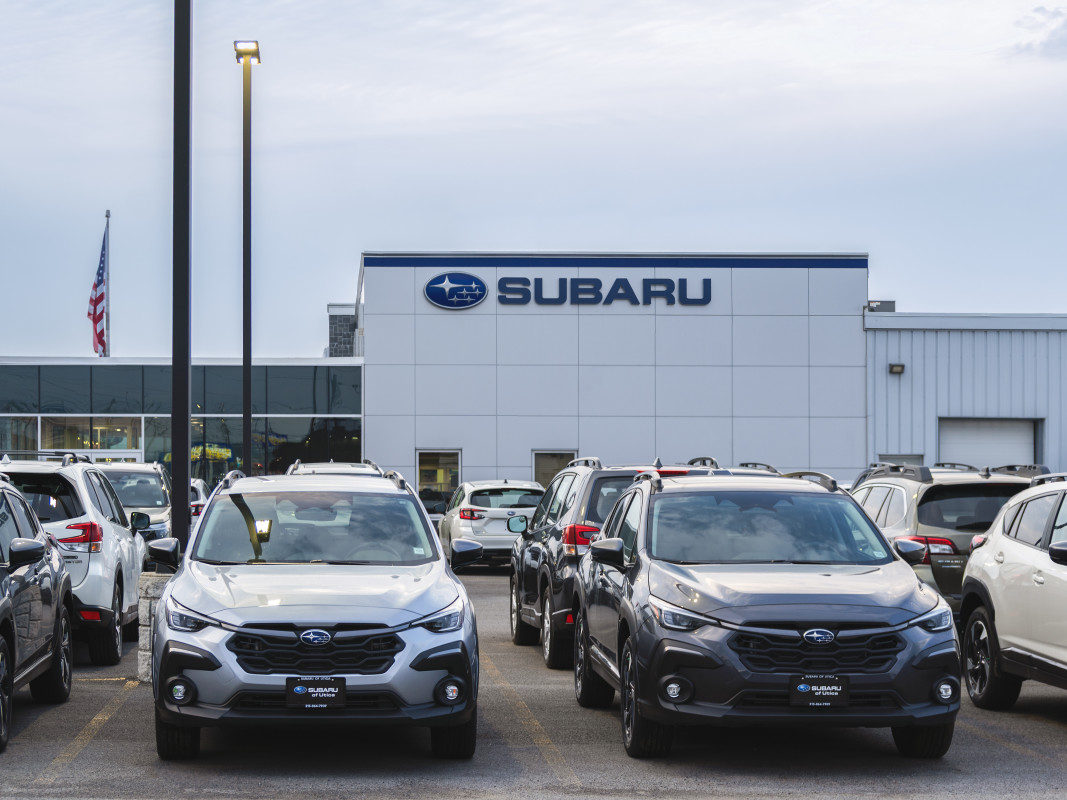
Americans are buying more SUVs than ever, and car companies are the biggest beneficiaries. But now, thanks to shifting insurance rates, SUVs are also increasingly becoming cheaper to own despite their often higher price tags.
Sport utility vehicles accounted for 52% of new vehicle sales in 2025, up from 46% in 2021 and 38% in 2016, per Good Car Bad Car. Full-size SUVs have doubled their market share since 2016, representing 3.5% of the market.
The growth in SUV popularity is great news for automakers. Profit margins for SUVs and trucks average 10% to 20% higher than those for smaller cars, since larger vehicles are more expensive, but use many of the same components, according to The Week.
The Big 3 U.S. automakers are shifting their production capacity away from less profitable electric vehicles for now and investing in higher-margin vehicles.
It’s a move that makes perfect financial sense, according to Bank of America analysts who reinstated coverage on the company with a buy rating on March 4.
“We highlight Ford & General Motors (see reports) as OEM top picks as we see potential for upward estimate revisions given the shift away from EVs and emissions mandates that limited profitability over the past several years,” the firm said.
“We think Ford is positioned well to capitalize on the significant shift in the regulatory backdrop under the current administration that should enable it to shift focus to its most margin accretive trucks/SUVs.”
But while car makers benefit from the rise in popularity of higher-margin, higher-priced models, consumers are benefiting from lower-priced insurance, making it cheaper to own an SUV.
Photo by M. Suhail on Getty Images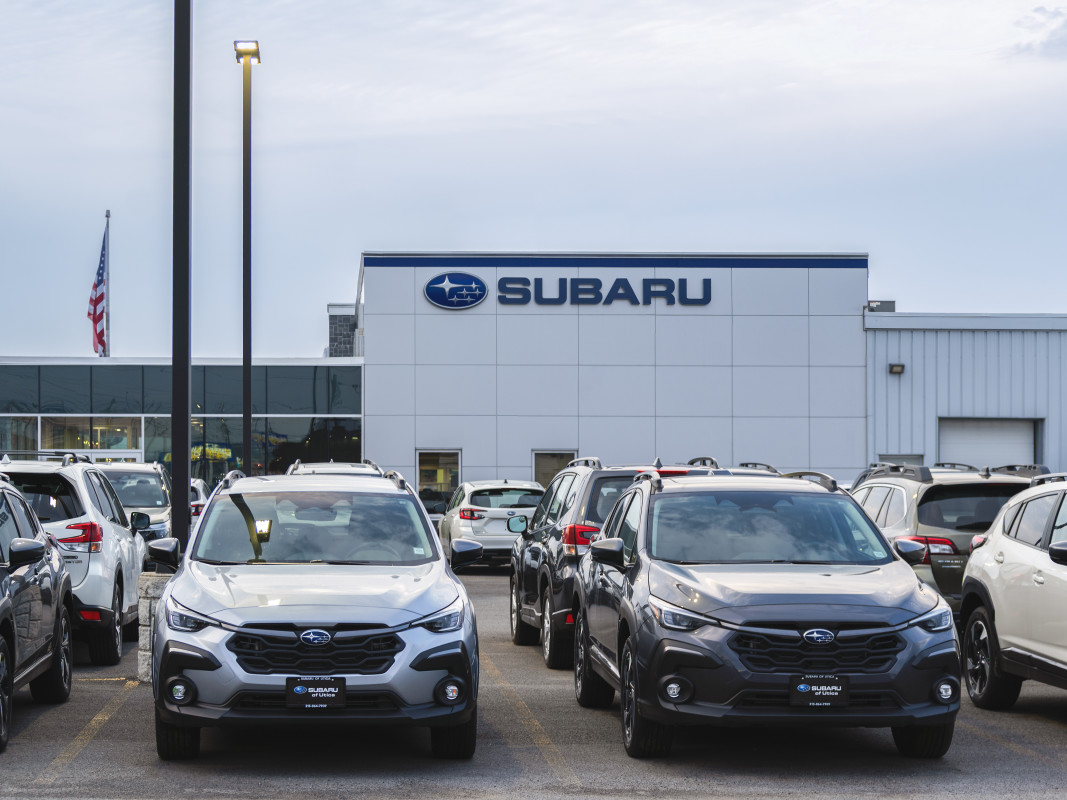
The top-3 cheapest cars to insure are all SUVs
Insurance companies adjust your rates based on the type of vehicle you own, and they deem safer vehicles as getting lower rates.
“Solid, safe and reliable vehicles with low repair costs tend to be cheaper to insure than sports cars, foreign vehicles or cars with a history of costly repairs,” according to analysts at CarInsurance.com who ranked the cheapest cars to own, and found that now SUVs are overtaking sedans in affordability.
Related: Consumer Reports names 5 more vehicles with the lowest hidden fees
Cheapest SUVs to insure in 2026
- Subaru Crosstrek: $1,150 average six-month premium
- Jeep Wrangler: $1,154 average six-month premium
- Honda CR-V: $1,158 average six-month premium
- Volkswagen Tiguan: $1,165 average six-month premium
- Mazda CX-5: $1,172 average six-month premium
In fact, sedans now cost on average 10% to 15% more to insure than comparable sedans due to structural design differences and claims data.
The Subaru Crosstrek is the most affordable vehicle to insure this year, with an average monthly premium of $192. But it is not alone on the list; the Jeep Wrangler came in tied for second with the Honda CR-V at $193 a month.
In fact, 16 of the top 20 cheapest cars to insure on CarInsurance.com’s list were SUVs.
The Subaru Crosstrek makes sense, and the Japanese-made SUV is Consumer Reports’ top subcompact SUV pick and one of the best-selling vehicles in the country due to its safety profile.
In fact, Subaru has two vehicles on the top-20 insurance list, with the Crosstrek joined by the Outback station wagon.
“Repair and replacement costs are a huge factor for insurance rates,” says Zach Lazzari, founder at Cross Border Coverage. “For example, some vehicles have very high repair costs for common fender bender damage. Entire panels may require replacements on one vehicle, while others can be fixed with a simple dent remover and some fresh paint.”
The top-5 cheapest SUVs averaged under $1,172 for a six-month premium, while the cheapest sedan (unsurprisingly, a Subaru Legacy) had an average six-month premium of $1,265.
SUVs’ size and height offer safety, but there are tradeoffs
Many Americans buy SUVs not just due to an affinity for big toys, but also because they believe these vehicles are safer.
SUVs are heavier and generally sit higher than sedans. That extra mass can reduce the force transferred to occupants in a head-on collision or side impact, according to Pierce Skrabanek.
Related: Consumer Reports names top 5 vehicles with lowest hidden fees
Also, because SUVs’ higher ride height places the bumper above the main reinforcement zones of a sedan, they are less vulnerable to side-impact crashes than their smaller counterparts.
They also score better in multi-vehicle accidents.
But there are tradeoffs.
Smaller vehicles tend to handle better because they are lighter. So they are better at avoiding collisions altogether if the driver can react in time. Also, due to the higher ride height mentioned above, SUVs have a greater rollover risk than sedans.
That higher center of gravity also works against the vehicle’s control during sharp turns, swerves, or high-speed crashes. Rollover accidents are particularly dangerous because roof crushes and ejections are common in those situations.
Related: Tesla FSD makes terrifying mistake in viral video
#Cheap #car #insurance #rates #offer #insight #SUV #takeover