
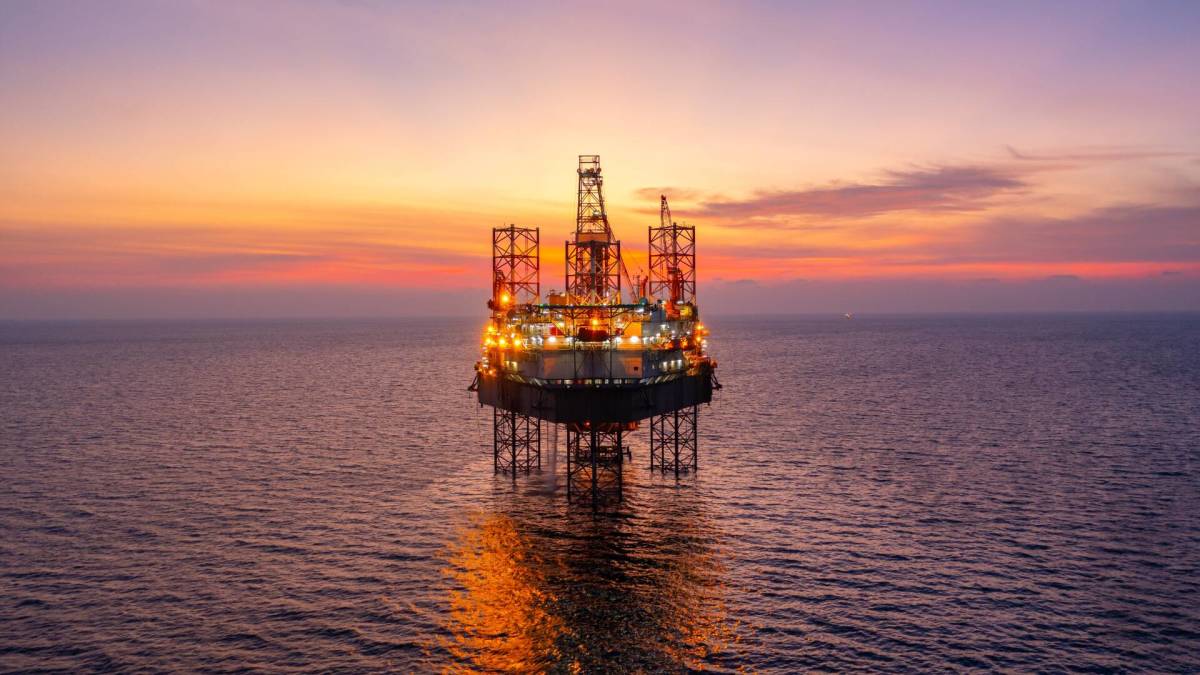
The U.S.–Israeli war with Iran has officially reached Chevron’s Middle East growth engine. Israel ordered Chevron to shut production at its giant offshore Leviathan gas field after joint U.S.–Israeli strikes on Iran and retaliatory attacks raised security risks to critical energy infrastructure, according to OilPrice and Yahoo Finance.
Leviathan is Israel’s largest gas field and a key supplier to Israel, Egypt, and Jordan. In the first nine months of 2025, the field sold 8.1 billion cubic meters of gas, with Egypt taking more than half, said OilPrice. Chevron followed the shutdown order by declaring force majeure, a formal notice that it cannot meet some contract obligations because of events beyond its control, according to Rigzone and Reuters.
Israel’s energy ministry acted on a “security recommendation” when it told Chevron to suspend Leviathan operations until further notice, NewMed Energy said in a stock filing cited by Rigzone. Chevron told Morningstar that all personnel and facilities at Leviathan remain safe and that the company is complying with the temporary shut‑in directive from Israel’s Ministry of Energy.
When I look at that combination of forced shutdown plus expansion spending, it feels like a textbook example of geopolitical risk finally catching up with a big‑ticket growth narrative.
Shutterstock
How the Iran war is hitting Middle East energy flows
Chevron’s Leviathan pause is part of a broader pattern of Middle East energy assets going offline as the Iran war drags on. Israel has ordered shutdowns at multiple offshore gas fields and at its 197,000‑barrel‑a‑day Haifa refinery after U.S.‑Israeli strikes on Iran and retaliatory missile attacks, said Argus Media.
Related: Oil shock threatens Fed rate-cut bets
Energean confirmed that it was told to suspend production at the Karish gas field, trimming Israel’s export capacity further, according to OilPrice. Those moves worsen the region’s gas balance because Leviathan and Karish both supply Israel’s domestic demand and exports to neighbors that rely heavily on imported gas, said Argus.
The disruption is not limited to Israel.
Qatar temporarily shut down its liquefied natural gas facilities at Ras Laffan and Mesaieed after drone strikes linked to the conflict, cutting around 20 percent of global LNG export capacity, according to Argus. Saudi Arabia also suspended production at its largest domestic refinery as a precaution after Iranian attacks and debris fell near key Gulf energy sites.
Global shipping is now tangled up in the conflict.
Traffic through the Strait of Hormuz has been closed for days after Iran attacked multiple ships, effectively blocking a route that carries about 20 percent of global oil and gas supply, said Channel NewsAsia. Hundreds of oil and LNG tankers are stranded near hubs such as Fujairah, and shipping rates have jumped to record levels as the war intensifies, the same report said.
More Oil and Gas:
- Energy giant sends blunt $20 billion message on dividend growth
- 147-year-old oil giant just raised dividend 4% in 2026
- Top energy stocks to buy amid Venezuela chaos
When I connect all of that, Leviathan’s shut‑in looks less like a one‑off and more like one link in a chain of outages stretching from the Eastern Mediterranean to the Gulf.
What this means for prices, inflation, and central banks
A regional supply shock like this rarely stays contained to energy traders’ screens. Global oil and gas prices have climbed more than 15% since the latest round of strikes began, with Brent crude up about 6 percent on one recent trading day to above $82 per barrel, according to Channel NewsAsia.
European gas prices have spiked roughly 40% on top of a previous 40 percent jump as Qatar’s LNG halt and Israeli disruptions tighten supply, Channel NewsAsia said. At the same time, gasoline prices in the United States have moved back above $3 a gallon, reversing some of the relief drivers saw earlier this winter.
Analysts are already warning that the energy shock could re‑ignite inflation and complicate central bank plans.
The war‑driven rise in oil and gas prices “risks triggering a renewed spike in inflation that could choke off economic recovery in Europe and Asia” if the conflict drags on in a region that delivers about one‑third of global oil and nearly one‑fifth of natural gas, Channel NewsAsia reported.
A Goldman Sachs note said a prolonged disruption could add a double‑digit dollar “risk premium” to crude and significantly raise global gas prices if LNG supply from Qatar and other exporters remains constrained, TheStreet reported.
For consumers, that likely shows up as:
- Higher gasoline, diesel, and jet fuel prices that filter into commuting and travel costs.
- Rising utility and heating bills in markets that depend on imported gas.
- Higher odds that rate cuts are delayed or scaled back if headline inflation gets a second wind.
I see this conflict as an unwelcome reminder that energy security, inflation, and everyday budgets are still tightly linked.
Chevron’s Middle East strategy under new scrutiny
Before this crisis, Chevron was treating Israel as a major growth hub.
The company has been investing to boost Leviathan’s capacity from around the low‑teens in annual billion‑cubic‑meter output to about 21 billion cubic meters as part of a roughly 35 billion dollar export framework with Egypt, according to AzerNews.
Chevron told investors its onshore operations in the Partitioned Neutral Zone between Kuwait and Saudi Arabia are running normally, which means its broader Middle East production has not been fully dragged into the conflict, Morningstar reported. Still, declaring force majeure at Leviathan signals the company knows contractual volumes and cash flows from that project are now at the mercy of security conditions, Rigzone noted.
Chevron’s stock, meanwhile, has reflected a mix of fear and opportunity.
Chevron shares recently hit record levels as investors flocked to large U.S. oil names on expectations that higher crude prices will boost earnings even as some overseas projects face disruptions, MarketWatch wrote.
When I look at Chevron through a personal‑finance lens, I see two truths that can coexist:
- The company’s diversified portfolio means rising global oil prices can offset lost Israeli gas volumes.
- Its Middle East gas assets are clearly not the low‑volatility, utility‑like earnings stream some investors once imagined.
If you hold CVX, you’re now partly betting that management can keep harvesting higher prices while navigating an increasingly unstable political map.
What I’d do with this as a saver or investor
You can’t pick the next headline from Tehran or Jerusalem, but you can decide how much of your balance sheet is exposed to them.
If I were building or tweaking a portfolio around this:
- I would size any position in Chevron and other Middle East‑heavy energy stocks so a prolonged Leviathan shutdown or further Gulf export disruption doesn’t threaten my long‑term plan.
- I’d be careful about overweighting LNG exporters that depend heavily on the Strait of Hormuz or regional pipelines, given the tanker bottlenecks and infrastructure hits that Channel NewsAsia and Argus have detailed.
- I’d also use this episode as a stress test: imagine oil staying in the 80s, gas prices elevated, and central banks cutting rates more slowly. If that scenario breaks your budget or your portfolio allocation, it’s a signal to reduce risk.
On the household side, I’d build in a bit more room in my 2026 budget for fuel and utility costs and look hard at any variable‑rate debt while central banks weigh how patient they can be. You don’t control the war, but you do control how exposed your finances are when a field like Leviathan suddenly goes dark.
Related: Analyst resets Chevron stock price target as oil strategy shifts
#Chevron #feels #Iran #war #heat #Leviathan #gas #field #dark