
Fast fashion remains one of the most dominant segments in global apparel retail, driven by growing consumer demand for trend-driven styles at accessible price points.
However, the category is undergoing a significant shift as rising operating costs, changing consumer behavior, and the rapid expansion of e-commerce reshape the competitive landscape.
In particular, digital-first platforms like Shein and Temu have accelerated disruption across the sector. Their ability to offer vast assortments of ultra-low-priced products, supported by their highly efficient supply chains, has allowed these companies to rapidly capture market share among price-sensitive consumers.
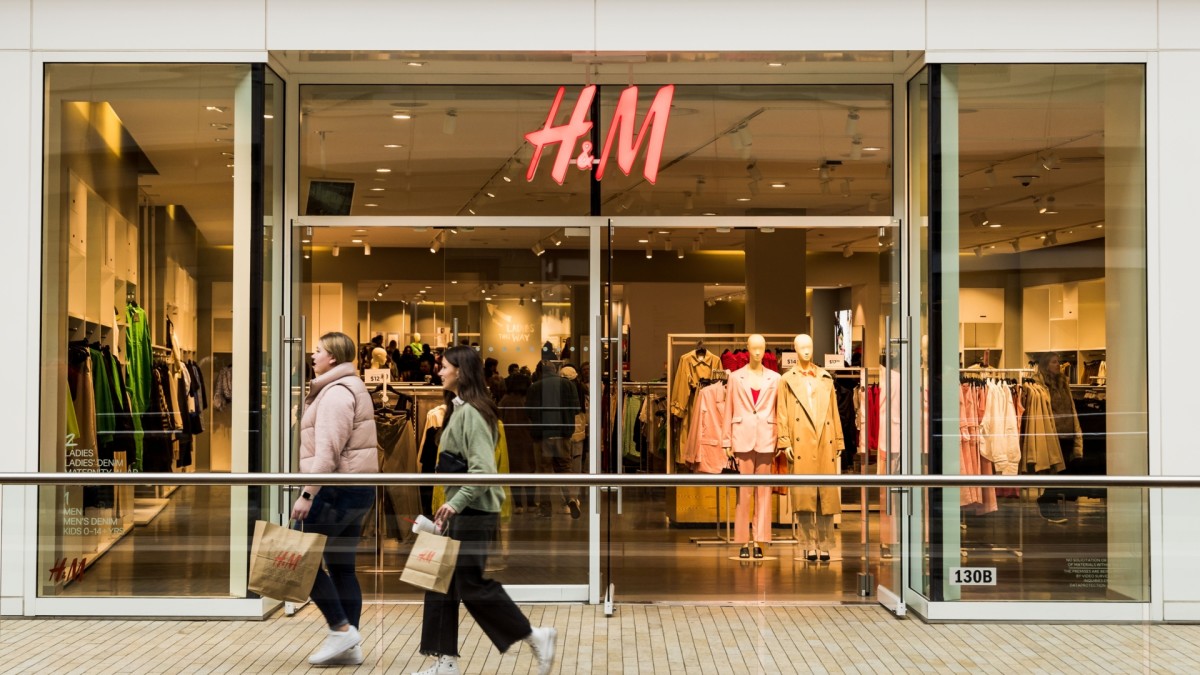
In response, the H&M Group is accelerating a multi-year strategy, continuing to reduce its physical footprint in 2026 after closing hundreds of locations in 2025.
H&M accelerates store closures as part of a global restructuring
Founded in 1947, H&M Group (HNNMY) operates in more than 80 markets, with online sales in over 60 of them. Its portfolio includes brands such as H&M, COS, Weekday, Cheap Monday, Monki, & Other Stories, Arket, Singular Society, and Sellpy.
Last year, H&M announced plans to close around 200 locations globally by the end of 2025, mainly in established markets as part of a broader strategy to optimize its store portfolio in response to evolving consumer demand, according to its second-quarter fiscal 2025 earnings report.
H&M noted that it regularly evaluates its retail footprint and can renegotiate or exit about one-third of its leases annually. This flexibility allows the company to allocate capital toward higher-performing stores through refurbishments, relocations, and format adjustments, as well as make digital investments.
Store optimization is designed to improve margins by increasing sales productivity per square foot while reducing costs tied to excess inventory, staff, and markdown activity.
That strategy has now extended into 2026.
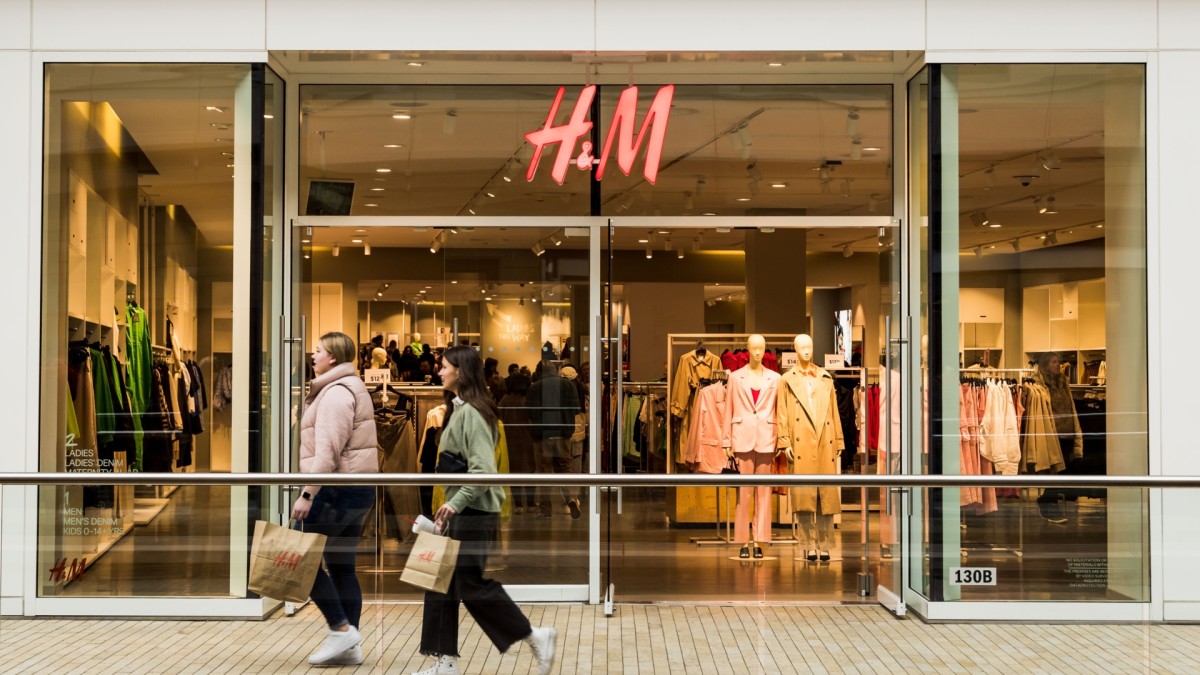
In January, H&M closed two stores in New York City, affecting 62 employees, according to WARN filings. By late February, the company had filed an additional WARN notice indicating a planned statewide layoff impacting 181 workers, though no timeline has been disclosed.
Shutterstock
H&M faces sales declines amid location shutdowns
While these closures are intended to improve long-term efficiency, they have had a near-term impact on sales performance.
In the first quarter of fiscal 2026, H&M reported a 1% year-over-year decline in net sales in local currencies, citing a 4% reduction in store count as a contributing factor.
Overall, H&M reduced its global footprint by 163 locations, bringing the total to 4,050 stores.
While this contraction weighed on revenue, the company emphasized that portfolio optimization is expected to strengthen operational efficiency and profitability over time.
“The optimisation of the store portfolio has had a somewhat negative impact on sales in the first quarter of 2026 due to store closures and rebuilds,” said H&M in the earnings report. “For full-year 2026, however, the sales effect from store optimisation is expected to be slightly positive.”
H&M also projects March 2026 sales to increase by 1% year over year, suggesting the strategy may be stabilizing performance.
H&M’s shift to omnichannel retail
A key driver behind H&M’s restructuring is the continued rise of e-commerce, which now accounts for more than 30% of its total sales.
This shift is forcing retailers to rethink the role of physical stores, not as primary channels, but as part of a broader ecosystem.
“Customers want to be inspired and have products available so that they can shop where, when and how they choose – in the stores, on the brands’ own websites, on digital marketplaces and on social media,” said H&M.
For H&M, this means fewer but more strategically located stores and increased investments in digital channels to meet evolving consumer expectations.
Industry trends support H&M’s new strategy
H&M’s transformation aligns with broader retail trends.
The global e-commerce market was valued at $25.93 trillion in 2023 and is projected to grow at a compound annual growth rate of 18.9%, reaching $83.26 trillion by 2030, according to Grand View Research.
Industry experts highlight that success in this environment increasingly depends on customer-centric strategies.
“Digital commerce doesn’t look the same as it did when it began,” said Forbes Business Strategy and Growth Expert John Hall. “Improvements in logistics, online platforms, personalization, and marketing continue to drive the industry forward. Brands that are succeeding are putting customer experiences at the center of dynamic strategies, constantly adapting to the digital landscape.”
Coverage on more retail store closures:
- 125-year-old retail chain to close more stores in 2026
- 48-year-old nostalgic mall retailer will close 25 stores in 2026
- 77-year-old jewelry giant will close 100 stores, shut 2 brands
Still, physical retail remains the preferred format for most consumers.
Brick-and-mortar stores accounted for approximately $14.4 trillion of total retail sales of $18.9 trillion in 2025, significantly outpacing e-commerce, according to Euromonitor research gathered by EY.
“It’s clear that the physical store still plays an important role,” said EY Retail Analysts Malin Andrée and Jon Copestake. “Not only do stores have plenty of runway left in delivering revenue, but they also have opportunities to drive new growth and alternative revenue streams and, by working in tandem with digital channels, they can maximize returns on investment.”
H&M store closures and openings in 2026
Looking ahead, H&M plans to open around 80 new stores and close roughly 160 locations in 2026.
Most new locations are expected to open in growth markets, while closures will continue to focus on underperforming or saturated regions. The company is also expanding its digital presence into new markets and sales channels.
Store counts during Q1 2026
- Total stores: 4,050
- New openings: 17
- Closures: 68
For H&M, the success of this transition will depend on its ability to balance short-term sales declines with long-term margin improvement while competing against newer e-commerce rivals and their ultra-low prices.
The company’s restructuring shows that, in today’s retail environment, scale alone is no longer a competitive advantage for capturing consumer share. Execution, efficiency, and customer experience have become the new measures of success.
Related: 106-year-old retail brand operator closing all stores in bankruptcy
#Fastfashion #giant #closing #stores #shutdowns