
You can also listen to this podcast on iono.fm here.
JIMMY MOYAHA: FirstRand Limited released interim results for the six months ended December 2025 early this morning, at around 08:30. The group has seen double-digit growth in most of the metrics: headline earnings per share, basic earnings per share and normalised earnings per share, while maintaining a very stable credit-loss ratio for a bank.
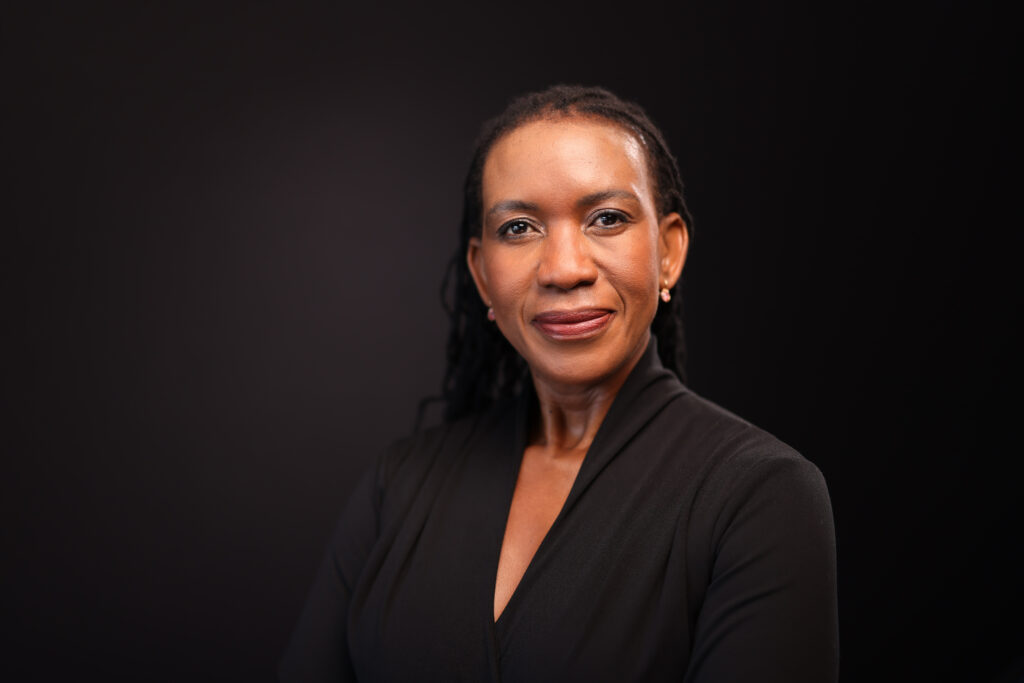
We’re going to look at these numbers in a bit more detail with the group chief executive of the FirstRand group, Mary Vilakazi. She joins me on the line now to see what we make of the performance. Ms Vilakazi, lovely having you on the show as always. Thanks so much for taking the time.
A strong start to the new financial year for the business. I can imagine a lot goes into running so many different portfolios, and we’ll get into those in a second. How is the team feeling at the moment?
Read: FirstRand eyes Ghana, Nigeria growth as lender seeks scale
MARY VILAKAZI: I think with a positive set of key group metrics the team is, firstly feeling energised, I would say and secondly I think constructive with the economic outlook.
Because when we look back to periods where we’ve come from – an environment with high interest rates and high inflation and actually a really lacklustre GDP growth, I guess we can look out for the next two years and a little, and I think it should be a slightly better environment – not quite where we need to be, but an improvement.
So in this environment the team sees a lot of opportunities for growth and opportunities to support our different customer segments – all the way from FNB’s large businesses, and FNB Commercial and RMB Investment Bank.
JIMMY MOYAHA: Ms Vilakazi, let’s take a look at those businesses in a bit more detail because, while the FirstRand Group sits as a group company with some of these what one would consider portfolio assets, effectively they are businesses that function on their own and run almost independently while still being part of the group.
Take us through just some of the performances within the FirstRand Group across your portfolio.
ADVERTISEMENT
CONTINUE READING BELOW
MARY VILAKAZI: I would call out FNB. I think FNB has delivered strong earnings growth – FNB Retail in particular. I think their PBT [profit before tax] was up by 14%. So a good credit print coming off from the levels of high credit charges we’ve seen over the last while, and early signs that the consumers and businesses are doing better and, I suppose, starting to see a bit more demand come through as well.
Read:
FNB pays out over R1bn to Ithala depositors in under a month
RMB CEO sees opportunity for big banks in rise of Africa fintech
So FNB Retail deserves a shout out because even their return on equity increased to 41%. FNB Commercial Business is a business that has really been steadily growing, also holding its own. This is a very competitive market segment in South Africa, so we’re very grateful that we’re able to grow customers and have a healthy transactional franchise.
And then the WesBank business has also continued to do well, to deliver solid growth. In an industry at least where the growth is coming, there’s been strong demand for vehicles.
We’ve also expanded our risk appetite to fulfil more of those customer needs.
And then RMB, Rand Merchant Bank, also deserves a shout out here because I think across the different businesses they performed very well. The lending business and the investment banking division did very well to optimise the balance sheet. So I guess what we want them to do is to be there to structure deals and to originate them. But then we ultimately want them to put those assets on the right balance sheet.
Pension funds are a good example of some of the long-term lending that we do. And when we do that and improve the balance sheet velocity, it provides us with more capital capacity, and in a number of instances also improves our margins. So they’re commended on execution of that strategy.
And then the RMB Global Markets business has also bounced back. I think we’re seeing very good contribution. Our private equity business had a big realisation these six months, which we welcome.
So I guess everybody did what they promised, Jimmy, and that always helps.
JIMMY MOYAHA: I want to look at credit performance. That is an area of any bank that is something to be careful of and monitor carefully. How has your portfolio performed?
ADVERTISEMENT:
CONTINUE READING BELOW
MARY VILAKAZI: What we’ve seen is new business growth, particularly from WesBank and on the vehicle finance and in the corporate side. We’ve had strong origination there. There you are expected to set up provisions, which we basically take when we put new business on our books. That’s expected credit losses. And then you also have to look at the actual bad debts, and that’s in the NPLs, or non-performing loans. There’s a full description. So that’s a strong indication of your credit performance and what’s happening within your credit book.
We are starting to see a decline after a number of periods in which we saw inflows, particularly on the retail side with people going into debt review. We called that out. At the moment we’re at 4.3%, coming down from 4.33% last year, and I think we’re continuing to see an improving sign.
So that for us is very encouraging. And with a better household income and balance sheet, you know the level of NPLs should continue trending down.
Read: FirstRand chair on threat of new entrants, Discovery Bank, and collapsing municipalities
JIMMY MOYAHA: Ms Vilakazi, can we look at the six months ahead? From a business perspective, it’s clear you don’t look at your business in six-month silos, and some of the strategies you would have in place for several years. But how are you feeling about the market at the moment?
We have been expecting interest rates to come down, but it looks as though we may be thrown a curveball with the escalating tensions that might affect fuel inflation in South Africa – and possibly even interest rates. How are you feeling about the macros that would affect your business and inherently the rest of the economy?
MARY VILAKAZI: I think we do need to brace ourselves for a bit of volatility. In this geopolitical environment that we have, our expectation is that we’re going to have an increased number of shocks – if you think about the tariffs last year and what’s happening in the Middle East.
As a business we actually are anchored in our baseline expectations of growth, and what happens around the world includes this expectation of frequent shocks…As a business we focus on resilience, so that’s why it’s important to do that.
From an SA perspective, obviously the oil price going up is not a good story for our inflation trend. Inflation has been trending lower and we need that for more interest-rate cuts. So the spike in the oil price I think will obviously play out in the inflation print, and then the Sarb [South African Reserve Bank] will probably postpone any interest-rate cuts that were going to take place.
Read:
Traders now positioning for South African rate hike this month
April fuel prices set to rocket
But I think we see it as more-delayed rate cuts versus cuts that won’t happen, or even an increase. That’s our outlook. Obviously we don’t know how long this war is going to last, and which other countries also get caught up in this. But what we focus on, I guess, is our business is 80% in South Africa and South Africa has its own engine.
ADVERTISEMENT:
CONTINUE READING BELOW
So I think if we focus on the structural reforms, ensure that we are attracting investments into many projects that we know are required from an infrastructure point of view, and just get the productivity of the country up, [we’ll] ultimately lift the GDP growth.
If we focus on those things in South Africa, that should be able to provide us with some tailwinds in this environment where the global economy is. I think it’s in more turmoil. So I guess this is always where we urge government to continue the execution of the structural reforms at pace, and I think just continue providing an environment that will attract foreign investors in particular.
JIMMY MOYAHA: Ms Vilakazi, you mentioned the Sarb. Before you go, I want to get your thoughts on the proposal they’ve put forward to potentially scrap what we know as the ‘prime rate’ and move to a single reference rate known as the ‘policy rate’. Your thoughts around that, and the implications that would potentially have for the FirstRand Group and inherently other commercial banks in South Africa?
Read/listen:
Why the Reserve Bank wants to ‘abolish’ the prime lending rate
Death of the prime rate a win for homeowners
MARY VILAKAZI: We welcomed that move by Sarb to say the repo rate will be reviewed. It has been long in the making. I think the Sarb coming out providing a date also helps. So Jimmy, one thing I will say, having read some of the models publicised some time back on the repo rate, we actually lend to clients on the basis of a lending rate. There we take into account the credit profile and what we need to charge – or the cost of the loan for the client.
So we actually internally use a client rate, and then we reference that to prime so that people have comparability. Even when the prime rate is taken off, we don’t deviate from our practices of pricing at a client level, and every client having a rate. So it’s not that 300 basis points between the repo rate and the prime rate – that does not actually impact our margins. It is being a reference rate for us.
Obviously going forward we’re going to need to have a reference rate because it really does help with comparability. So there will be no impact from a margin point of view, because it’s not that we price off the prime rate. We’ve always actually just determined the client rate. And then we used that to convert it and express it as prime-plus-one or prime-minus-one rate.
JIMMY MOYAHA: A very strong start to the first half of the financial year, and optimistic that the second half of the year could still potentially be a resilient one for South Africa and for the economy.
We’ll leave the conversation on that note. All the best to you and the team, Ms Vilakazi. We’ll speak to you at the end of the year and see how the rest of the year shapes up… Mary Vilakazi, CEO at the FirstRand Group, joined us to take a look at the first half of their year and how the second half could potentially shape up.
Read:
FirstRand sets aside more for UK loan probe, still delivers record profit
FirstRand weighs higher UK motor finance provision after Supreme Court ruling
FirstRand sets aside more for UK loan probe, still delivers record profit
FirstRand weighs higher UK motor finance provision after Supreme Court ruling
FirstRand questions fairness of UK motor finance redress scheme
FirstRand’s UK future hinges on motor finance decision, CEO says
#FNB #RMB #WesBank #promised #FirstRand #CEO