
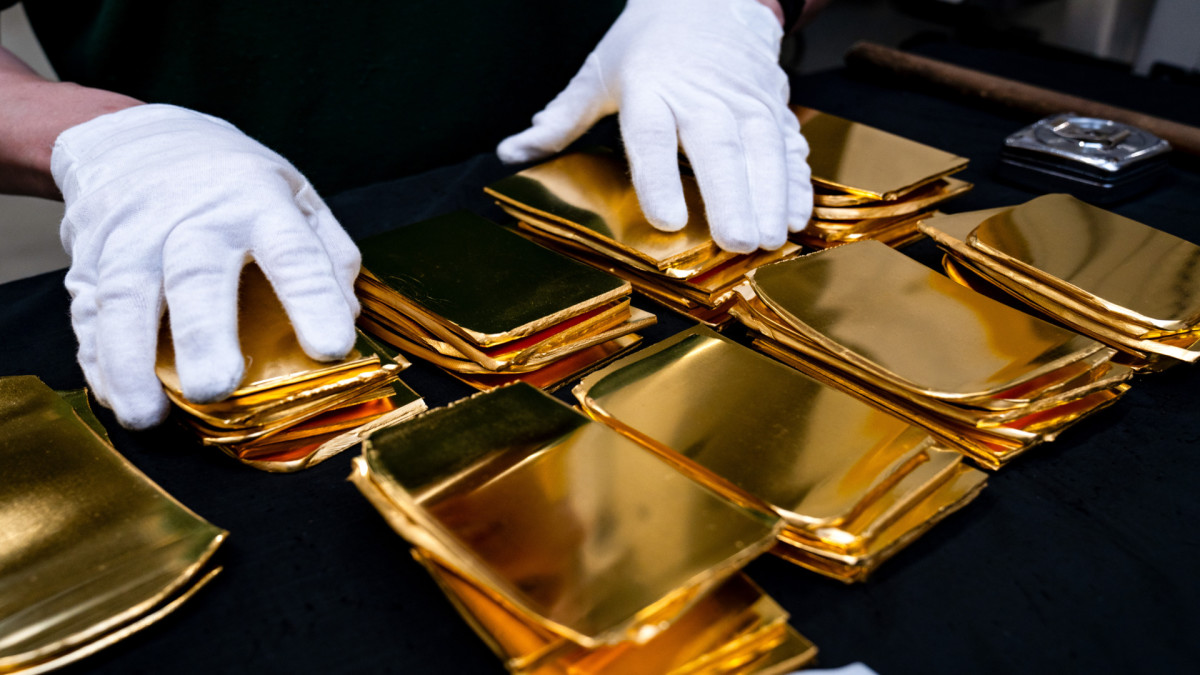
Gold has had a brutal week. The metal that spent all of 2025 rewriting record books just posted its worst seven-day performance in more than four decades. It shed 11% to close at $4,497 an ounce on March 20. That is a drop of more than $500 from where it started the week and a loss of over 14% since the U.S.-Israel strikes on Iran began in late February.
The last time gold fell this sharply in a single week was 1983. Back then, Middle Eastern oil producers dumped their gold reserves after oil revenues collapsed.
The parallel to today is uncomfortable. Once again, a Middle East crisis is driving the sell-off. But this time the mechanism is different, and understanding why matters for anyone trying to figure out where gold goes next.
Why gold is falling when it should be rising
The paradox at the center of this sell-off is what makes it so disorienting. Gold is supposed to be the ultimate crisis hedge. Wars, inflation fears, and geopolitical chaos are precisely the conditions that have historically sent investors rushing into bullion. Instead, gold has dropped every single week since the conflict began.
The explanation lies in oil. The Iran conflict has sent Brent crude above $112 a barrel. That surge is feeding directly into inflation expectations. Higher inflation gives the Federal Reserve less room to cut rates.
Traders who had priced in multiple Fed cuts for 2026 have now swung to pricing in a 50% hike odds by October, according to Bloomberg. That is a seismic shift in a matter of weeks.
More Gold:
- Gold, silver surge after record drop flashes technical signal
- Silver and gold tumble triggers major reset for mining stocks
- J.P. Morgan revises gold price target for 2026
Gold pays no interest. When real yields rise and the dollar strengthens, holding gold becomes progressively less attractive against Treasury bonds. The 10-year yield climbed to 4.2% this week. The Dollar Index hit 99.9. That is a double headwind that overwhelmed whatever safe-haven demand the conflict might have generated.
“This sharp decline in gold reflects a confluence of factors: large-scale risk asset liquidations, a hawkish shift in Fed expectations, and a stronger dollar,” explained Pepperstone strategist Dilin Wu. She described the move as “a pricing logic adjustment rather than a reversal of the long-term trend.”
That distinction matters a great deal for what comes next.
Where gold is heading in the weeks ahead
The next key level to watch is $4,361. That represents the 50% retracement of gold’s entire 2025 rally from its September origin.
Technical analysts at The Gold Forecast noted March 20 that gold is currently “suspended in open air” between the broken $4,654 support floor and that next meaningful level. A test of $4,361 looks likely if oil stays elevated and rate hike bets keep building.
Below that, the 200-day moving average near $4,200 is the critical line. It separates a bull market correction from something more structurally damaging. A sustained break below $4,200 would open a path toward $3,500, the very base of gold’s 2025 bull run.
The near-term catalyst is the Fed. Any signal that policymakers are willing to look through the oil-driven inflation spike would remove the primary headwind on gold. Conversely, hawkish commentary would likely extend selling toward that $4,200 level.
Gold ETFs have shed more than 60 tonnes over the past three weeks, as I reported on March 20. That pace of institutional exit reflects genuine repositioning, not just tactical profit-taking.
The medium-term picture: 1 to 3 months
The medium-term outlook hinges on two questions. How long does the Iran war last? And does the Fed blink?
If the conflict moves toward a ceasefire and oil retreats, rate hike expectations would quickly reverse. That would restore gold’s primary tailwind of falling real yields and likely trigger a recovery toward $4,800 to $5,000.
History supports this pattern. Gold fell 25% peak to trough in 2008 before launching to new highs. The 17% March 2020 Covid dump preceded a 50% rally.
The more difficult scenario is a prolonged conflict that keeps oil above $100 and inflation running hot. Central bank buying, which ran above 1,000 tonnes in 2025, remains a structural floor under prices.
Yet it may not be enough to offset institutional ETF outflows if the macro headwind persists for months.
Lemanski/Bloomberg via Getty Images
Where analysts see gold by year-end
The major bank forecasts remain bullish. J.P. Morgan holds a year-end 2026 target of $6,300, citing central bank demand and ETF inflows. Wells Fargo has a $6,100 to $6,300 range. BNP Paribas raised its 2026 average forecast by 27% and flags a peak above $6,250 as probable.
Ed Yardeni, one of Wall Street’s most closely followed strategists, had a $6,000 target. He said this week he is considering lowering it to $5,000 if gold continues falling, despite conditions that should be driving it higher.
The two scenarios investors are watching
- Bull case: Iran ceasefire by mid-year, oil retreats toward $85, Fed holds steady, real yields fall, gold recovers toward $5,500 to $6,000 by December.
- Bear case: Conflict drags on, oil holds above $100, Fed hikes once or twice, dollar stays elevated, gold tests $4,000 and potentially lower.
The structural foundations that drove gold’s 65% gain in 2025 have not disappeared. De-dollarization trends, U.S. fiscal deficits, and central bank accumulation remain intact.
What has changed is the near-term macro environment. Right now, macro is in charge. When that logic inverts, the recovery could be as sharp as the sell-off that preceded it.
Related: Gold and silver bugs face grim reality check
#Gold #biggest #decline #what039s