
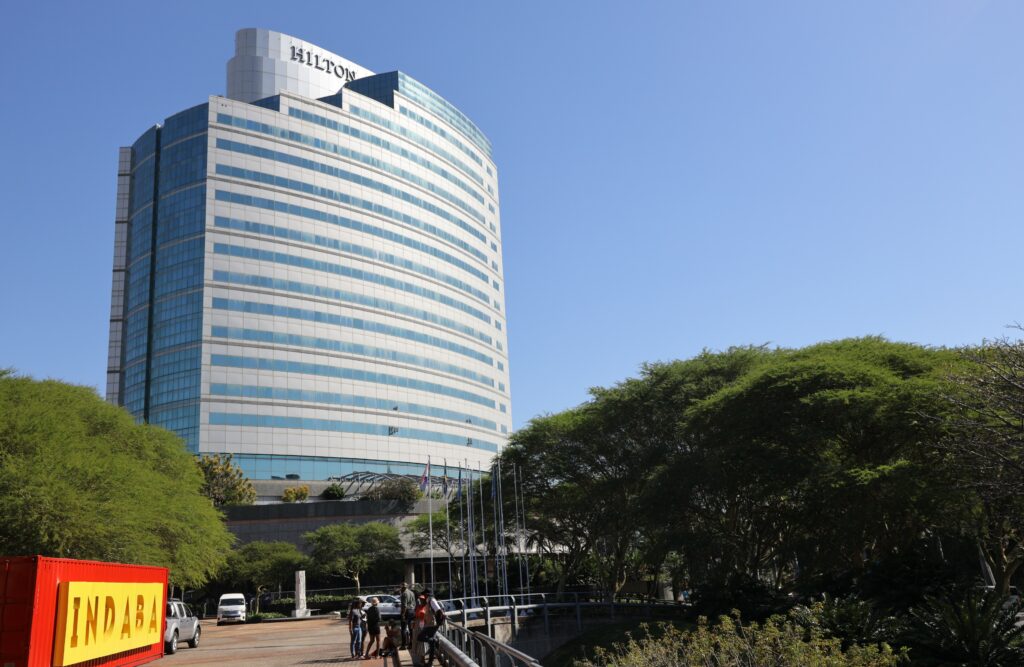
When news broke that Hilton Hotels & Resorts had exited its Durban ICC property, nobody in the industry was particularly surprised. I’ve been watching that building and that node for a long time, and the pressures were visible. But that doesn’t make it any less frustrating and damaging.
What struck me wasn’t the exit itself. It was the ownership history. This is the same group that parted ways with the Hyatt in Rosebank – a hotel I personally opened back in 1996 – and other operators elsewhere.
Read: Iconic Hilton Durban shuts after hotel group yanks agreement [Feb 2026]
As always, there are two sides to every story.
International operators won’t unpack disputes around contractual capital expenditure, owner interference, lack of governance or unmet funding obligations in the media. They protect the brand and move forward. Owners won’t publish their version either.
What the public sees is the ending, not the years of tension, disputes and commercial pressure that possibly preceded it.
But when the same ownership group has repeatedly parted ways with major international operators, it stops feeling like isolated disagreements and starts looking like a pattern.
And destructive patterns should ideally warrant more than a collective shrug from the industry.
So yes, Durban will navigate this. The city’s hospitality fundamentals remain intact. The property will likely continue operating under a different flag.
Location was clearly part of the challenge here. Durban’s hospitality geography has been shifting north for years, and business demand has followed infrastructure, mixed-use development and perceived stability. We operate successfully in those northern nodes ourselves, and the fundamentals there are strong.
ADVERTISEMENT
CONTINUE READING BELOW
The bigger issue
But the exit has surfaced a much bigger issue that extends well beyond one property or one city. It has brought into sharp focus the question of ownership accountability and the trail of disruption that certain owners leave behind without consequence.
When a large hotel in a key node becomes destabilised, the impact spreads quickly and widely.
Conference organisers hesitate. Corporate travel buyers reassess risk. Suppliers lose contracts. Staff face uncertainty. Municipalities see their rates base erode. What we are really talking about is a trail of destruction that extends well beyond boardroom disputes.
Listen/read:
SA private sector ‘carrying the tourism can’ – Millat CEO
The ‘petrol’ firing up the property market
Even if we acknowledge that operators may have in some way contributed to these owners’ decisions to mothball their hotels and kick international operators into touch, it is astonishing to see those same owners trading under their house brand and simply moving on to the next property.
And yet, we rarely say any of this out loud.
We don’t talk enough about the structural imbalance that exists once owner-operator relationships deteriorate.
Owners versus operators
At this level, owners are often extremely well-resourced individuals or family offices. They control the asset and capital decisions. When disputes arise, they can afford to dig in.
ADVERTISEMENT:
CONTINUE READING BELOW
I have seen so many situations where what should have been straightforward arbitration turns into something resembling Stalingrad tactics, where every step is contested, every process delayed and every avenue stretched for time.
Time becomes strategy. And operators, who have staff to protect and guests to serve, are rarely in a position to match that kind of endurance.
From the operator’s side, it feels like managing through fog. You continue running the hotel, protecting staff and shielding the guest experience, while the commercial disagreement drags on behind the scenes, sometimes for years. Or the operator, their staff and their creditors are on the street with no realistic redress opportunity.
Read: Park Hyatt makes its SA debut [Jul 2025]
This isn’t about painting all owners with the same brush. Many of the strongest partnerships in our sector are built on mutual respect, and those relationships are what this industry is built on. But when a hotel owner has effectively unlimited resources to prolong a fight and a documented history of leaving operators behind, we should be asking harder questions before the next contract is signed.
Operators share responsibility here too. We are meticulous when assessing a building. We interrogate feasibility studies, rate projections and market demand until the numbers are airtight.
Yet historically, far less attention has been paid to the behavioural track record of the owner sitting across the table.
I have personally underestimated this over the years and have – on a few occasions – ignored whispers from industry friends about the ethics of a particular hotel owner. This has cost me dearly.
Understanding how an owner has handled previous operator relationships, how they approach capital obligations, and how they behave when performance tightens is just as important as understanding RevPAR (revenue per available room) growth.
Partnership strength pivotal
ADVERTISEMENT:
CONTINUE READING BELOW
Hospitality is a long-term business requiring patient capital, operational discipline and, above all, partnership between owner and operator.
Without that alignment, even the strongest global brand will find itself exposed.
I opened the Hyatt Rosebank in 1996. Watching what subsequently happened to that property under this ownership group over the last few years was difficult.

The old Hyatt Regency Rosebank Hotel, which has been rebranded by the Middle Eastern based owner into the Royal Majestic Hotel. Image: Suren Naidoo/Moneyweb
Watching it happen again in Durban and Cape Town is worse, because it was entirely predictable.
Perhaps the real takeaway is not about one brand leaving one building.
To me, it’s actually about whether we, as operators, are prepared to do the hard work of proper owner diligence and make it a prerequisite to signing deals, so that owners are held accountable when patterns of disruption emerge.
In our business the human being you choose to partner with often matters just as much as the agreement you eventually sign.
Guy Stehlik is founder & CEO of BON Hotels.
#Hilton #Hyatt #letting #hotel #owners #act #impunity