
The global economy looks resilient, but the energy shock from the Iran war could flip the script, including for the U.S., which is still battling inflation in the final stretch.
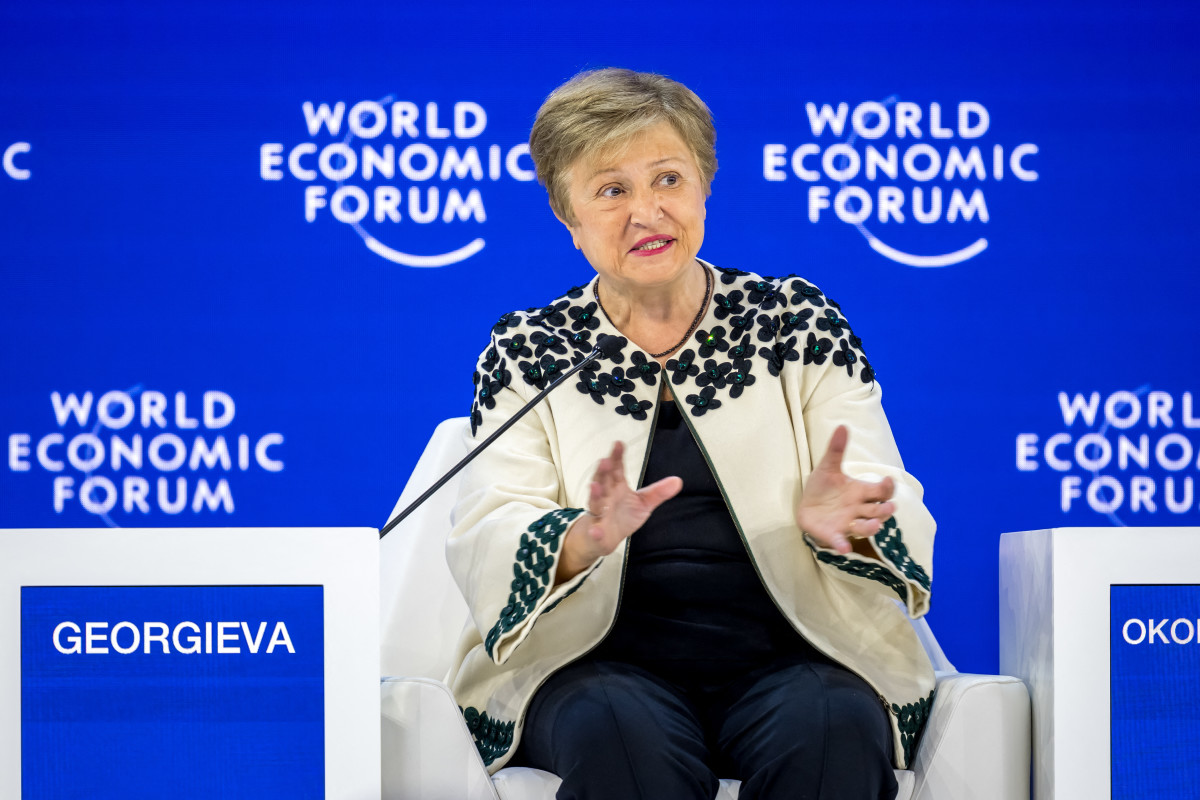
In a sitdown interview with Bloomberg, International Monetary Fund (IMF) Managing Director Kristalina Georgieva dropped a shocking take, saying policymakers can’t just assume the battle against rising prices is over.
Georgieva feels that the rapid rise in oil prices could ripple through global markets, stoking inflation while constricting economic growth.
Bad timing for the U.S.
For the U.S., it comes at a remarkably inopportune time, as policymakers look to steer inflation back to the Federal Reserve’s target without hampering economic expansion. However, this sort of geopolitical shock can prove incredibly disruptive.
For perspective, per Reuters, Brent crude has jumped nearly 23% since the start of the Iran war, skyrocketing from around $73 a barrel before the strikes to around $90.
It’s worth noting that multiple banks have raised their Brent forecasts in the days since the Iran conflict widened.
- Goldman Sachs: raised its Q2 2026 Brent forecast by $10 to $76 a barrel and laid out a $100 scenario if Hormuz disruption lasts for more weeks.
- Standard Chartered: bumped its Q1 2026 Brent forecast to $74 from $62, Q2 to $67 from $63, and its 2026 average to $70 from $63.50.
- UBS: now sees Q1 Brent averaging $71, implying $80 in March, and raised its 2026 average to $72, up $10 from its previous view.
- ANZ: raised its Q1 2026 average Brent forecast to $90 a barrel, the more bullish near-term calls.
Simultaneously, Georgieva said that governments and central banks might have much less room to cushion fresh shocks than during earlier crises.
For the U.S. economy, it points to a persistent risk and to the fact that the path back to stable inflation is still as muddled as ever.
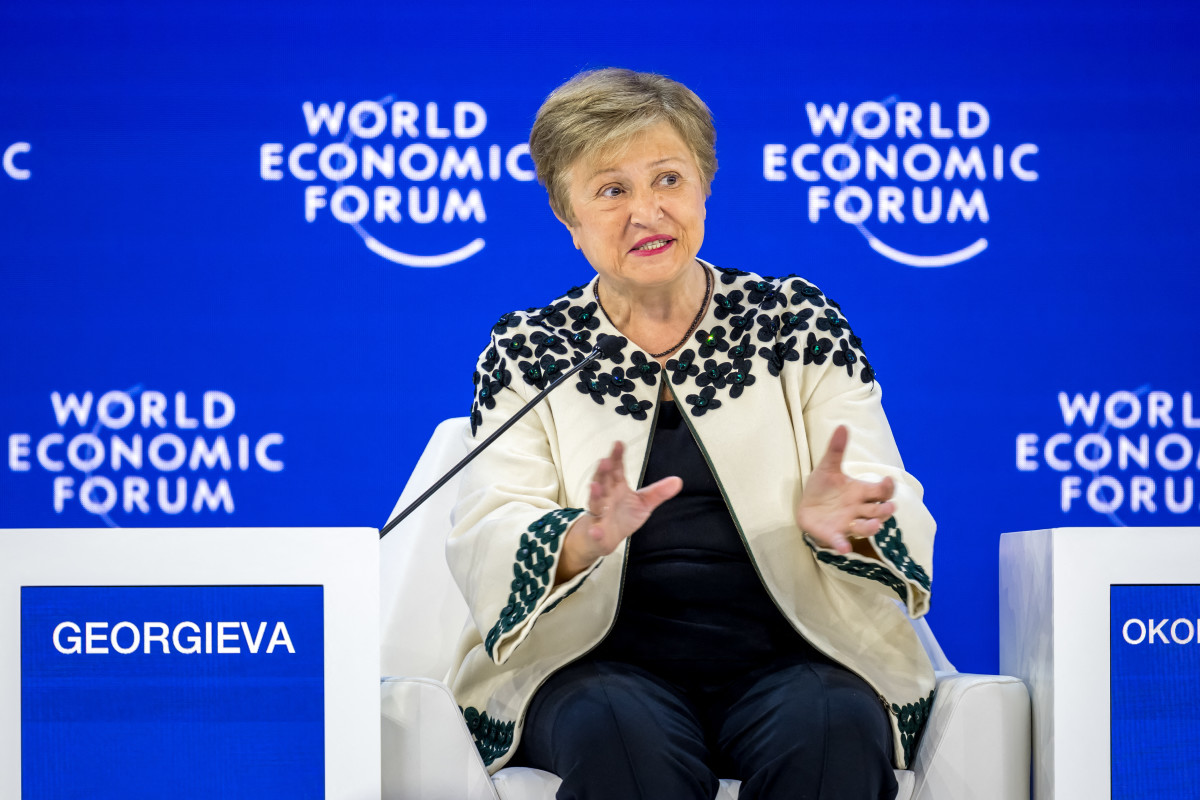
Photo by FABRICE COFFRINI on Getty Images
Georgieva’s warning is about how fragile disinflation can be
IMF chief Georgieva feels that all the progress on inflation can be effectively undone from the outside.
That means even if we’re seeing a slowdown in domestic demand and the Federal Reserve’s making headway on prices, a new oil shock could still push inflation higher by raising fuel and shipping costs, while tanking confidence across the economy.
MoreEconomic Analysis:
- Ernst & Young drops blunt reality check on the economy
- Federal Reserve official blasts latest interest-rate pause
- IMF drops blunt warning on US economy
The U.S. is not at the center of her analysis, but clearly it remains highly exposed to the same external price pressures.
So essentially what she’s saying is that a sustained energy shock need not be catastrophic for it to have an outsized impact.
It can be large enough to continue keeping inflation sticky while also weighing down growth, which is naturally a remarkably uncomfortable mix for the U.S. economy.
Georgieva reinforces that by saying,
“We cannot take the victory against inflation as given,” and adds that “now is the time for advanced economies to relearn this lesson.”
Put simply, for the U.S., disinflation is progress, not permanence.
Related: Morgan Stanley delivers curt 2-word verdict on S&P 500
That said, over the past couple of weeks, I’ve covered a couple of economic stories that framed the U.S. outlook differently.
My Bank of America piece pushed back on theAI apocalypse narrative, pointing to an economic evolution.
My Nancy Lazar (Piper Sandler economist) piece was perhaps even more constructive, pointing to stronger small business confidence and manufacturing signals. In contrast, the IMF story is more external, testing the economic progress already made.
U.S. CPI numbers, 2020-2025
U.S. inflation has essentially followed a boom-and-cooldown pattern over the past five years. CPI numbers were mostly muted in 2020 but skyrocketed in 2021, peaking in 2022 and then easing through 2023, 2024, and 2025.
Moreover, the latest BLS report shows that the cool-off continued well into January 2026, with inflation still running above the Fed’s 2%longer-run goal.
- 2020: 1.4%.
- 2021: 7.0%.
- 2022: 6.5%.
- 2023: 3.4%.
- 2024: 2.9%.
- 2025: 2.7%.
- Latest report — January 2026: 2.4% year-over-year; the BLS released it on February 13, 2026.
Source: U.S. Bureau of Labor Statistics Consumer Price Index data and latest CPI release.
Fed rate cuts over the last two years
- July 2023-Sept. 2024: Fed held rates at 5.25%-5.50%.
- Sept. 18, 2024: Fed cut by 50 basis points to 4.75%-5.00%.
- Nov. 7, 2024: Fed cut by 25 basis points to 4.50%-4.75%.
- Dec. 18, 2024: Fed cut by 25 basis points to 4.25%-4.50%.
- Jan.-July 2025: Fed paused and left rates unchanged.
- Sept. 17, 2025: Fed cut by 25 basis points to 4.00%-4.25%.
- Oct. 29, 2025: Fed cut by 25 basis points to 3.75%-4.00%.
- Dec. 10, 2025: Fed cut by 25 basis points to 3.50%-3.75%.
- Jan. 28, 2026: Fed held rates steady at 3.50%-3.75%.
- CME FedWatch / recent market odds: Reuters reported on March 3 that traders were fancying a 30.7% chance of at least a quarter-point cut in June and a 47.2% chance of a July cut. After the sluggish U.S. jobs report on March 6, the June-cut odds rebounded to nearly 49%.
Source: Federal Reserve FOMC statements and CME FedWatch probabilities as cited by Reuters.
Related: Bank of America drops blunt message on the economy
#IMF #drops #blunt #warning #economy