
In the early 1990s, during Bill Clinton’s presidential campaign, strategist James Carville famously coined the phrase: “It’s the economy, stupid.” The point was simple. Voters may talk about many issues, but in the end economic confidence shapes how people feel about a country, its leadership and its future.
The phrase has endured because it captures a universal truth. When the economy works, many other things begin to work. When confidence grows, investment follows. When investment follows, opportunity expands.
Read: Steyn City LIV Golf showpiece puts Joburg in global spotlight
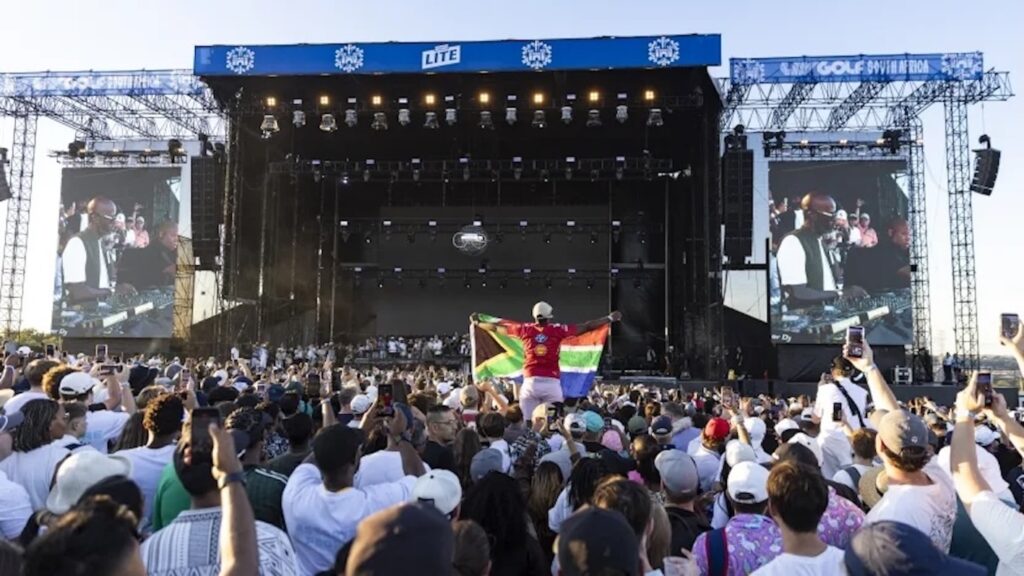
Watching the LIV Golf South Africa event in Johannesburg this past weekend, that line kept coming to mind.
Because what we witnessed was not just a golf tournament. It was a reminder that tourism, events and global visibility are not sideshows to the economy. They are part of the economy and sometimes they are the spark that shifts how a country sees itself and how the world sees it.
From a tourism perspective, the real impact of events like this cannot be measured only in ticket sales or hotel occupancy.
Their value lies in something less tangible but far more powerful: confidence, national image and the ability of a country to invite the world to experience it on its own terms.
The scenes on the 18th hole #LIVGolfSouthAfrica pic.twitter.com/GDb0GGiy4w
— LIV Golf (@livgolf_league) March 21, 2026
One of the most effective lessons I learnt while working in destination development in Saudi Arabia is that the strongest form of marketing is not advertising. It is hosting.
You invite the world into your home. You let them see you as you are. You create moments that no campaign can manufacture.
It is a very African instinct. Ubuntu. And it is one we should be using far more deliberately.
South Africa annually hosts many major golf events, but what made the LIV tournament in Johannesburg stand out was how naturally the format suited the South African fan.
The shorter format, the music, the noise, the humour and the freedom for the crowd to be involved created the kind of atmosphere South Africans thrive on.
We do not come to events to sit quietly. We come with gees, to participate, to celebrate and to make the occasion our own.
At times it felt less like a conventional golf tournament and more like the atmosphere of Ellis Park or FNB Stadium on a big match day.
ADVERTISEMENT
CONTINUE READING BELOW
One moment captured the mood perfectly – Dean Burmester stepped onto the tee box and donned a Bafana Bafana jersey with his name on the back, prompting the commentary box to coin the term that he was “Going Full South Africa” before sticking the shot close.
Read:
Destination South Africa: A year that will reward clarity and coordination
South Africa in talks with six firms to raise funds for F1 races
DJ Black Coffee buys R157m house in Clifton
It was more than theatre. It was a glimpse of what happens when confidence, pride and personality come together on a global stage.
For a few days, Johannesburg was not a headline about decline, infrastructure failure or uncertainty. It was a global stage and the world was watching.
From a tourism lens, that matters enormously.
We often make the mistake of evaluating events in isolation. Was it worth the cost? Could the money have been spent elsewhere? Did it deliver immediate returns?
That is ‘Either or’ thinking. It assumes that every investment must justify itself on its own.
Successful tourism economies do not work like that. Impact is built through accumulation, a series of events, conferences, sporting spectacles, cultural gatherings and business forums that, over time, reshape perception, attract visitors and build confidence.
No single event builds a destination brand. But a consistent calendar does.
Visibility does. Repetition does. Momentum does.
Johannesburg hosting LIV Golf did something tourism practitioners have long argued for. It showed a city that is rarely positioned as a destination, yet has the scale, infrastructure and personality to host the world.
Read: South Africa touted as a top golf tourism destination
For too long our tourism narrative has been narrow.
Cape Town, the Winelands and the Kruger National Park. All deserved, All world class. But not the full story.
When the world saw Johannesburg through the lens of LIV Golf, it saw something different. Energy. Edge. Humour. Music. Confidence. A city that knows how to host and knows how to celebrate. That kind of exposure cannot be bought through advertising. It has to be experienced.
There was also a moment of quiet irony in the galleries.
ADVERTISEMENT:
CONTINUE READING BELOW
In recent months, public discourse has made frequent reference to ‘refugees’ said to be enduring hardship in South Africa, yet the crowd at Steyn City suggested a healthy representation of the very group often described as suffering through it.
If this does become the most attended LIV event anywhere on the tournament calendar, it will be a reminder that a successful weekend of hosting the world can sometimes do more for the country’s image than any visit to offices of a certain geometric shape abroad.
For a long time, many former South Africans, expatriates and members of the diaspora have been among the loudest critics of the country, sometimes as a way of justifying their departure, at times sounding like the old saying about cutting your nose to spite your face.
Yet moments like these have a way of softening those positions, stirring a kind of positive nostalgia that reminds people why, despite everything, the country still gets under their skin.
Movements like the Lekker Network understand this instinctively. Built on the idea of South Africans connecting with purpose, the network brings together professionals across the country and the diaspora around a simple principle: how can I help.
By sharing stories, opening doors and amplifying each other’s success, it reinforces something we often forget – that national confidence is not built only through policy but through connection, pride and shared experience.
When a country believes in itself, the world tends to notice and that has real economic value.
But the real lesson from LIV Golf goes beyond tourism marketing. It speaks to a deeper mindset challenge we still struggle with as a country.
Too often we think in terms of ‘Either or’.
Either we invest in world class facilities or we invest in the masses.
Either we host global events or we focus on basic needs.
Either we build Gautrain or we fix passenger rail.
Either we support elite sport or we develop grassroots talent.
‘Either or’ thinking comes from scarcity. It assumes progress must come at the expense of something else.
Yet the countries that move forward adopt a different approach. They think in ‘And … and’.
We live in the most unequal society in the world. That reality cannot be solved by reducing ambition. It can only be solved by expanding opportunity.
Sport offers one of the clearest examples. South African rugby is built on the back of world class schools, world class facilities and world champions.
At the same time, initiatives like the Mzwandile Mali Schools Rugby Tournament are deliberately creating pathways for young players from rural and township communities to access the same system, not by replacing excellence but by widening the door to it.
Not ‘Either or’ but ‘And and’.
ADVERTISEMENT:
CONTINUE READING BELOW
The same logic applies in the economy.
The Gautrain was once criticised as an elitist project that benefitted the few. The argument was that the money should rather have gone entirely into passenger rail for the masses. But development does not work that way. You build the best in the world and at the same time you rebuild what serves the majority. Both strengthen the system.
Tourism works exactly the same way.
We should host global events. And we should grow community tourism.
We should attract international visitors. And we should invest in domestic travel.
We should build new attractions. And we should revitalise what already exists.
Not two systems. One system with room for everyone. Tourism sits at the centre of that equation.
It is one of the few sectors that touches everything. Transport. Sport. Culture. Cities. Rural economies. Small business. Global perception. When tourism works, the benefits spread far beyond the industry itself.
That is why moments like LIV Golf should not be dismissed merely as entertainment. They are signals. Signals that South Africa can still host, still attract, still deliver and still matter.
The opportunity now is consistency.
Fill the calendar. Bring the world in. Host sport, conferences, exhibitions, festivals. Showcase every province, not only the obvious ones.
Invest in world class. Invest in grassroots. Do both.
Because in the end, the lesson from Johannesburg is the same one Carville understood decades ago. It’s the economy, stupid.
And tourism sits right at the heart of it. Like Burmy showed us, let’s ‘Go Full South Africa’.
Sisa Ntshona is former CEO of South African Tourism.
#economy #stupidWhat #LIV #South #Africa #showed