
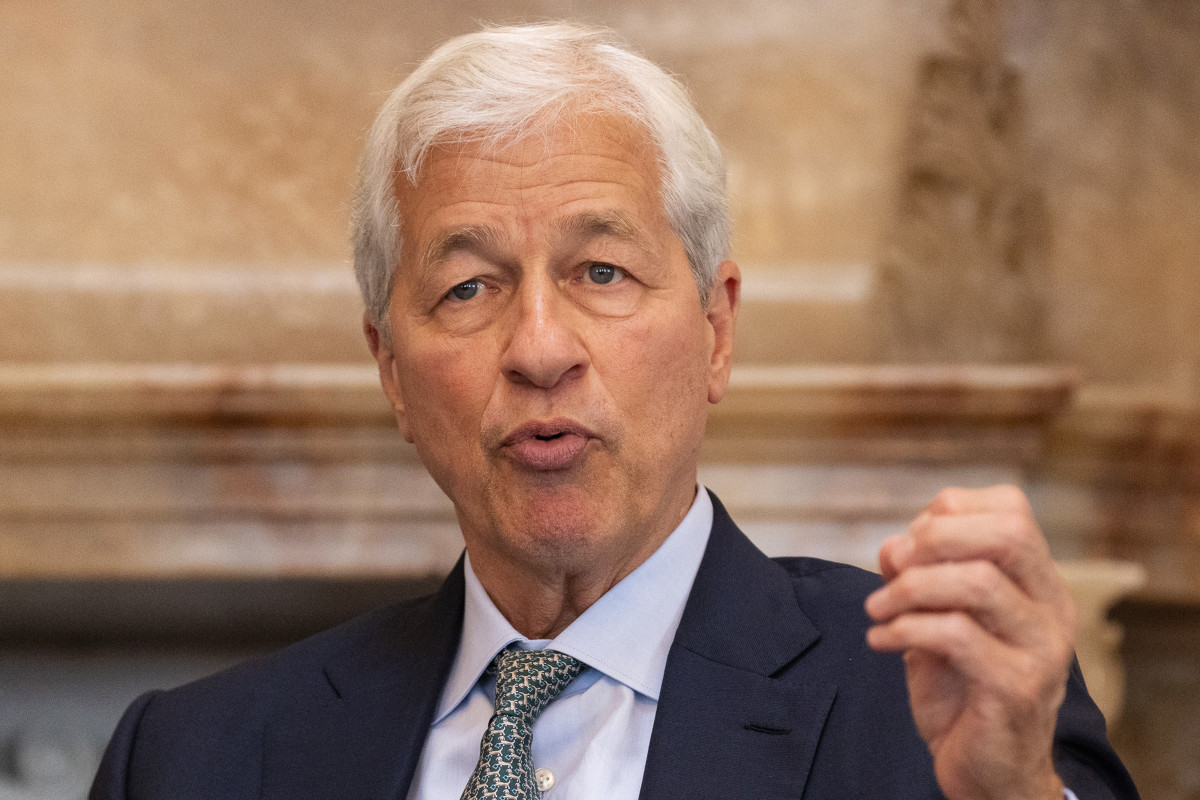
JPMorgan Chase (JPM) CEO Jamie Dimon stepped in front of the cameras Monday with Wall Street desperate for a measured voice. The U.S. and Israel had struck Iran over the weekend, oil markets were rattled, and investors wanted to know how bad the inflation fallout could get. Dimon’s answer was careful but clear.
Speaking to Bloomberg Television’s Lisa Abramowicz at JPMorgan’s conference in Miami Beach, Dimon said the conflict will push gas prices higher in the near term. But he drew a sharp line between a short engagement and a prolonged one. “If it’s not prolonged,” he told Bloomberg, “it’s not going to be a major inflationary hit. If it went on for a long time, that would be different.”
That caveat matters enormously right now. President Trump has signaled the military campaign in Iran could last weeks, not days. And tanker traffic through the Strait of Hormuz has nearly ground to a halt, with shipping companies and insurers pulling vessels from the world’s most critical oil chokepoint.
What the oil market is doing right now
The energy market reaction has been sharp but not catastrophic yet. Brent crude surged roughly 9% on Monday to around $79 a barrel, while U.S. West Texas Intermediate climbed more than 7% to about $72. Both moved off their highs by afternoon as markets weighed OPEC’s decision to boost output by 206,000 barrels per day in April.
At the pump, Americans are already feeling it. The national average for a gallon of regular gasoline hit $3 on Monday for the first time since December, up 8 cents from last week. GasBuddy’s Patrick De Haan warned the average could reach $3.10 to $3.20 by end of week.
MoreEconomic Analysis:
- Ernst & Young drops blunt reality check on the economy
- Federal Reserve official blasts latest interest-rate pause
- IMF drops blunt warning on US economy
The bigger concern is the Strait of Hormuz. About 20% of the world’s daily seaborne oil supply passes through it. Four vessels have already been struck in Gulf waters since the conflict began. If tanker flows do not resume quickly, Wood Mackenzie warns oil could exceed $100 a barrel.
Inflation was already Dimon’s biggest worry
Even before the Iran strikes, Dimon had been sounding the alarm on inflation’s stubborn resilience. On Monday he called it the “skunk at the party” for an economy that on the surface looks strong. The image is deliberate: everything seems fine until the smell hits you.
His concern is not just about oil. He pointed to a broader mix of pressures keeping prices elevated well above the Fed’s 2% target. The most recent data backs him up.
January CPI came in at 2.4% year over year, down from 2.7% in December, with core CPI at 2.5%. Both readings were better than expected. But Dimon’s point is that the underlying pressures have not gone away.
What Dimon says is keeping inflation sticky
- Fiscal deficits running well above historical norms, with government debt levels Dimon has described as unprecedented
- A labor market that, while cooling, still supports wage growth above productivity gains
- Reshoring and supply chain restructuring raising structural costs across sectors
- Defense and infrastructure spending adding persistent demand pressure to the economy
- Iran conflict adding a near-term energy price shock on top of all of the above
Where the Fed stands heading into its March meeting
The Federal Reserveheld rates steady at its January meeting, keeping the benchmark federal funds rate in the 3.5% to 3.75% range after three consecutive cuts to end 2025. Markets were already skeptical about a March cut before the Iran conflict. That skepticism has now hardened significantly.
Photo by Bloomberg on Getty Images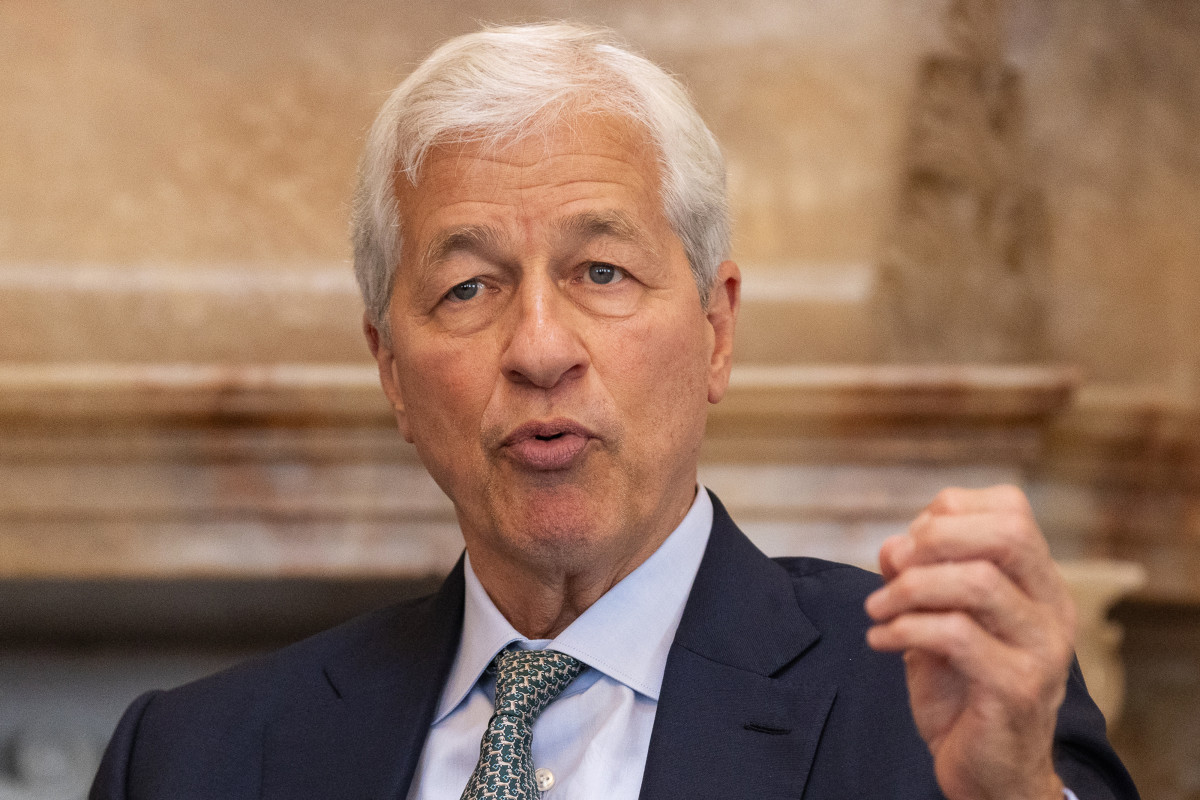
CME’s FedWatch tool showed the probability of a hold at the March 17-18 meeting sitting near 97% as of Monday, with the Iran conflict removing any remaining case for near-term easing. Dimon did not explicitly call for the Fed to hold, but his framing of inflation as an unresolved risk left little room for a different conclusion.
Why Dimon’s voice carries weight right now
Dimon acknowledged Monday that the U.S. consumer and corporate sector are in decent shape. Debt service ratios are stable, balance sheets are healthy, and the economy is still growing. But he was careful not to declare victory.
“Right now, the economy is doing fine, asset prices are high,” he told Bloomberg Television. “I think there’s a little more exuberance than there should be.” He also warned investors to expect cyberattacks and potential terrorist activity as a corollary to the Iran strikes, noting that banks could be targets.
The duration of the Iran conflict is now the single most important variable for inflation, energy markets, and Fed policy in the months ahead. Dimon’s message was not one of panic. It was one of hard-nosed realism: the economy can absorb a short engagement, but a prolonged one changes the math entirely.
Related: JP Morgan CEO has stark message for investors on stocks
#Morgan #CEO #blunt #inflation #message