
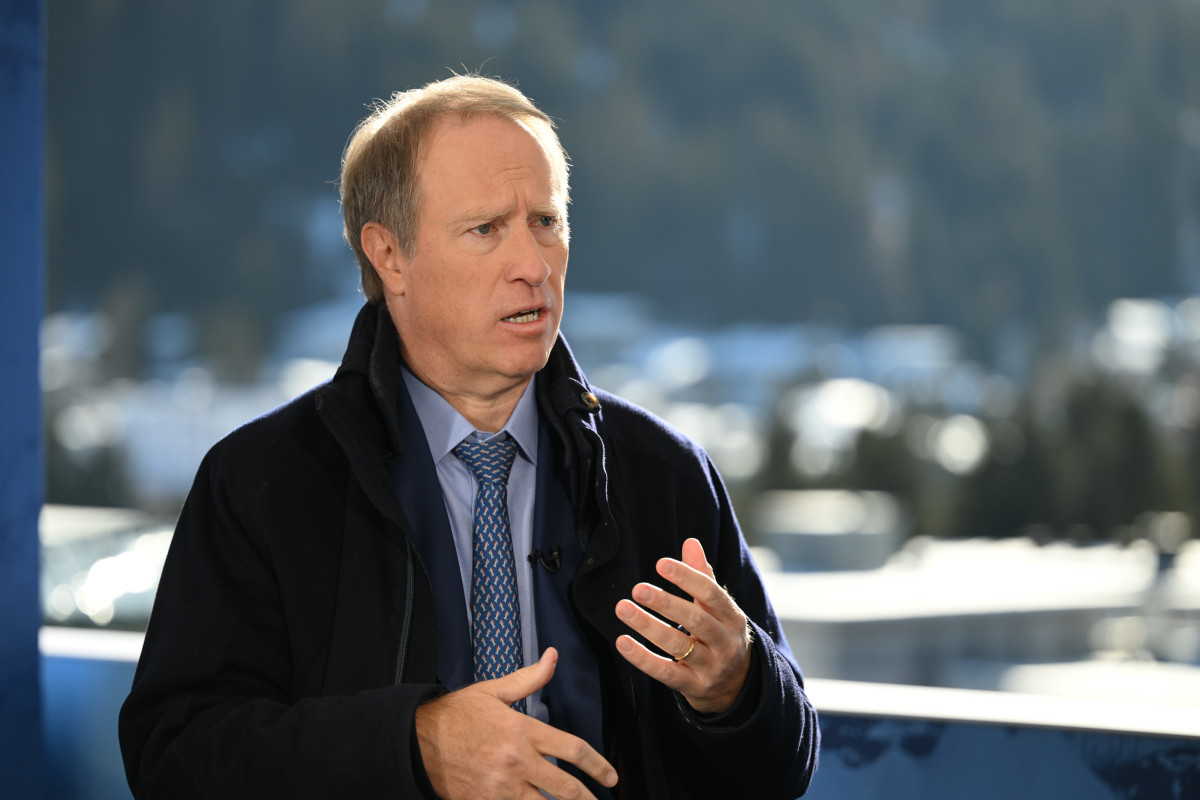
“Basically crashed.”
In a recent CNBC interview, Morgan Stanley’s Mike Wilson laid out his blunt two-word verdict on what he feels is happening beneath the surface of the S&P 500.
He argues that even though the index may feel it’s stuck in a relatively tight, give-and-take range, a stealth correction is already well underway. The issue is that the damage isn’t propping up in the headlines.
It’s important to note that when I last covered the S&P 500 in a Feb. 12, 2026, piece, it was trading around 6,941.47, hovering near record territory, according to Yahoo Finance.
As of the S&P 500’s latest close on Feb. 27, 2026, the index is trading at 6,878.88, down 62.59 points, or roughly 1%, based on the St. Louis Fed’s FRED S&P 500 series.
The past three months have been choppy, with the index going from 6,812.63 on Dec. 1, 2025, to 6,878.88 on Feb. 27, 2026 (a 1% net gain).
Moreover, January and February in particular had that gain-it/lose-it feel consistently falling toward the 6,800 area before snapping back toward the 6,950–6,980 range.
That’s exactly the “dispersion” Wilson is taking about.
The S&P 500 has effectively churned sideways for months, but if we zoom in on the picture changes remarkably. The widening gap between the top 50 stocks and the bottom 50 year-to-date has reached 68%, the largest spread in 20 years.
Over the past several weeks, I’ve been covering hot takes from multiple pundits on the dispersion angle.
For example, Bank of America analyst Michael Hartnett noted that the mega-cap-led leadership of the tech giants is buckling, with hyperscalers entering a heavier AI capex cycle. That’s exactly what Wilson is alluding to in pointing to the big split between winners and losers (dispersion), a precursor to the leadership broadening narrative.
Moreover, Morgan Stanley Strategist Katie Huberty discussed an “indiscriminate” sell-off in the stock market. She argued that investors have been shedding AI stocks without nuance, which creates the kind of under-the-surface damage Wilson flags.
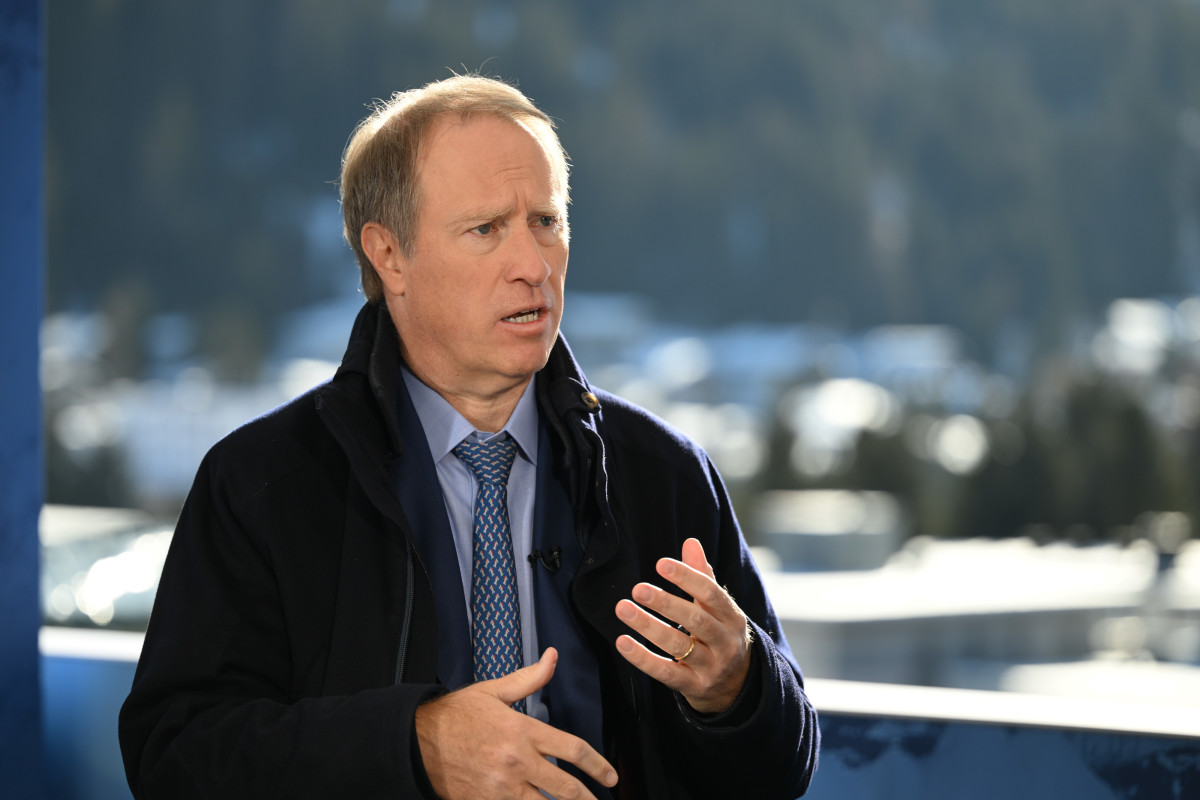
Photo by Bloomberg on Getty Images
Wall Street price targets for S&P 500
- S&P 500 (latest close, Feb. 27, 2026): 6,878.88;
- Morgan Stanley 12-month target: 7,800.
- Deutsche Bank’s year-end 2026 target: 8,000.
- J.P. Morgan’s year-end 2026 target: 7,500.
- Barclays’ year-end 2026 target:7,400.
- BofA Global Research year-end 2026 target: 7,100.
Source: Reuters, Morgan Stanley Research
Morgan Stanley sees near-term risk before second-half strength
Wilson’s take on the stock market is a lot more nuanced than what meets the eye.
More Wall Street
- Billionaire Dalio sends 2-words on Fed pick Warsh
- Top analyst bets these stocks will boost your portfolio in 2026
- Bank of America sends quiet warning to stock market investors
Morgan Stanley’s base case for the S&P 500 is still at 7,800 by year-end, which implies nearly 13% upside from recent levels.
However, between now and the back half, Wilson argues that the market might need to clear out excesses built up during the AI-powered rally.
The core rationale behind his hot take lies in dispersion.
He says that there’s a head-turning 68% spread between the top 50 and bottom 50 stocks year-to-date (the largest in two decades).
Let’s look at this from a mathematical standpoint.
- Top 50 stocks average: +18% year-to-date.
- Bottom 50 stocks average: -50% year-to-date.
- Spread: 68%.
Hence, that appears to be a violent stock market setup, but the index is still mostly quiet.
Related: Goldman Sachs analyst delivers shock message on Circle after blowout quarter
For perspective, as per Yahoo Finance, on Feb. 27, 2026, the VIX (the S&P 500’s “30-day fear gauge) closed out at around 19.86, a relatively calm reading for the overall market.
Many individual stocks have taken major hits (some by 20%, 30%, or more), even with the index often hovering near record territory.
To back that up, the VIXEQ (option-implied 30-day volatility of the average S&P 500 stock) came in at 40.98 that same day, roughly 2 times the VIX as per Yahoo Finance.
The stock market correction may be mostly done
Wilson feels that the stock market correction is actually 70% to 80% complete.
Related: Veteran economist drops surprise 8-word verdict on economy
In essence, he’s laying the case that the average stock has paid the price already, and perhaps fallen enough to count as a correction.
However, the big question is whether the stocks spearheading things now need to retrench. If that happens, the S&P 500 “catch down,” which means that the index would reflect the weakness that we’re already seeing in the average stock.
At the same time, he isn’t bearish.
If corporate earnings continue blowing past market expectations, capital could effectively roll back into stocks later this year. Nevertheless, the short-term turbulence is a given.
Given the current setup, Wilson feels it’s important for investors to target opportunities in selectively beaten-down names wherefundamentals are stabilizing.
Those are stocks where earnings revisions have been flattening out, margins have held steady, and guidance risk is reflected in valuations.
At the same time, the discipline matters a ton too. Some sluggish stocks are inexpensive for a reason, including stretched balance sheets, poor demand, or competitive disruption. Those aren’t rebounds that are just waiting to happen.
In that case, position sizing becomes an imperative, as you scale into ideas instead of going all-in, favoring a much more balanced approach.
That would entail focusing on quality defensive stocks while adding cyclicals or overlooked names poised for a fundamental turn.
Related: Veteran analyst revamps AMD price target following big news
#Morgan #Stanley #delivers #curt #2word #verdict #SampP