
From soaring prices at gasoline pumps to high interest rates on the credit cards used to pay for that purchase, your wallet is facing a potentially bruising economic impact in the very near future.
The escalating conflict in the Middle Eastrisks hiking oil prices and energy costs just as the Federal Reserve is weighing interest-rate cuts amid a gradually cooling labor market and sticky inflation, especially in services sectors such as health care and shelter.
Supply disruptions especially involving oil-transit routes raise the geopolitical concerns of global traders and U.S. central bankers.
If oil spikes while core inflationremains stubborn, interest-rate cuts become harder to justify. Plus, if oil surges and inflation expectations tick up, markets may need to reprice easing bets for 2026.
The potential inflationary impact had traders pricing 0.56% of Fed rate cuts this year on March 2, down from 0.6% on Feb. 27 — before the U.S.-Israeli attack on Iran, Bloomberg reported.
“It’s probably an early sign that the market thinks the Fed will be less inclined to cut rates if this oil price surge is sustained and ultimately translates into higher U.S. inflationary pressure,” said Gareth Berry, a strategist at Macquarie Group in Singapore.
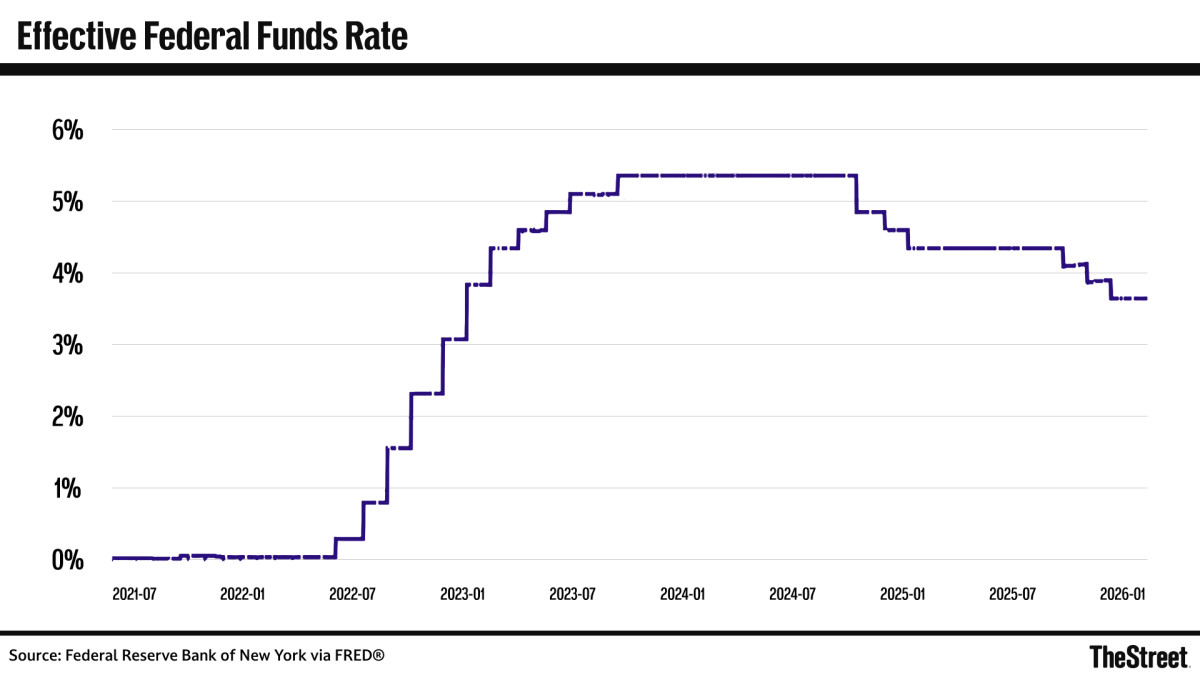
Federal Reserve Bank of New York via FRED®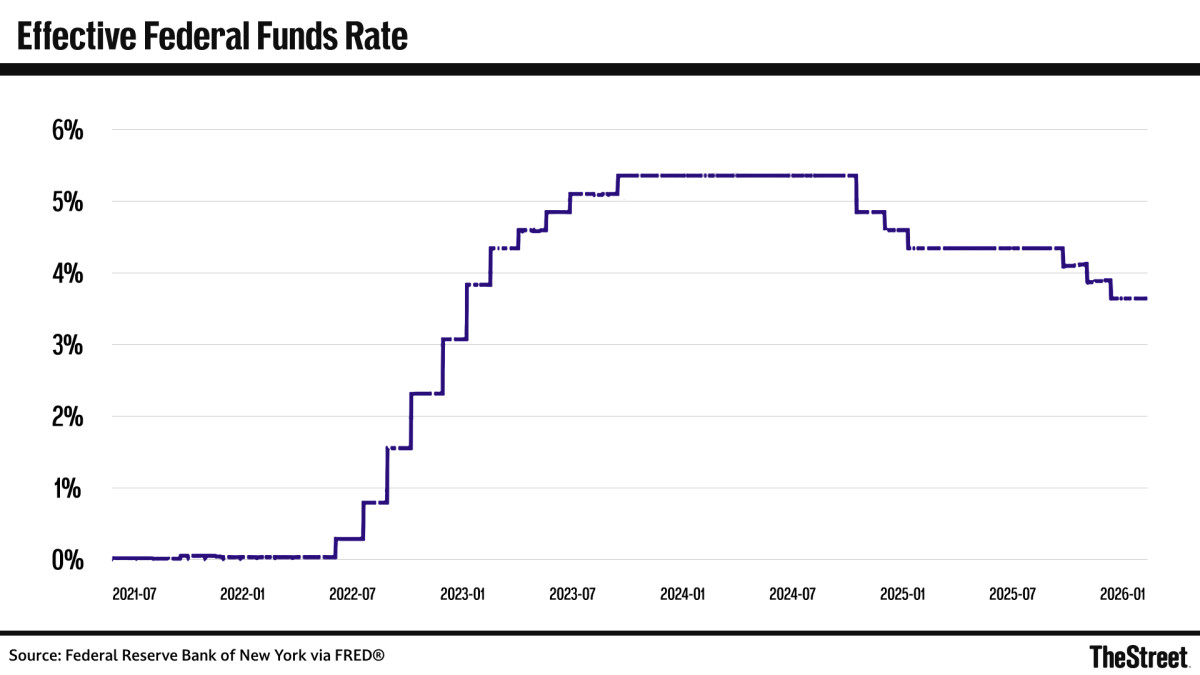
Potential inflation risks from Mideast conflict
There won’t be a major inflationary hit as long as the Mideast conflict is not prolonged, JPMorgan Chase CEO Jamie Dimontold CNBC March 2.
The United States is more protected from energy shocks than many of its allies due to domestic oil and gas production.
However, the global impact on trade, prices, and investment could crimp what has been a bullish growth outlook for 2026.
For every $10 a barrel increase in the cost of oil, the price at the pump could rise by up to 30 cents a gallon, Amy Myers Jaffe, director of the Energy, Climate Justice and Sustainability Lab at New York University, told The New York Times March 2.
How oil spikes impact inflation
While the CME Group FedWatch tool expects the Fed to cut the Federal Funds Rate by a quarter point at its July and September meetings, oil spikes can seep into:
- Headline Consumer Price Index data immediately
- Core inflation indirectly, via freight, airlines, and goods
- Consumer inflation expectations, which are the Fed’s preferred measure of price stability
This uncertainty comes as many Americans are already grappling with rising utility bills and higher prices at grocery stores and car dealerships, prompting affordability to become a buzzword for Democrats seeking victory in the November midterm elections.
Fed reacted to Ukraine invasion, energy risk
“A military war, layered on top of the ongoing U.S. ‘war on trade,’ could reignite concerns over global stability,’’ Joseph Lupton, an economist at JPMorgan, wrote in a note, Reuters reported.
Note: Russia’s invasion of Ukraine in 2022 posed similar global oil risks. The Fed, in a dovish reaction, reduced its plans for a major interest-rate hike in the spring of 2022.
The result: A sharp rise in inflation, and the Fed quickly responded with rate hikes.
“The conflict with Iran is a wild card, though markets may quickly lose interest if the situation looks likely to devolve from a regional to an internal conflict,” Tim Duy, chief U.S. economist at SGH Macro Advisors, wrote March 2.
How the Fed manages interest rates
The Fed’s dual congressional mandate requires it to balance full employment and price stability.
- Lower interest rates support hiring but can fuel inflation.
- Higher rates cool prices but can weaken the job market.
The two goals often conflict, operate on different timelines and are influenced by unpredictable global events.
After the December rate cut, Fed Chair Jerome Powell said that the lowering of rates brought monetary policy “within a broad range of neutral.”
A neutral rate neither stimulates nor restrains economic growth.
When the Federal Reserve last paused interest rates
The Fed last paused interest rates in September 2023, holding the funds rate at 5.25% to 5.50% after a rapid tightening cycle aimed at curbing post-pandemic inflation.
The pause lasted nearly a year as policymakers wanted to see if the higher borrowing costs would tame inflation without dipping the economy into a recession.
Related: Crude, natural gas prices jump on Iranian news
During that pause, inflation gradually cooled and the labor market remained resilient.
The central bank resumed cutting rates in September 2025, once Fed officials became confident that inflation was moving sustainably toward the Fed’s 2% target.
Inflation risk adds to Warsh’s list of challenges
President Donald Trump has been demanding the Fed dramatically slash interest-rates to 1% or less to jump-start the stagnant housing market and reduce the interest on the national debt.
The president’s campaign for lower rates included vows that his nominee to replace Powell’s term as chair in May would support rate cuts, prompting concerns about Fed independence from political influence.
Former Fed Governor Kevin Warsh, Trump’s pick to replace Powell, is facing a tough Senate confirmation in part due to Republican Sen. Thom Tillis of North Carolina vowing to hold up the process until the administration drops a criminal probe of Powell.
More Federal Reserve:
- Fed Chair Powell sends frustrating message on future interest-rate cuts
Powell has called the unprecedented investigation into the $2.5 million restoration of Fed headquarters a “pretext” to force lower interest rates.
With the clock ticking, the Senate has yet to schedule Warsh’s nomination hearings.
“It does strike me as odd that there’s been no forward movement on the Warsh nomination,” Derek Tang, an analyst with forecasting firm LH Meyer, told Reuters on Feb. 27.
“The White House seems no closer to overcoming the Tillis block: that the senator won’t let any nominee for the Fed get past the Senate Banking Committee unless and until the Powell probe goes away.”
Fed officials debate inflation risk
Multiple Fed officials, including Federal Reserve Bank of Boston President Susan Collins and Richmond Fed President Thomas Barkin, have already warned that inflation remains too uncomfortably high to consider cutting rates in the short term, including the March 17-18 meeting of the policymaking FOMC.
By contrast, Miran has called for four quarter-point cuts this year, saying the Fed should still cut a full percentage point from its policy rate in 2026 because there were still risks to the labor market while inflation was no longer a problem.
President Trump has said he had not asked Warsh to lower rates, but felt it was clear what his nominee would do.
Warsh, a vocal proponent of Fed reform, has argued that AI-driven improvements in productivity would justify lower interest rates.
The Fed chair is only one vote of 12 on the policy-making FOMC. The role is traditionally seen as one in which the chair would drive the other 11 Fed officials to agree with their point of view based on economic data.
Economists have said that Warsh could face resistance from the other FOMC members to cut rates pending economic activity and world events.
Evercore ISI Vice Chairman Krishna Guha told Bloomberg that investors may be overestimating Warsh’s hawkish reputation.
While Warsh, 55, was among the more inflation-focused officials during his previous stint at the Federal Reserve, Guha says he’s better understood now as a pragmatic conservative (with a small “c”) who distinguishes between supply-driven and demand-driven inflation — framework that could make him more dovish in today’s environment.
Related: Fed officials signal shocking twist on interest-rate cuts
#Oil #shock #threatens #Fed #ratecut #bets