
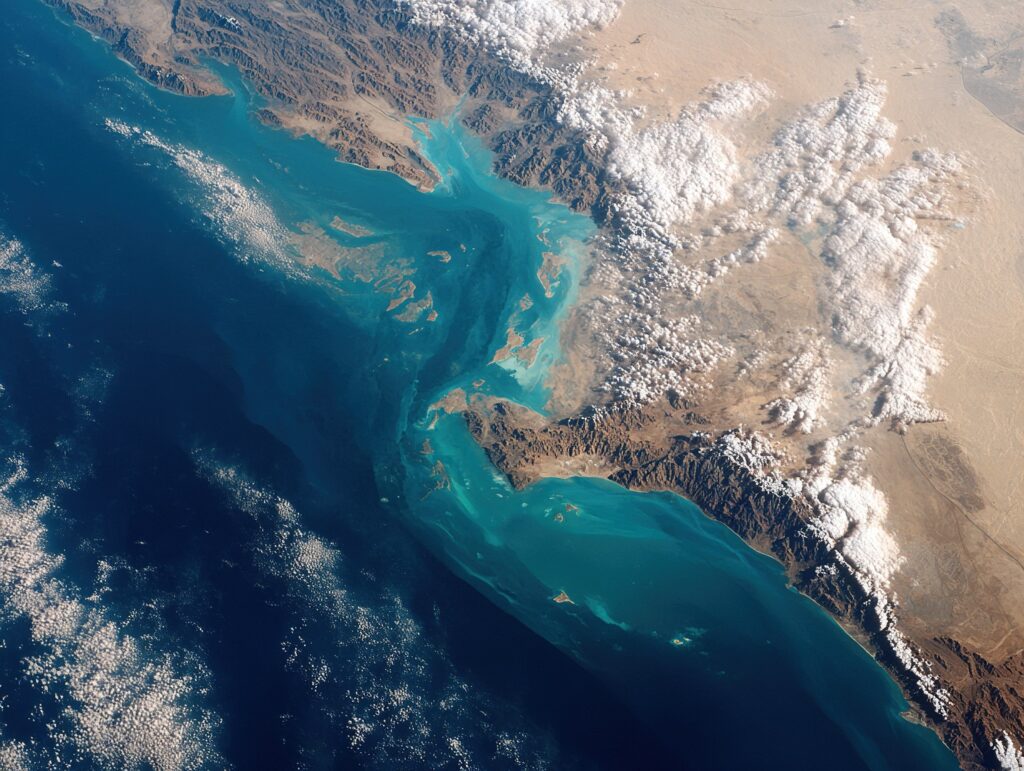
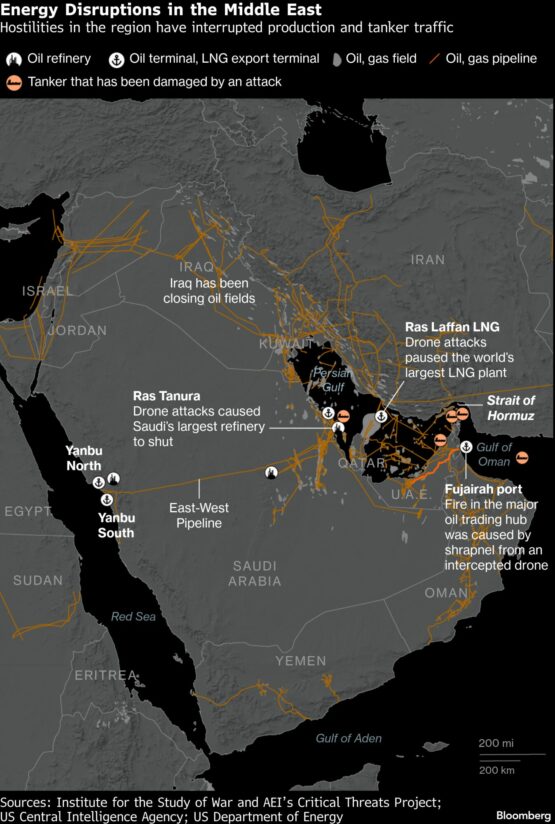
Ship traffic in the Strait of Hormuz has ground to a near-complete halt as the Middle East conflict disrupts the key global artery for commodities from oil to fertilisers.
A recent review of shipping signals in the waterway “indicates transits have reduced to single-digit levels, with only two confirmed commercial transits observed in the past 24 hours,” the Joint Maritime Information Center said in a March 6 note. The crossings involved cargo ships rather than oil vessels, according to the multinational naval advisory group focusing on the Middle East.
The escalating war in the region has prompted dozens of fully laden oil and gas tankers to stay hunkered down within the Persian Gulf. The frequency of attacks on ships in and around the strait remains high, making it too risky for energy tankers and their multimillion-dollar cargoes to attempt a transit.
ADVERTISEMENT
CONTINUE READING BELOW
Washington offered insurance backstops and naval escorts this week, after international insurers began pulling back on war-risk coverage, but shipowners haven’t yet been assured.
ADVERTISEMENT:
CONTINUE READING BELOW
“This represents a near-total temporary pause in routine commercial traffic,” the JMIC said. Just one inbound and one outbound vessel were seen transiting the strait on March 4. The tally reflects ships with their transponders turned on, and doesn’t fully capture any transit done without signals.
Two vessels, MSC Grace and Sonangol Namibe, were reportedly involved in incidents in the Arabian Gulf and near Iraq. Separately, bulk carrier Iron Maiden exited the Strait signaling “CHINA OWNER” as it made a breakthrough the waterway, an example of how vessels are trying to ensure safe passage. Earlier, another ship — LPG tanker Bogazici — broadcast that it was a Muslim-owned and Turkish-operated vessel.
© 2026 Bloomberg
#Strait #Hormuz #shipping #neartotal #halt #JMIC