
You can also listen to this podcast on iono.fm here.
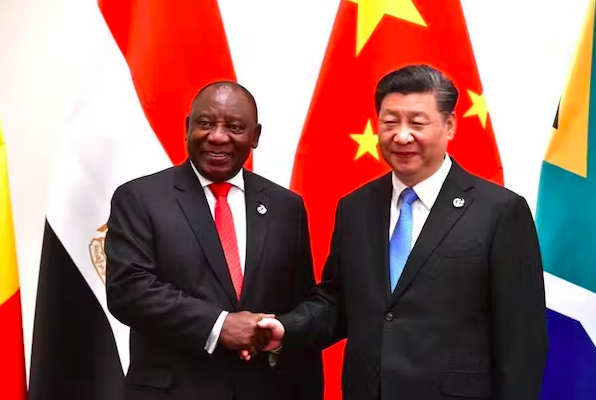
JIMMY MOYAHA: Effective the first of May 2026 – in a couple of weeks – China will fully implement zero tariffs on imports from 53 African countries. Now, of course, there are 54 African countries on the continent, and I wonder which country has been left out of this.
Nevertheless, this bodes very well for relationships between China and the African continent.
We’re going to take a look at this in a bit more detail with the chief growth officer at HLB International, Coco Ke Liu. She joins me on the line now to see what we make of these developments.
Coco, lovely having you on our show. Thanks so much for taking the time. Perhaps let’s start our conversation with an overview of the significant milestone of the decision taken by the Chinese Republic to improve trade relations with the African continent.
COCO KE LIU: Yes, definitely. This is a very positive signal from China, which is demonstrating confidence in the future of China-Africa collaboration.
JIMMY MOYAHA: Now, Coco, this is coming off the back of some interesting global developments that we have seen.
We have seen that the United States has taken quite a different approach on how they are approaching their tariff conversations, and one wonders whether this has sparked reviews from other countries like China, on how they view the tariff discussions.
ADVERTISEMENT
CONTINUE READING BELOW
What is the significance or the importance of being able to have improved trade and tariff conversations where it relates to trade?
COCO KE LIU: Yes. China has a very unique strategy, especially in the developing markets, and we call it the Belt and Road [Initiative] because [for] China and Africa we are embracing the same global trend – like innovation and, for instance, digitalisation.
However, we are also facing common challenges as the supply chain shifts and the geopolitical uncertainties [continue].
I’m very happy to see China is taking its own approach to improve this trade relationship and to facilitate and promote collaborative opportunities in different markets.
JIMMY MOYAHA: Coco, this goes beyond just trade, because we have also seen increased investment conversations and investment opportunities, relationships between South Africa, China, other members of the Brics bloc. We’ve seen a concerted effort from China to expand where it relates to investment – and not just around trade.
What is the strategic planning thereof? We know that it has been very well documented that the decisions taken within the Chinese economies are taken years in advance and are not really short-term decisions.
COCO KE LIU: Oh yes, definitely. Africa is a strategic investment destination for China and from [our] own clients we have seen many successive stories of Chinese investment into Africa [in] different sectors, from automotive to logistics and to mining. I think that definitely the momentum will keep going, and with the new policies coming in place, that would provide more clarity, confidence and connections on the bilateral trade and investment between China and Africa.
JIMMY MOYAHA: Coco, before I let you go, I want to take a look at the consumer markets. China has one of the most thriving consumer markets in the world. The African markets have also been on the up from a consumption point of view.
How are we looking at that from a trade perspective, and potentially looking at not just growing the consumer markets but growing the capital markets and the investment markets as well?
COCO KE LIU: Oh yes, definitely. So talking about African trade into China, and I think with the new policies definitely giving advantages to South Africa compared with competitors in Brazil and, for instance, Australia and Chile on those – for instance, agriculture products and raw materials.
ADVERTISEMENT:
CONTINUE READING BELOW
Also it will open the door to more African business into the massive Chinese market.
However, I would like to stress that it will also give South African business a window of opportunity to build long-term strategic relationships with Chinese business partners to change the buyer-seller relationship, upgrade into a long-term business-partner relationship so that we can also invest into South Africa from China to upgrade industrial development and also grow into something bigger.
JIMMY MOYAHA: Coco, what do you think is the secret to building these relationships? You allude to the fact that it’s not just about having them be transactional and buyer/seller but around building long-term and sustainable relationships.
What then becomes the secret to keeping these relationships, understanding that of course you go through political changes, you go through administrative changes, and the geopolitical changes that we have gone through just this year.
How then do you strengthen these relationships to last throughout all of these?
COCO KE LIU: Yes, in my view today the growth is not only about the numbers; it’s about building a business ecosystem inclusive to business to collaborate, to grow and to thrive. And it is also about building bridges culturally, commercially and strategically.
JIMMY MOYAHA: Building relationships, building bridges, and growing beyond just the transactions themselves – these are the efforts or the hope that we will see from the new trade agreements that China has struck with 53 African countries to remove tariffs on imports from Africa into China.
We’ll leave the conversation on that note. Thanks so much to the chief growth officer at HLB International, Coco Ke Liu, for joining us to look at the importance of this step from a trade perspective and what it means for Africa.
#ChinaAfrica #trade #agreement #brings #R3.5trn #consumer #market