
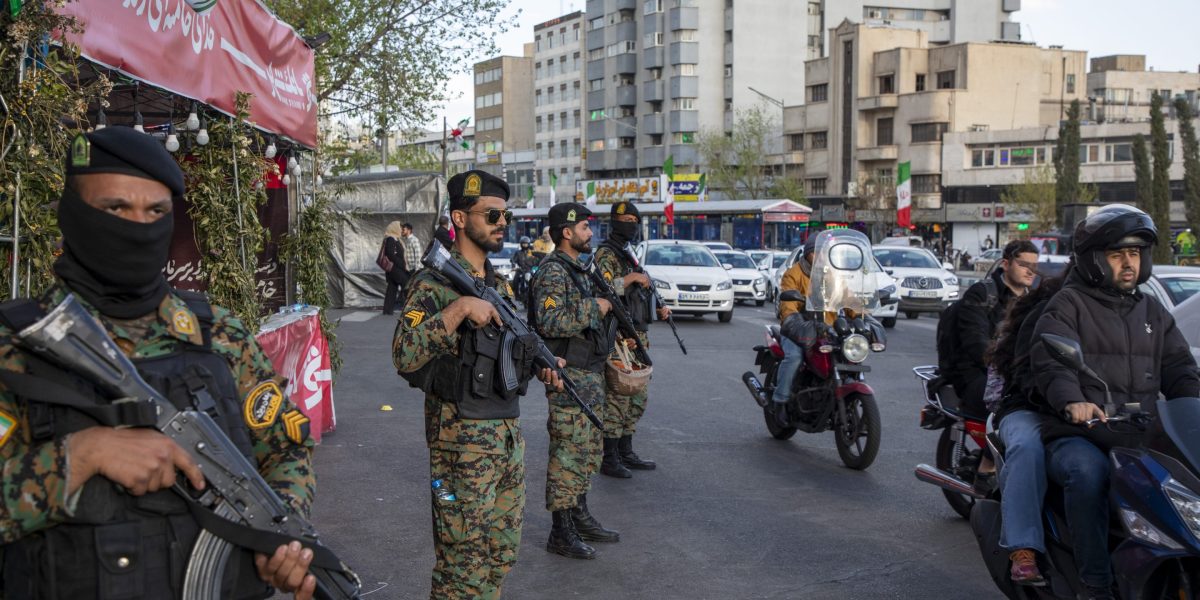
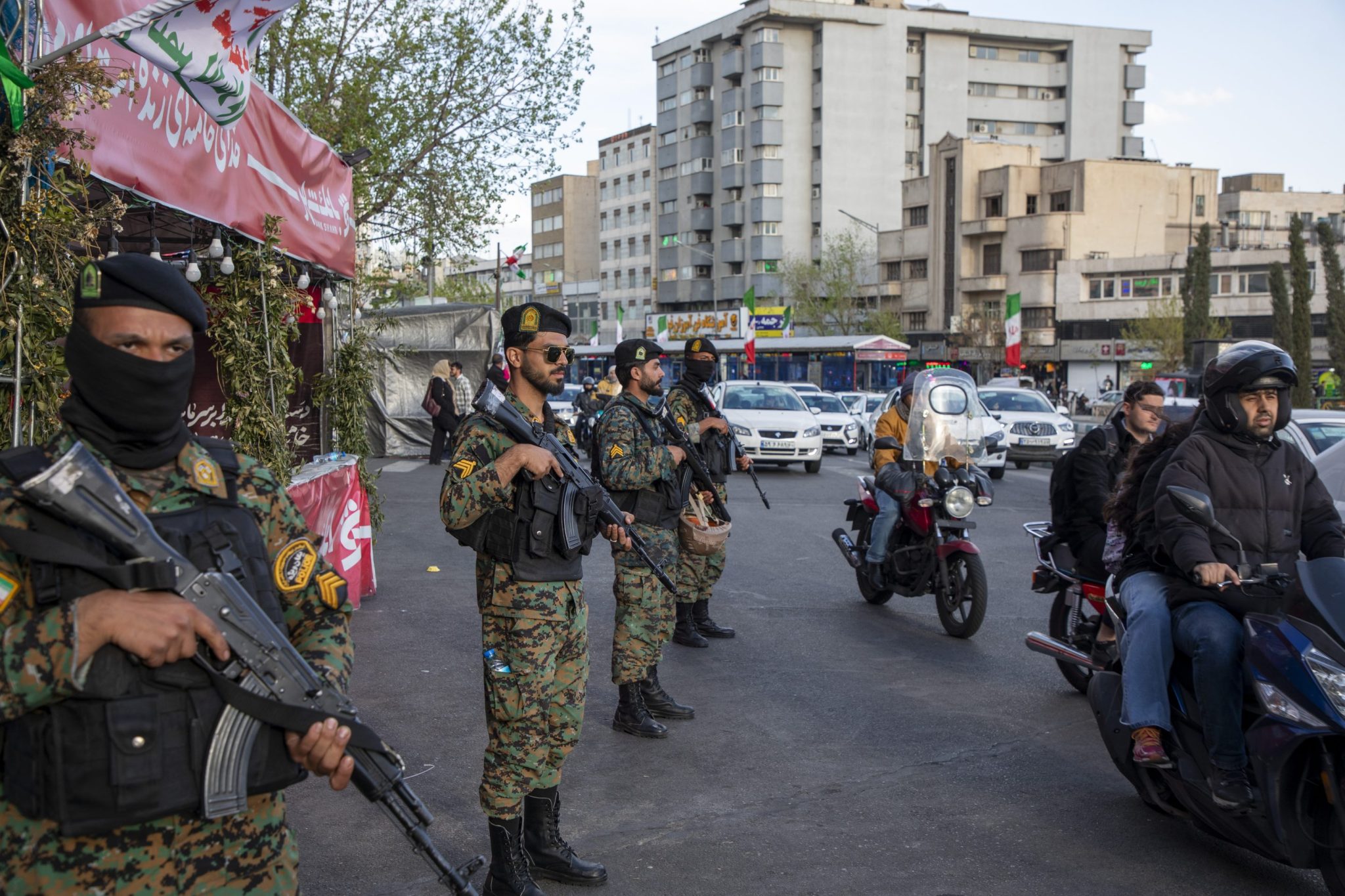
Tehran has been embolden by its ability to maintain tight control over the Strait of Hormuz and its own population. But even if the regime survives the war against the U.S. and Israel, its biggest challenge may come afterward.
For now, there’s little sign of de-escalation as President Donald Trump has vowed to obliterate Iran’s economy if Tehran doesn’t reopen the strait in the next few days, while the Islamic republic continues bombarding its Persian Gulf neighbors.
Both sides are already targeting civilian and energy infrastructure, boosting postwar rebuilding costs everyday. But while the Gulf states boasted thriving business sectors before the conflict, Iran’s economy was already in shambles, leading to domestic unrest that prompted a brutal crackdown.
Still, the regime’s ability to stay its power, resist Trump’s threats, and weaponize the Strait of Hormuz shouldn’t be mistaken as evidence it will survive, according to Burcu Ozcelik, a senior research fellow for Middle East security at the Royal United Services Institute.
“It risks treating a political outcome as predetermined, leaving too little room for the possibility that pressures from below, including from Iranian opposition voices and a war-weary public, could still shape the direction of events,” she wrote in an analysis on Thursday. “It also overlooks the possibility that hardening may generate not only endurance, but brittleness: a post-war system that appears more entrenched yet is less capable of absorbing internal shocks without fracturing.”
Once the fighting ends, Tehran must somehow rehabilitate relations with its neighbors to restore the commercial and financial channels that gave the regime access to the global economy, Ozcelik explained.
Gulf states were vital conduits for Iran in skirting Western sanctions, allowing it to generate oil revenue. But after the war, they are unlikely to go back to the earlier status quo without guarantees from Tehran on their future safety, she added.
In fact, there may be no going back. The United Arab Emirates, which long had deep commercial ties with Iran, is revoking visas of Iranians in the UAE and may freeze Iran’s assets in country.
Gulf neighbors have also signaled that Trump must continue the war until Iran’s hold on the Strait of Hormuz is broken, with the UAE and Saudi Arabia even contemplating joining the fight.
Unless the war ends with substantial easing of sanctions, Iran’s “economic strain ahead will be shaped by the war’s extensive damage and by Iran’s own exposure to the consequences of escalation,” Ozcelik predicted.
She also pointed out that prolonged disruption of the oil trade drives up market volatility, threatens Iran’s export position, and risks angering its main oil buyer, China. At the same time, Iran can’t put its economic recovery hopes on being a “toll booth” in the Strait of Hormuz, where it acts as a gatekeeper and collects payments from ships it approves.
‘Creating different incentives for the elite’
Instead, Tehran may have to look to negotiated, conditional sanctions relief—but that’s where the catch is, according to Ozcelik.
Bringing more of Iran’s economy out of the shadows and into formal, regulated channels could weaken some of the structures that empowered pillars of the regime, like the Islamic Revolutionary Guard Corps, she said.
That doesn’t mean lifting sanctions will lead to democracy in Iran, and the war will strengthen the IRGC in the near term, Ozcelik cautioned.
“But the scale of reconstruction required after damage to major energy and industrial infrastructure will be severe, and that will put pressure on the very patronage system that has helped hold the regime together,” she wrote. “Over time, conditional re-entry into regulated economic channels could begin to weaken parts of the pre-war economy, creating different incentives for the elite and create opportunities for domestic political opposition.”
However, a critical question is whether the U.S. will have the patience to wait and see how changes in Iran’s political economy actually shift “the balance of interests inside the system,” Ozcelik warned.
Indeed, the war may come to a head in the next few weeks as Trump deploys thousands of troops to the region for a potential ground assault meant to reopen the strait.
But in the meantime, Iran’s economy continues to deteriorate. Inflation has worsened and apparently is so bad now the government issued its largest-ever currency denomination: the 10 million rial note (equivalent to about $7).
The new currency went into circulation last month, according to the Financial Times, and came just a month after the prior record holder, the 5 million rial, came out.
As prices continue to spiral higher while the war boosts demand for cash, long lines formed to withdraw the fresh banknotes, and supplies quickly ran out. Doubts about the viability of the banking system have grown during the war as the U.S. and Israel target the regime’s levers of control.
In addition to bombing IRGC and Basij paramilitary forces, a data center for Bank Sepah was also hit on March 11. Sepah is the country’s largest bank and is responsible for paying salaries to the military and IRGC.
“Iran is already in the middle of a severe cash liquidity crisis,” Miad Maleki, a senior advisor at the Foundation for Defense of Democracies and a former Treasury Department official, said on X last month. “As of Jan 2026, banks were running out of physical banknotes daily, with informal withdrawal caps of just $18–$30/day. Cash in circulation surged 49% YoY due to panic hoarding. The regime simply cannot pivot to cash payments, there isn’t enough physical currency in the system.”
#Irans #regime #outlasts #Trump #survive #reconstruction #shattered #economy