
You can also listen to this podcast on iono.fm here.
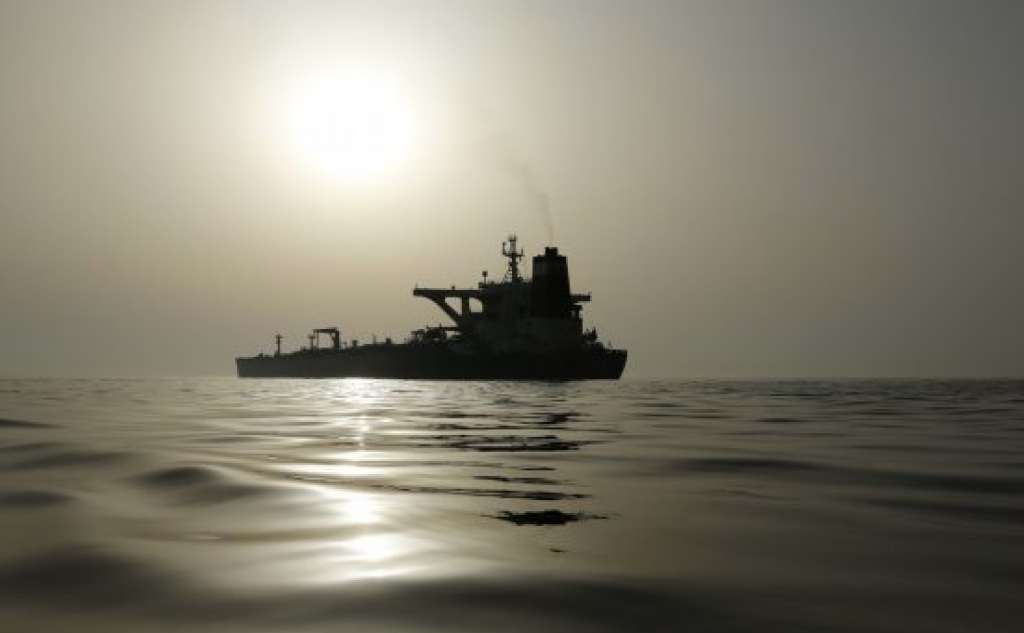
JEREMY MAGGS: Now, you’ll be aware of a fragile pause in the Middle East conflict. The United States and Iran have agreed to a conditional two-week ceasefire, reopening the Strait of Hormuz and easing immediate fears of a full-blown escalation.
The deal comes after weeks of strikes, extreme rhetoric from Washington and conflicting expectations on both sides.
All of this is raising serious questions about whether this is a genuine de-escalation or simply a tactical breather before what could be another phase.
Read:
Oil and gas prices plunge after US and Iran agree to a ceasefire
Shipowners eye Hormuz truce with 800 vessels still trapped
Let’s put all of that to Zeenat Adam, deputy executive director at the Afro-Middle East Centre. Zeenat, a very warm welcome. From your early interpretation, is this a real turning point or, as I’ve suggested, maybe just a temporary pause in a conflict that would seem to be far from over?
ZEENAT ADAM: It’s, in my opinion, a pause, but with a lot of pressure from behind the scenes.
We have a mediator that is a nuclear power in the form of Pakistan, and we have the hidden hand of China and Türkiye behind this that apparently made the last push towards the clinching of the ceasefire agreement.
Interestingly, the points that the Americans had put forward, which were 15 demands, are not the points that are going to be discussed over this weekend, but in fact, the points that Iran responded with, which is a ten-point plan, is actually what’s going to be on the table.
JEREMY MAGGS: So how credible then, I think we have to ask, is the agreement, given the clear differences in what the United States and Iran actually think it means?
ZEENAT ADAM: I think it’s a conditional ceasefire and there’s a massive trust deficit. So we know that in the previous negotiations that Iran was conducting with the Americans through Omani mediators, this was the time that the attack happened.
ADVERTISEMENT
CONTINUE READING BELOW
So that is still quite prominent in the minds of the Iranians, that there may not be a potential for trust here.
But what we were looking at in the lead up to this agreement was President Trump wanting an off ramp.
He simply couldn’t find a way out of this war, having gone into it quite brazenly, responding to the Israeli pressure to do so.
The expectation was it would be a very quick war, but it lasted 41 days.
There was not this anticipation that Iran would be able to withstand the military might of the Americans for such a long time.
JEREMY MAGGS: Well, talking of Israel, the country is not fully committed. How much does that, in your opinion, complicate the stability of the ceasefire?
ZEENAT ADAM: Israel is potentially the spoiler in this negotiation. They have already responded openly to the Pakistani prime minister’s (Shehbaz Sharif) announcement that Lebanon is included in the ceasefire, and the Israelis have said they don’t accept that at all, and that their occupation and attacks in Lebanon will continue.
So already we’re seeing some fragility in the agreement, and I think these are issues that will be ironed out by Friday.
I think that President Trump will certainly be putting some pressure on Prime Minister Netanyahu, because this is costing the Americans far more than they ever anticipated. They’re looking at spending approximately $2 billion a day.
Read: JSE jumps 5% and rand over 2% on Trump-Iran ceasefire
The objective now, it’s changed over the 41 days, initially it was decapitation and regime change.
ADVERTISEMENT:
CONTINUE READING BELOW
Then it was related to the nuclear sites and the uranium, and now it’s changed to very much focused on the opening of the Strait of Hormuz, which was not closed before the war began.
JEREMY MAGGS: Well, talking of America and the confused signals, the president says military objectives have been met. What does it signal then about US strategy going forward if we can discern anything at all?
ZEENAT ADAM: I think that the US actually had tactics in mind and not really a long-term strategy, and I think that they were taken by surprise by the Iranian response.
Iran went into survival mode. They believed that this was an existential threat to them, and their stamina was really unexpected.
So I think there’s going to be a massive recalibration in the minds of not just the Americans, but of the regional powers as well, of how to respond to Iran, how to manage the balance of power in this region and what this potentially means.
We’re already seeing Türkiye proposing a rail network that will connect the Gulf to the Red Sea, to the Mediterranean and beyond, to Europe.
We know that the Saudis, Qataris and other Gulf states are looking at land-based oil pipelines so that they may not have to be subjected to the hostage situation that they were in the Strait of Hormuz with the closure.
JEREMY MAGGS: Talking about Iran and response to Tehran, the country, as I understand it, is tying all of this to sanctions relief and some form of compensation. Zeenat, are those realistic demands or do you think just negotiating tactics?
ZEENAT ADAM: I think that they’re going in with high expectations. But this will be mediated downwards. This is a strategy that they’re entering the negotiations into.
But I think they certainly do have the upper hand in this, and I think that they have the strength of China behind them.
I think that this is going to be a very interesting weekend, upcoming with the negotiations. They may not receive that full reparation.
ADVERTISEMENT:
CONTINUE READING BELOW
The expectation would possibly be that the Strait of Hormuz turns into a toll road or a toll strait, and that the revenue that is extracted from that would possibly be utilised for those reparations.
JEREMY MAGGS: Well, let me talk to you about the Strait of Hormuz. It is open again, albeit temporarily, at this point. How significant is that for global energy markets, do you think, in the short term, we’ve already seen the price of oil come back below $100 a barrel?
ZEENAT ADAM: Yeah, we’re already seeing some of the changes within the last few hours. I think the dollar has also stabilised a little bit. We see the oil price stabilising.
I think that these are all positive indications towards a final agreement around the opening of the Strait of Hormuz.
Now, it wasn’t closed before the war began and the closure was conditional. We saw Iran playing a very interesting game of allowing certain countries that appear to be allies, or were at least in negotiation with them and allowing them through.
Read:
Trump insists on Hormuz opening
Secret codes, yuan get ships through Iran’s Hormuz ‘tollbooth’
They saw an opportunity to also make a little bit of money. They’ve been a country under sanctions for over 40 years. So this was an opportunity for them to increase their revenue out of this.
It’s, something that not many expected, but should have been. I mean, the strait is very, very, very limited.
The other thing is that most of the Gulf states experienced heavy blows to their infrastructure, especially on the oil and gas infrastructure, and that is going to take a number of years to repair.
We’re looking at between five to seven years to be back up and running at the levels that they were. So all sides seem to have incurred massive expenses.
JEREMY MAGGS: Zeenat Adam, thank you very much indeed, deputy executive director at the Afro-Middle East Centre.
#Iran #ceasefire #offers #shortterm #relief #longterm #risks #remain #elevated