
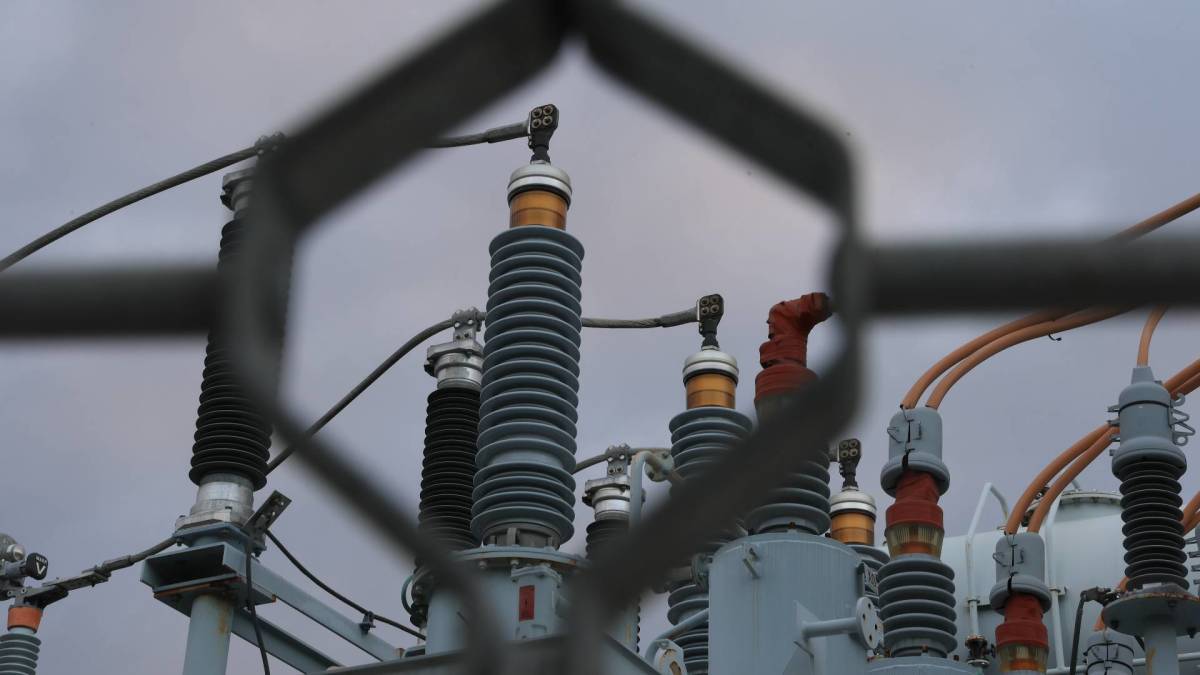
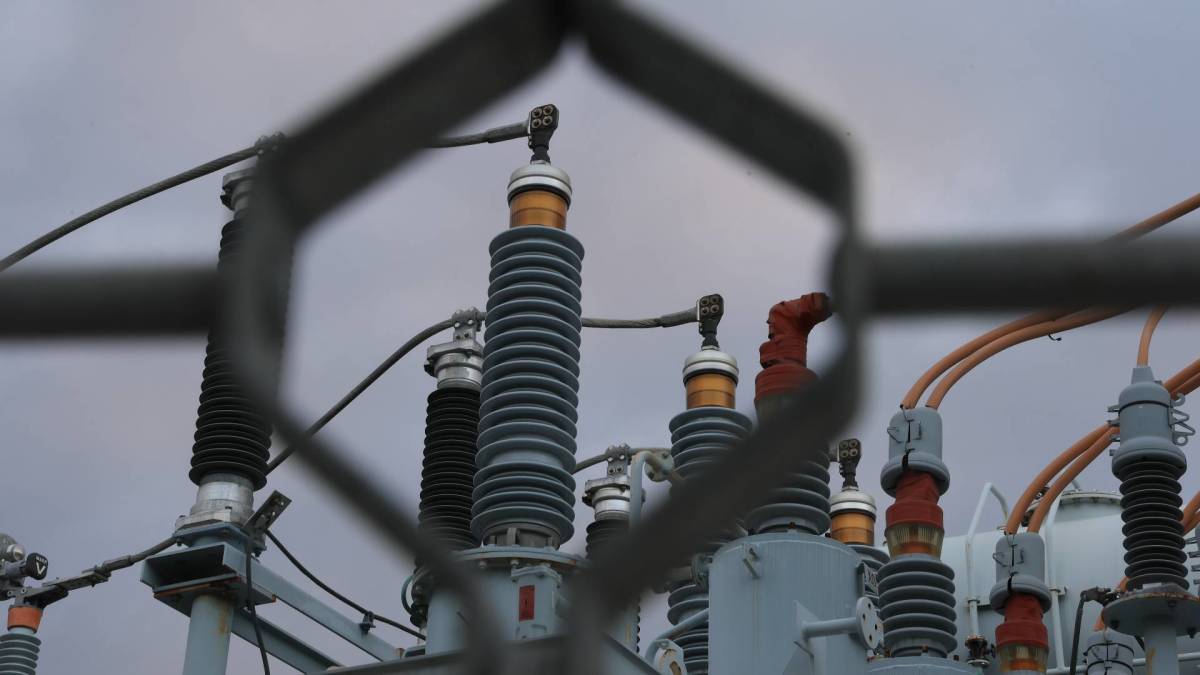
The wires running beneath American cities and strung between utility poles across the country are, on average, nearly 60 years old. JPMorgan thinks that’s a problem the whole economy should be watching closely.
The bank published a report on March 25 calling the aging U.S. power grid a “national security risk,” warning that decades-old infrastructure is increasingly vulnerable to extreme weather, cyberattacks, and geopolitical threats, according to JPMorgan. Sarah Kapnick, the bank’s global head of climate advisory, authored the report.
The warning comes alongside a forecast that makes the case for investment. Globally, $5.8 trillion is expected to be spent on grid upgrades between 2026 and 2035, with the U.S. alone accounting for roughly $1 trillion of that total, according to JPMorgan.
Why JPMorgan is raising the alarm on electric-grid vulnerability
Much of the U.S. electric grid was built in the 1960s and 1970s, making it close to 60 years old in many areas. Assets of that age need maintenance and replacement, and external threats, from climate change to cyberattacks to geopolitical conflict, add pressure that infrastructure designed decades ago was never built to handle.
“Grid resilience efforts are not just defensive infrastructure maintenance; they also increasingly underpin economic development, industrial competitiveness, and national security,” Kapnick wrote, as JPMorgan shared.
Related: JPMorgan has a surprising message about markets and war
The timing of the warning is not coincidental. Global power demand is projected to grow at a 3.6% compound annual growth rate between 2026 and 2030, a pace roughly 50% faster than the previous decade.
AI data centers are projected to drive 465 terawatt hours of demand growth over the next five years, representing around 9% of total demand growth globally.
The AI data-center crunch
The report highlights a growing mismatch between what AI companies want to build and what the grid can actually support. The U.S. Department of Energy projects that AI data centers could require an additional 100 gigawatts of peak capacity by 2030.
The strain is already visible. Plans for U.S. data-center additions fell by half in the fourth quarter of 2025 compared to the third quarter, in part because the grid is nearing its limit, according to Wood Mackenzie. Projected capital spending growth by the largest grid developers is also set to slow in 2026 for the first time since 2023, falling to $94 billion, or 58% less than 2025.
More Wall Street
- Billionaire Dalio sends 2-words on Fed pick Warsh
- Top analyst bets these stocks will boost your portfolio in 2026
- Bank of America sends quiet warning to stock market investors
The reliability concerns are not limited to Wall Street analysts. Mark Christie, director of William and Mary Law School’s Center for Energy Law, offered a blunt summary of the situation. “We are headed for a reliability crisis, except now the crisis is not over the horizon, but across the street,” he said, as The Daily Upside reported.
The scale of power-grid investment required
JPMorgan’s report maps out a striking set of numbers. Global grid spending rose from $300 billion in 2020 to $480 billion in 2025. The bank forecasts $5.8 trillion in cumulative global grid investment between 2026 and 2035, with roughly $700 billion of that earmarked for digital grid technology including smart meters, analytics, cybersecurity, and automation, according to JPMorgan.
In the U.S., the $1 trillion expected over the next decade is split roughly 37% toward transmission and 63% toward distribution. U.S. private capital flowing into the grid has already been accelerating, growing from $3.2 billion in 2021 to $6.6 billion in 2025.
Europe is expected to invest approximately $1.1 trillion over the same period, while Asia Pacific is projected to invest around $2.6 trillion, with China accounting for more than two-thirds of that.
JPMorgan’s grid investment forecast by region, 2026-2035:
- Global total: $5.8 trillion, including $700 billion in digital grid technology
- United States: About $1 trillion, split between 37% transmission and 63% distribution
- Europe: About $1.1 trillion
- Asia Pacific: Approximately $2.6 trillion, with China representing more than two-thirds
Raedle/Getty Images
JPMorgan’s own stake in grid resilience
The bank is not just issuing a warning. In October 2025, JPMorgan unveiled a Security and Resiliency Initiative targeting $1.5 trillion in financing and investments across industries critical to national security over the next decade, committing $10 billion of its own capital.
Grid resilience was named as one of the initiative’s priorities alongside AI, defense technology, pharmaceutical supply chains, and access to critical minerals, reported The Daily Upside.
In November 2025, JPMorgan acted as joint bookrunner on a $5 billion financing package for VoltaGrid, a Texas-based company that makes natural gas-powered microgrids for AI companies, reported The Daily Upside.
How the energy market is responding
Grid-sector stocks have been outperforming a struggling broader market. A key grid sector ETF is up more than 8% year to date. GE Vernova, the energy equipment manufacturer, has risen 39%. Duke Energy is up 8.7% and American Electric Power is up 11.7%, reported The Daily Upside. The S&P 500 is down 4.2% over the same period.
The shift is also visible in how utility companies are talking about themselves. The frequency of resilience-related keywords in S&P 1500 utilities firms’ earnings and investor meeting transcripts has increased by 70% since 2016, according to JPMorgan, citing FactSet data.
The grid has spent decades as one of the least glamorous corners of infrastructure finance. JPMorgan’s report suggests that era may be ending, whether investors are ready for it or not.
Related: JPMorgan resets price target on this AI dividend stock
#JPMorgan #identifies #massive #investment #opportunity