
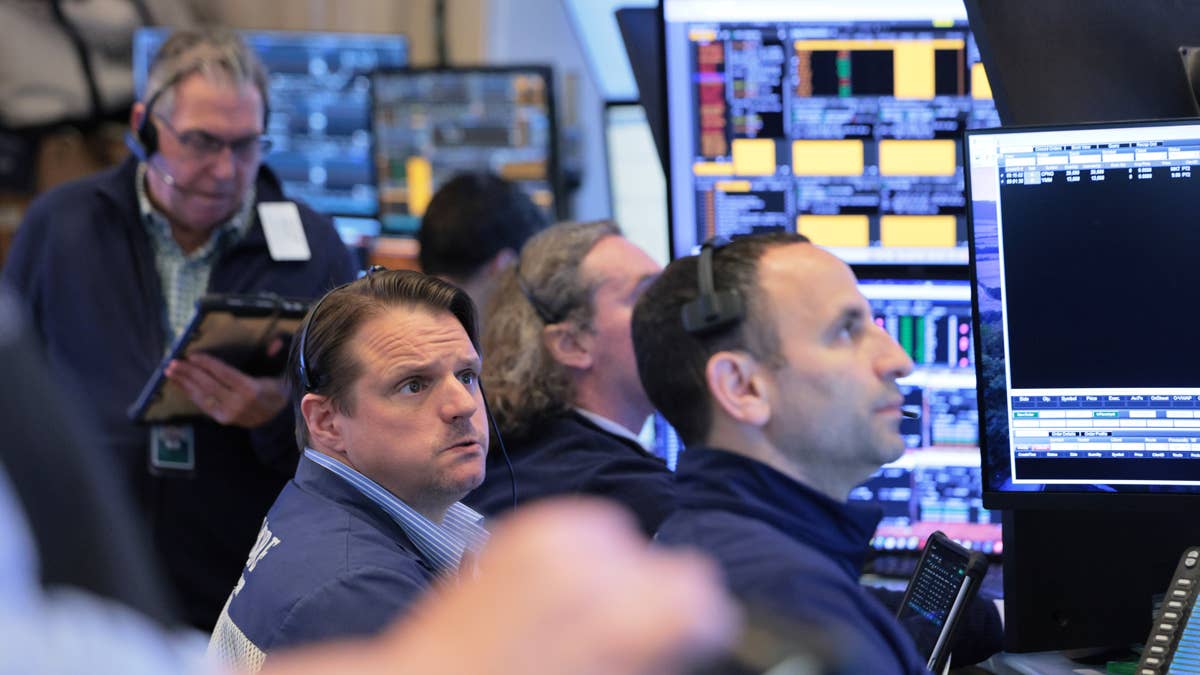
The S&P 500 is up roughly 9% this year. The average large-cap mutual fund is up too, in absolute terms. The gap between those two facts is where Goldman Sachs found its story.
According to a Goldman Sachs research note published May 20, only 29% of large-cap mutual funds are outperforming their benchmarks year-to-date, well below the historical average of 37%. And Goldman’s analysts have a specific explanation for why.
The Mag 7 underweight that is costing active managers
Goldman’s “Mutual Fundamentals” note analyzes the quarterly positioning of 509 large-cap active mutual funds managing a combined $3.9 trillion in equity assets. The May 20 note was authored by Ryan Hammond, Daniel Chavez, Ben Snider, Jenny Ma, Kartik Jayachandran, and Christophe Sung at Goldman Sachs Global Investment Research.
The core finding: large-cap mutual funds were 723 basis points underweight the Magnificent 7 as of Q1 2026, up from 710 basis points underweight in Q4 2025. That is not a small positioning tilt. At the scale of a $3.9 trillion asset base, a 723 basis point underweight in the market’s most dominant group of stocks is a structural drag on relative performance.
More Wall Street:
- JPMorgan resets S&P 500 price target for the rest of 2026
- Vanguard challenges the S&P 500 as a one-stop strategy
- Goldman Sachs resets Broadcom stock forecast
The note also reveals that on a net shares basis, mutual funds reduced ownership in each of the Magnificent 7 during Q1, with the largest reduction in Alphabet despite its strong year-to-date performance.
AAPL, NVDA, GOOGL, and AMZN outperformed year-to-date while MSFT, TSLA, and META lagged, creating wide dispersion inside the group. Yet even with that mixed performance, the average large-cap mutual fund cut exposure to every single name.
Why only 13% of value funds are beating their benchmarks
The underperformance is not evenly distributed across fund styles. Goldman’s data shows 50% of large-cap growth funds are outperforming their benchmarks year-to-date, compared with 25% of core funds and just 13% of value funds. The divergence reflects where market leadership has concentrated.
Value funds, by definition, tend to underweight expensive high-multiple growth stocks, including the Mag 7.
When those same stocks drive the lion’s share of index returns, the structural underweight in value strategies becomes a direct drag on relative performance that has nothing to do with stock selection quality.
Goldman’s note describes it plainly: large-cap mutual funds have delivered positive absolute returns but have struggled to keep pace with rising benchmarks.
The benchmark concentration problem is compounding the issue. When the S&P 500’s return is being driven by a small number of enormous stocks, even a marginally smaller weight in those names can create a meaningful performance gap.
Goldman notes that diversification constraints continue to play a role in the Mag 7 tilts, which helps explain why many funds cannot simply match benchmark weights in stocks that have grown to represent such a large share of the index.
Santiago/Getty Images
The semiconductor versus software rotation and what it means
Beyond the Mag 7, Goldman identified a major thematic rotation inside mutual fund portfolios during Q1. The average large-cap mutual fund increased its semiconductor overweight by 25 basis points to plus 49 basis points, while simultaneously increasing the magnitude of its software underweight by 12 basis points to minus 36 basis points, excluding mega-caps.
That semis-versus-software preference is now the widest it has been since at least 2012. Mutual funds carry their lowest exposure to software since at least 2012, while the overweight in semiconductors remains modestly below the peaks of Q1 2023 and Q2 2024.
Six of the twenty most popular mutual fund increases in Q1 were constituents of Goldman’s AI Data Centers basket, including Arista Networks, Corning, SanDisk, and Coherent.
The rotation reflects the broader market narrative: hyperscaler capital expenditure upgrades have benefited semiconductor names while concerns about AI disruption have weighed on software valuations.
Managers are leaning into that trade, but Goldman’s note points out the irony: even as funds rotate aggressively into the AI infrastructure theme, the strong performance of some of those positions meant funds struggled to keep pace with rising benchmark weights in the same names.
Key figures from Goldman’s May 20 Mutual Fundamentals note:
- Universe: 509 large-cap active mutual funds with $3.9 trillion in equity assets analyzed for Q1 2026 positioning
- Benchmark outperformance: only 29% of large-cap mutual funds are ahead of benchmarks YTD, below the historical average of 37%
- By fund style: 50% of growth funds outperforming; 25% of core funds; just 13% of value funds
- Mag 7 underweight: 723 basis points underweight as of Q1 2026, widened from 710 basis points in Q4 2025; mutual funds reduced net ownership in every Mag 7 name during the quarter
- Semis vs. software: semis overweight at plus 49 basis points, widened 25 basis points in Q1; software underweight at minus 36 basis points, widened 12 basis points; widest semis-over-software tilt since at least 2012
- Cash balances: mutual fund cash reached 1.4% of assets at end of March, up year-to-date alongside geopolitical uncertainty, though still low relative to history
- Fund flows: $166 billion in inflows to US equity mutual funds and ETFs year-to-date; active ETFs attracted $95 billion of that total
- Sector positioning: most overweight Industrials (plus 197 basis points) and Financials (plus 190 basis points); most underweight Info Tech (minus 478 basis points); Industrials overweight at a 10-year high
- Stock baskets: Goldman’s mutual fund overweight basket underperformed the equal-weight S&P 500 YTD (minus 3% vs. plus 6%) and trailed the underweight basket (plus 14%)
Source: Goldman Sachs May 20 note
What Goldman’s data means for investors watching active management
Goldman’s note delivers a straightforward but uncomfortable message for the active management industry. The market is being driven by a small set of enormous stocks.
Many active funds are underweight those stocks for reasons that are structural rather than tactical, including diversification limits, risk management frameworks, and valuation discipline that makes it difficult to own expensive mega-caps at benchmark weight.
The result is a performance environment where good stock selection across the rest of the portfolio is not enough to overcome the drag from being underweight the five or ten names that matter most to index returns.
Goldman’s Mutual Fund Overweight basket, the fifty stocks where the average large-cap fund is most overweight, has returned minus 3% year-to-date versus plus 6% for the equal-weight S&P 500 and plus 14% for the Mutual Fund Underweight basket.
Active managers’ favorite stocks are not just underperforming the market. They are significantly underperforming the stocks those same managers are avoiding.
For investors in actively managed large-cap funds, the data imply that benchmark-beating performance in the current market environment requires either a willingness to own the Mag 7 at or above benchmark weight or the ability to generate enough alpha elsewhere in the portfolio to offset the structural drag from being underweight.
Goldman’s note suggests most funds are doing neither with sufficient conviction. That gap between 29% outperforming and the 37% historical average is unlikely to close until either market leadership broadens or active managers meaningfully increase their exposure to the names that are driving the index.
Related: HSBC resets its S&P 500 price target for the rest of 2026
#Goldman #Sachs #stark #message #mutual #funds #Mag