
Emerging peace talks aimed at ending the Iran War could reshape the Federal Reserve’s 2026 rate path but a Goldman Sachs note warns the outlook still hinges on how quickly geopolitical tensions ease and how long oil-driven inflationary pressures persist.
The Wall Street bank characterized the economic impact of the Middle East conflict as an inflation shock driven by energy prices rather than a traditional demand-driven downturn, adding that the oil disruptions have pushed inflation risks higher even as growth slows.
This dynamic complicates the Fed’s policymaking by creating a stagflation-like effect in the short term, the note said.
“Outside economists and business leaders broadly agree that while easing geopolitical tensions could pave the way for rate cuts in 2026, policymakers risk moving too quickly if inflation tied to energy prices remains elevated,’’ Goldman said.
However, Goldman outlined early signs that markets were increasingly pricing in a post-war scenario citing optimism around proposed ceasefire negotiations that could reduce some oil-driven inflation expectations.
If peace talks gain traction, the firm said it expects the energy-driven price pressures to ease thus prompting monetary policy “normalization” to resume.
“The period of greatest risk is likely over the next couple of months both because the chances of re-escalation are highest over that period, but also because we think the initial energy shock may pass through the system more quickly than the tariff shock, and its economic impact may already be clearer by early summer,’’ the note said.
As a result, Goldman said it continues to expect the Fed could deliver as many as two 25 basis point rate cuts in 2026 but that timing remains uncertain.
Oil spike clouds Fed rate-cut 2026 path
Goldman said the rate-cut path is contingent upon inflation trends and labor-market conditions, reflecting the Fed’s dual mandate of maximum employment and price stability.
More Federal Reserve:
- J.P. Morgan pushes back on Fed’s 2026 rate-cut forecast
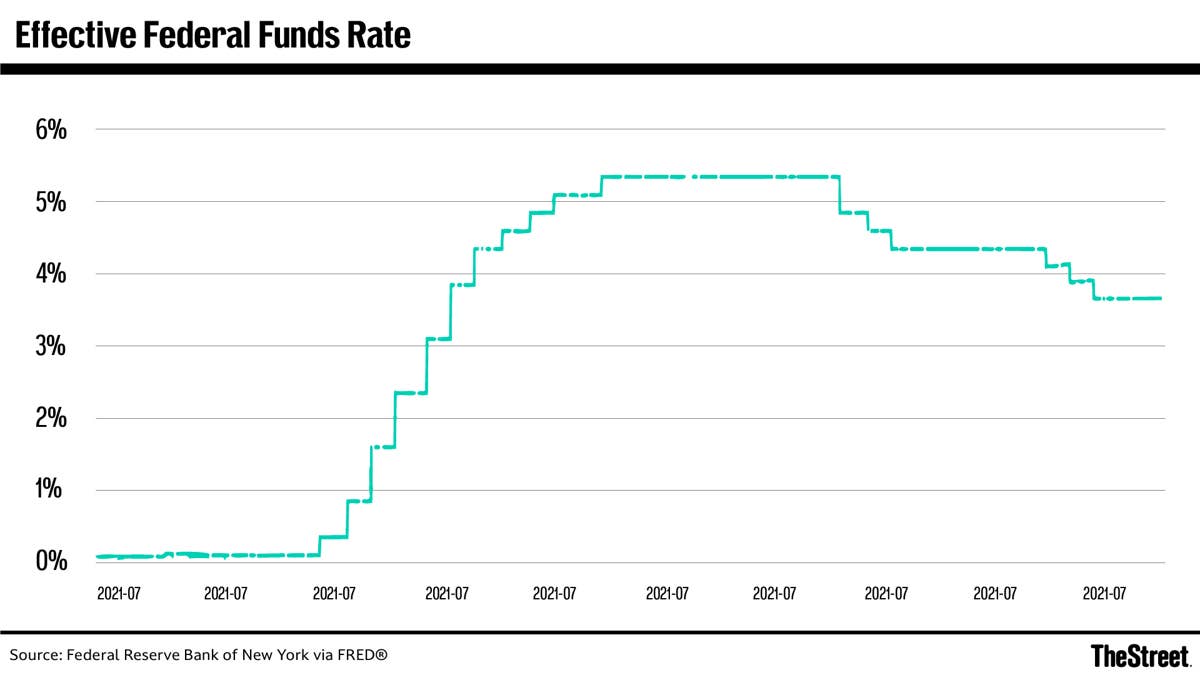
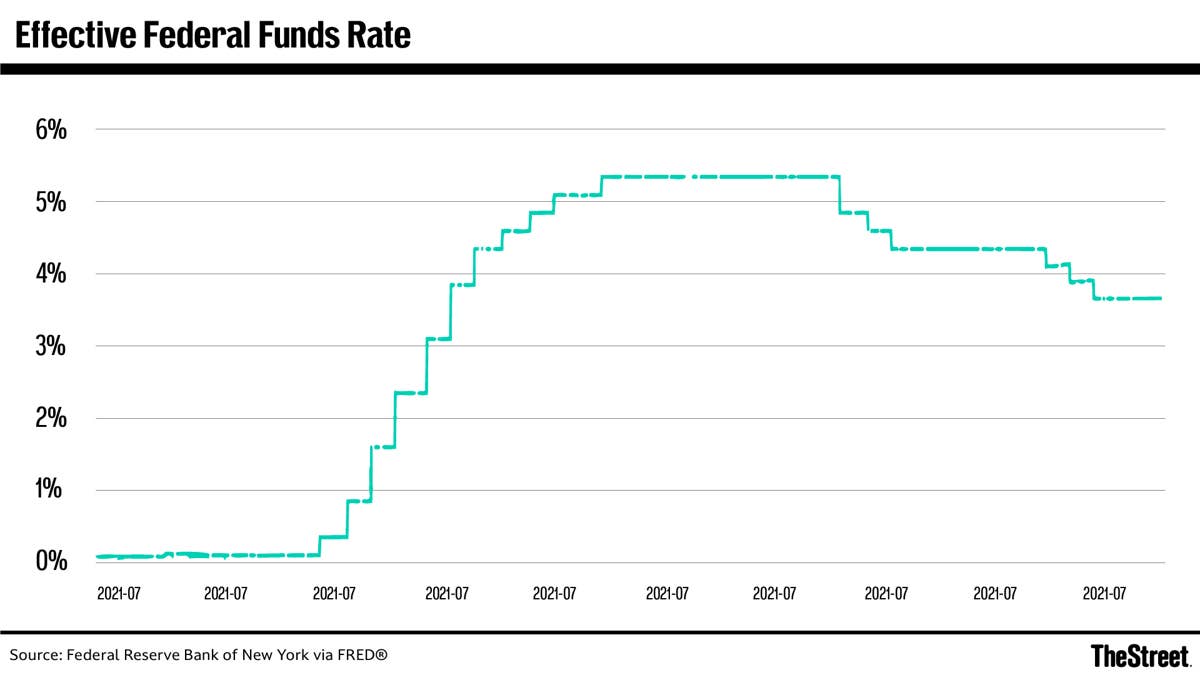
The benchmark Federal Funds Rate is currently 3.50% to 3.75% after the policy-making Federal Open Market Committee held the rate steady after its last two meetings.
The FOMC cut the funds rate by three 25 basis points in its last three meetings of 2025 due to weakening conditions in the labor market.
The next FOMC meeting is April 29.
CME Group’s FedWatch Tool estimates a near 100% probability the panel will vote to continue to hold rates steady.
Fed March ‘dot plot’ called for single 2026 rate cut
The Fed’s March median Summary of Economic Projections or “dot plot” calls for a single 25 basis-point-rate cut in 2026, and an additional 25 basis-point-cut in 2027, the same as the December 2025 forecast.
Fed Chair Jerome Powell noted at the March FOMC press conference the rate cut was not guaranteed, especially if the projected decrease in inflation doesn’t occur.
Futures markets tracked by the CME FedWatch Tool showed April 20 that investors were pricing in no more than a one Fed rate cut in 2026 as the base case with the majority probability showing that rates would remain unchanged.
Fed has been balancing risks to both sides of its mandate
Even before the outbreak of the Iran War, the Fed faced a dilemma from worrisome risks to both sides of its congressional mandate: wobbly unemployment rates and sticky inflation from tariffs.
President Donald Trump and his administration have been demanding the Fed slash interest rates to 1% or less to boost the stagnant housing sector and prevent the overall economy from falling into a recession.
- Lower interest rates support hiring but can fuel inflation.
- Higher rates cool prices but can weaken the job market.
The two goals often conflict in a tricky balance, operate on different timelines and are influenced by unpredictable global events like pandemics and wars.
Goldman Sachs offers 2026 rate-path outlook
Goldman emphasized that policymakers were likely to remain in a “wait-and-see” stance until there is clear evidence that inflation is sustainably moving back toward the Fed’s 2% target.
The February Personal Consumption Expenditures Price Index, the Fed’s preferred measure of inflation, was 2.8%. The March PCE will be released April 20.
Related: Top Fed officials rethink rate cuts as peace talks begin
The Goldman Sachs note warned that risks are two-sided:
- A prolonged conflict or renewed escalation could keep oil prices elevated thus delaying or even derailing rate cuts by reinforcing inflationary pressures.
- A viable peace agreement could accelerate disinflation and allow the Fed to ease monetary policy sooner than currently expected.
Fed’s Waller supports current “wait-and-see” approach for now
Fed officials have been preaching caution about the impact of oil spikes, inflation and tariffs on the U.S. economy since the conflict began at the end of February, tossing aside previous rate-cut forecasts for 2026.
As I reported, this list includes Fed Governor Christopher Waller who said April 17 that monetary policymakers would be open to cutting interest rates again later this year if peace in the Middle East was reached in a timely manner.
“I see a forecast in which underlying inflation would continue to move toward 2%, leaving me cautious about rate cuts now and more inclined toward cuts to support the labor market later this year when the outlook is more steady,’’ Waller said.
Related: Treasury Secretary Bessent just dropped a Fed rate-cut bombshell
#Goldman #Sachs #drops #cautious #signal #Fed #rate #cuts