
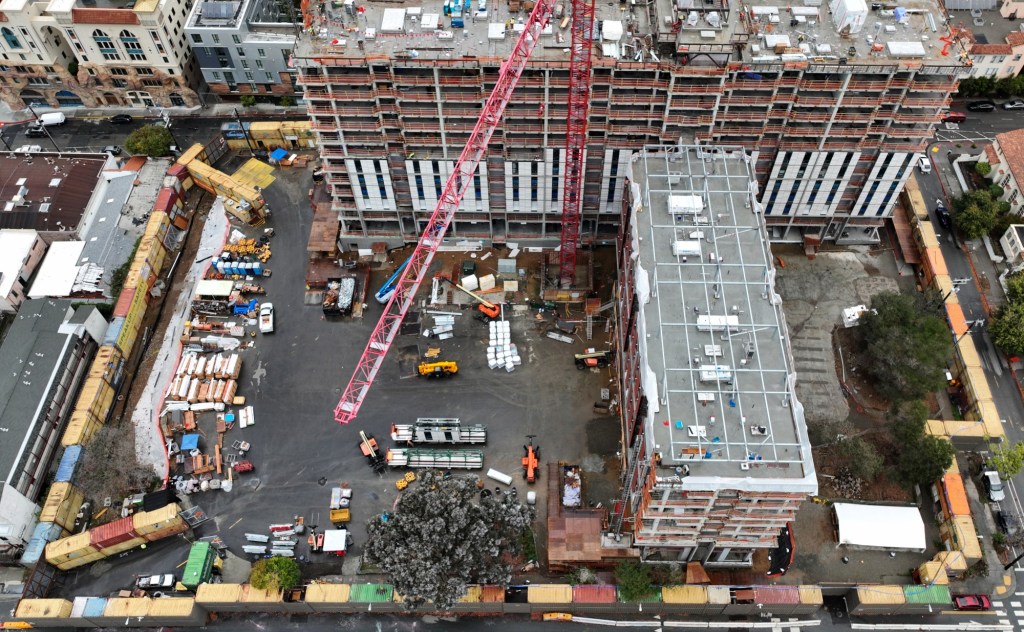

For the past five years, Alameda County residents have paid nearly $1 billion in taxes as part of Measure W to support homelessness services and new housing developments. But after a lawsuit delayed its use for both, funds are just now starting to flow.
Despite the obstacles, Oakland Councilwoman Charlene Wang told this news organization the county hasn’t moved fast enough to distribute the funds.
“I was hoping that the money would be released sooner than what we’re seeing,” Wang said. “We really don’t have time to wait. We’ve got to move with some urgency here. We have a crisis on the streets. We need to move quickly.”
The Board of Supervisors is expected to vote Tuesday on whether to commit $53 million in Measure W funds to 10 affordable housing projects throughout the county. If approved, however, developers will not receive that money until they compete for state funding this year to get their projects shovel-ready.
Meanwhile, more than $700 million of the $800 million raised from Measure W sits in the county’s coffers.
Voters approved Measure W, a half-cent general sales tax, in November 2020. It was projected to raise $1.8 billion over 10 years. The board decided last year that 80% of the money would be allocated specifically to homeless services, while the other 20% would be for other social services such as food security and health care.
Passed with a simple majority, the county began collecting Measure W revenue in 2021, but a lawsuit by the Alameda County Taxpayers Association hamstrung the release of funds soon after.
The association alleged that Measure W was written as a “special tax” to specifically support housing and homelessness, so it required a two-thirds majority to pass. Because of the lawsuit, the county held the taxes in escrow.
When a judge ruled in 2025 the measure was a general tax that the Board of Supervisors could use at their discretion, more than $800 million sat in the fund.
The years of delays came during a particularly unaffordable time in Alameda County. A May 2025 assessment of the county’s affordable housing market by the California Housing Partnership found that renters needed to earn $50.73 per hour to afford the average monthly rent of $2,638.
Jonathan Russell, the county’s director of Housing and Homelessness Services department, said his office has started paying out about $93 million that the board has committed to homeless service providers through the next five years.
The county last year approved spending $33 million through the next two years to provide new shelter beds and another $60 million over the next five years for permanent supportive housing. Having spent the last several months getting the money to start trickling into the county’s services, Russell said, “That’s really fast from our perspective.”
“The spending has started, and the commitments have been made,” Russell said. “This next year or two will be where you naturally see that bell curve get steeper, when more and more dollars flow.”
An issue for the county, Russell said, is that it doesn’t have enough staff to review and process applications for funding. Without enough staff, the distribution of Measure W funds will be cumbersome and slow while the fund accumulates taxes through 2031.
“We don’t have enough staff on board to run the whole thing yet,” Russell said. “But we’ve got enough to get started, so we’re phasing it in. We’re rapidly moving the dollars forward.”
The projects that Russell’s department is funding are for temporary and permanent housing assistance, serving homeless residents and those at risk of being homeless. As far as building new affordable homes goes, however, the process is barely getting started, said Michelle Starratt, director of the county’s Housing and Community Development department.
Her department is responsible for releasing one-time capital funding to build new affordable homes, but she said, “We’re not rushing to release those dollars.” The board’s decision Tuesday and other state and federal factors will need to be known before developers can get their projects closer to the construction phase.
Starratt said her office is anxiously waiting to see whether the Trump administration will curtail funding for homelessness and housing this year before the county decides how to fund capital projects.
“We’re not moving fast on spending that capital,” Starratt said. “We’re not going to get very far if what we’re doing is backfilling the state or backfilling the federal government.”
Capital funds are split between the county’s regions based on the Point-In-Time homelessness survey, with 59% expected to go to Oakland, 21% to Berkeley and Richmond, 9% to Livermore and Dublin, 8% to Hayward, San Leandro and Castro Valley, and 4% to Fremont and Union City.
The largest of these projects is the People’s Park Supportive by UC Berkeley, an $8 million 1,100-unit development with below-market rate student housing and an additional 100 supportive apartments for formerly homeless individuals.
In downtown Livermore, developers behind the Eden Housing project are expected to receive $6 million in Measure W funding to help construct 130 units of affordable housing, according to HCD. The project has been delayed for years by failed legal challenges.
Livermore Mayor John Marchand said it’s “heartening” to see an influx of county money toward the long-awaited project. Like other city leaders, Marchand also said he would like to see Measure W money hit the streets sooner rather than later.
“There’s a tremendous need throughout the region. The best time to release these funds is as soon as possible,” Marchand said. “It’s going to take a group effort. Everybody’s got to be working together on this. As I’ve said many times, there is no silver bullet to end homelessness.”
Hayward Mayor Mark Salinas said he would also like to see a speedy release of the funds, but the city’s affordable housing and homelessness projects are still empty-handed.
“We need less red tape,” Salinas said. “We want to work with the county, and like any other large-scale rollout of funds to solve a problem, we want to make sure that it is transparent. We want to make sure that the process is fair, equitable and that the money gets to the people.”
The board is expected to hold another work session on March 10 to further plan the future of Measure W spending. Board of Supervisors President David Haubert said money from the measure will be dispersed “equitably, to where everybody gets their share.”
The county has more deliberation ahead of the release of millions of dollars in funding.
“We’re still in the planning phase,” Haubert said. “We want to be extremely mindful.”
#Alameda #Countys #Measure #money #finally #starts #hitting #streets #years #delays