

Intel just delivered one of the most surprising earnings beats in the semiconductor sector this year. Revenue came in at $13.58 billion, well above the $12.32 billion analysts had expected. EPS hit $0.29, beating the consensus estimate of $0.01 by $0.28, according to Intel’s Q1 press release.
Still, not everyone on Wall Street is convinced the stock deserves to be where it is. The gap between the analysts who see a genuine turnaround and those who remain skeptical is wide, and it’s getting wider.
The call HSBC just made on Intel
HSBC made the boldest call on Intel. The bank upgraded the stock to buy from hold and raised its price target to $95 from $50, nearly doubling it in a single move, according to GuruFocus.
Analyst Frank Lee said the upgrade was driven by rising demand for server processors, which he now sees as more important to Intel’s near-term outlook than its foundry ambitions.
More Wall Street
- JPMorgan resets S&P 500 price target for the rest of 2026
- Vanguard challenges the S&P 500 as a one-stop strategy
- Goldman Sachs resets Broadcom stock forecast
He expects Intel to ship 20% more server CPUs in both 2026 and 2027, with average selling prices also rising 20% in 2026 and another 10% in 2027 in a tight supply environment, GuruFocus noted.
HSBC’s Q2 revenue estimate for Intel stands at $14.2 billion, roughly 9% above Wall Street consensus, GuruFocus added. The $95 target is based on a 2027 earnings framework and excludes Intel Foundry from the core valuation. That signals the bank is making its case on Intel’s established chip business, not betting on every part of the company’s long-term strategy at once.
For context, Intel also reported strong Q2 guidance of $13.8 billion to $14.8 billion in revenue with EPS guidance of $0.20, well above the consensus of $0.06, according to Intel’s Q1 press release.
Why server CPUs are the story right now
The excitement around Intel is not just about one quarter. It is about what is happening structurally in the server CPU market, and why that matters for a company that has been fighting to reclaim credibility for years.
As agentic AI workloads grow, the compute mix is shifting. The GPU-to-CPU ratio that defined the pretraining era is giving way to something closer to parity as real-time agent workloads run more heavily on CPUs. Intel is directly in the path of that shift, and the Q1 results confirmed the demand is already showing up in orders and pricing.
Related: Bank of America resets Intel stock price target after earnings
Morgan Stanley analyst Joseph Moore raised his Intel price target to $56 from $41 ahead of earnings, citing stronger server demand and higher expected earnings. His team now projects 30% year-over-year revenue growth for Intel’s data center segment in 2026, reaching $21.8 billion.
“It has been clear for a while that CPUs are becoming a more substantive part of the AI surge, as real-time agents built by AI are running on CPU,” Moore’s team wrote, according to Investing.com.
Moore kept his equal weight rating even as he raised the target. He also upgraded Intel to overweight after earnings, lifting the target further to $73, according to Investing.com. But he named Micron and SanDisk as his preferred way to play CPU strength, noting they offer better risk-reward than Intel directly.
Where Bank of America stands on Intel
Not every analyst is celebrating. Bank of America analyst Vivek Arya reiterated an underperform rating on Intel after earnings, raising his price target to $56 from $48. His valuation is based on a sum-of-parts framework that values the internal chip business at $45 and the external foundry segment at $11, in line with competitive peers.
Arya raised his 2026 EPS estimate by 66% to $1.04 and his 2027 estimate by 39% to $1.58, acknowledging the earnings beat. But his concern remains the foundry business. He cited lower-than-expected yields and ramps on Intel’s 18A and upcoming 14A nodes, and the continued lack of a major external wafer-processing customer, as reasons to stay cautious.
Key analyst moves on Intel after Q1 2026 earnings:
- HSBC: Upgraded to buy from hold by analyst Frank Lee, price target raised to $95 from $50, according to GuruFocus
- Morgan Stanley: Upgraded to overweight by analyst Joseph Moore, target raised to $73 from $56, Investing.com confirmed
- Bank of America: Underperform reiterated by analyst Vivek Arya, target raised to $56 from $48
- Wells Fargo: Raised target to $85, according to GuruFocus
- Royal Bank of Canada: Raised target to $80, sector perform rating maintained, GuruFocus noted
- Intel Q1 2026 EPS: $0.29, beating consensus of $0.01 by $0.28, Intel’s Q1 press release indicated
- Intel Q1 2026 revenue: $13.58 billion, versus analyst estimate of $12.32 billion, according to Intel’s Q1 press release
- Intel Q2 2026 guidance: Revenue $13.8 billion to $14.8 billion, EPS $0.20 versus consensus $0.06, Intel’s Q1 press release confirmed
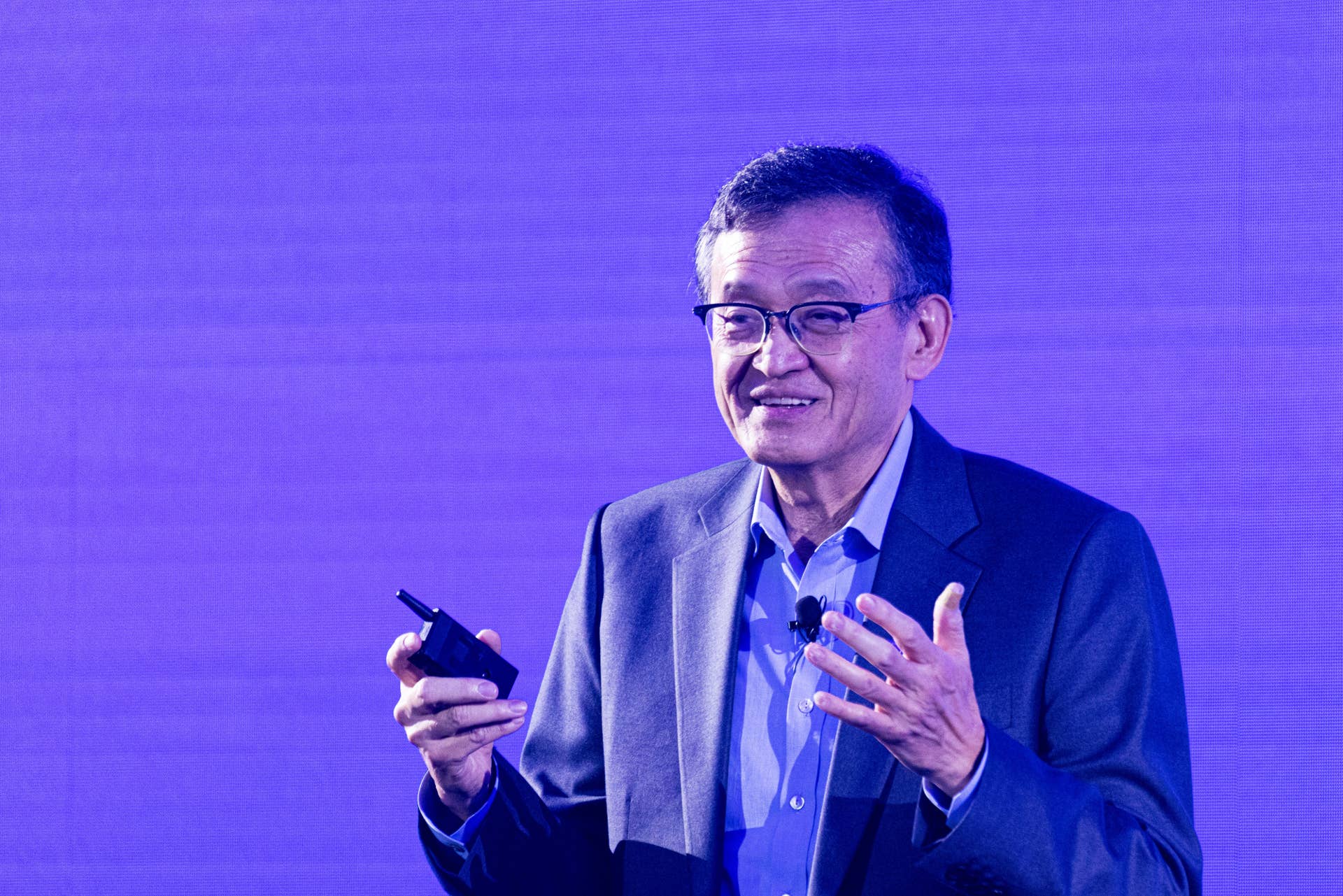
Chih/Getty Images
Why the Street is still divided on Intel
HSBC’s $95 target is the most aggressive call on Intel right now. It sits far above the analyst consensus, which remains clustered much closer to the mid-$50s, even after post-earnings upgrades. That gap reflects a genuine disagreement about what Intel’s earnings recovery actually proves.
The bulls, led by HSBC, see the server CPU surge as structural. They believe Intel can sustain higher shipment volumes and pricing for at least two years, which would justify a much richer valuation than the market currently assigns.
The bears, including Bank of America, acknowledge the strong quarter but argue the foundry problem has not gone away. Yields at Intel Foundry, while improving, remain below target.
Without a major external wafer customer, the foundry business continues to be a drag on the overall financial profile. And the stock, having already rallied sharply, may already be pricing in more good news than the fundamentals can yet support.
What investors should watch from here
The debate between $56 and $95 will not be settled by one quarter. It will be settled by execution over the next several earnings cycles.
The key variables are clear. Can Intel sustain 20% growth in server CPU shipments through 2027? Will pricing hold as competitors respond? And can the foundry business find its first major external customer before investor patience runs out?
HSBC’s call is a statement that Intel’s core business is improving fast enough to justify a major re-rating. Bank of America’s call is a reminder that improvement and completion are not the same thing. For now, both views are on the table, and the next few quarters will determine which one ages better.
Related: Analysts drop verdicts on AMD, Intel, and ARM
#HSBC #resets #Intel #price #target #rest