
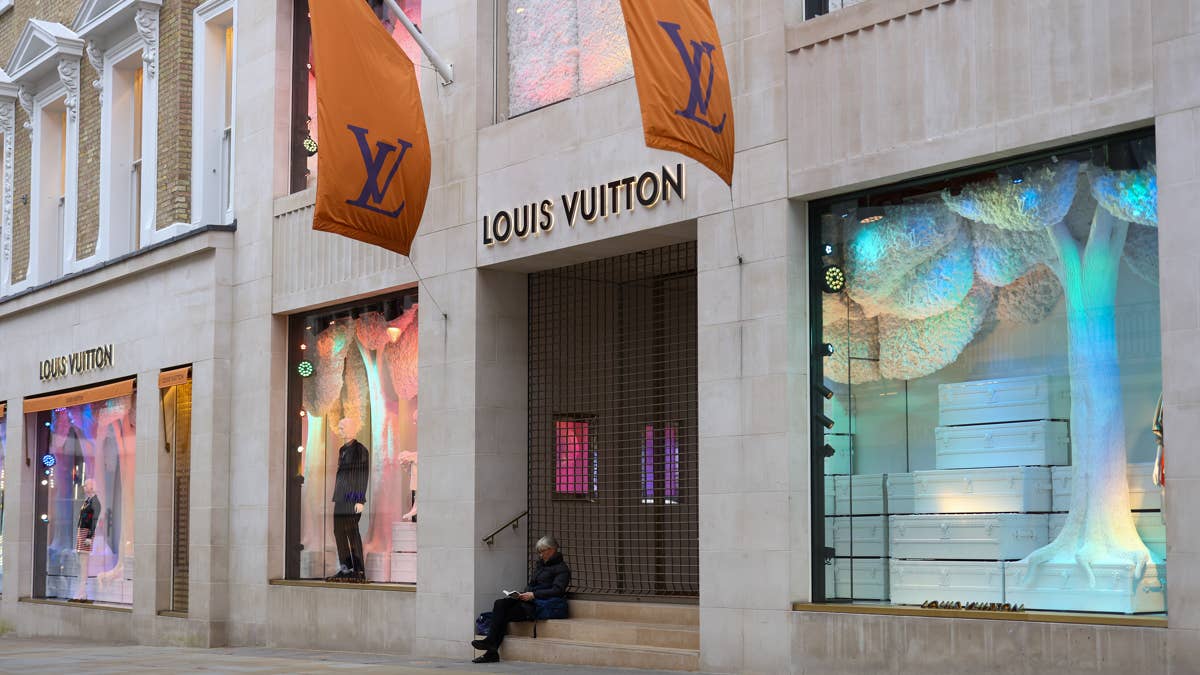
LVMH Chairman and CEO Bernard Arnault has issued a stark warning about the global economic risks posed by the escalating tensions in the Middle East. He cautioned that prolonged conflict and failure to reach a resolution could trigger what he described as a “world catastrophe.”
His comments followed LVMH’s first-quarter 2026 earnings report, which showed that geopolitical instability in the region is already weighing on performance. The company said reduced demand in the Middle East during March negatively impacted organic revenue growth by approximately 1% for the quarter.
“Either it’ll be a world catastrophe with very serious and very negative economic impact — in which case, who can say how 2026 will unfold — or it will be resolved more rapidly in some shape or form that we all hope for, even if it doesn’t seem to be easy, in which case, business will recover and resume their normal course,” said Arnault according to a company translation reported by CNBC.
LVMH’s weak results reflect crisis and structural slowdown
LVMH reported a 6% year-over-year decline in total revenue, with all business segments posting negative growth. While the Middle East disruption contributed to the downturn, the results also highlight a broader slowdown in global luxury demand.
The company has been dealing with weaker sales and softer store traffic for several years. In fiscal year 2025, total revenue fell 5% year over year, with most divisions posting declines, suggesting that current pressures extend beyond short-term geopolitical instability.
Although the Middle East represents a small share of LVMH’s global revenue, it plays an important role, particularly in high-margin luxury retail.
The company groups the region into its “other markets” segment, which accounted for about 14% of total revenue as of 2024, according to LVMH’s 2026 Annual General Meeting.
On a broader scale, the Middle East makes up roughly 6% of the global luxury market but is among the fastest-growing regions, with annual sales growth estimated at 6% to 8%, according to Bernstein Research.
The disruption doesn’t just reduce sales; it removes one of the industry’s key expansion engines.
Store closures across the Middle East signal deeper disruptions
Escalating tensions have forced LVMH to temporarily close stores across parts of the Middle East earlier this year. While some locations have since reopened, demand remains significantly weaker, particularly in tourist-heavy retail destinations that once drove key high-margin sales.
LVMH is not alone in scaling back operations. Several global retailers have taken similar measures.
- Kering Group: Temporarily closed stores across Gucci, Daint Laurent, Bottega Veneta, and Balenciaga in the UAE, Kuwait, Bahrain, and Qatar, Reuters confirmed.
- Apple: Shut down all its retail stores in the UAE, TheStreet reported.
- Amazon: Closed its fulfillment center in Abu Dhabi and suspended deliveries, Business Insider noted.
- Chalhoub Group: Closed Verace and Jimmy Choo locations in Bahrain, with many other regional stores operating with voluntary staff, Drapers reported.
The pullback underscores how quickly geopolitical risks can disrupt even the most resilient retail markets.
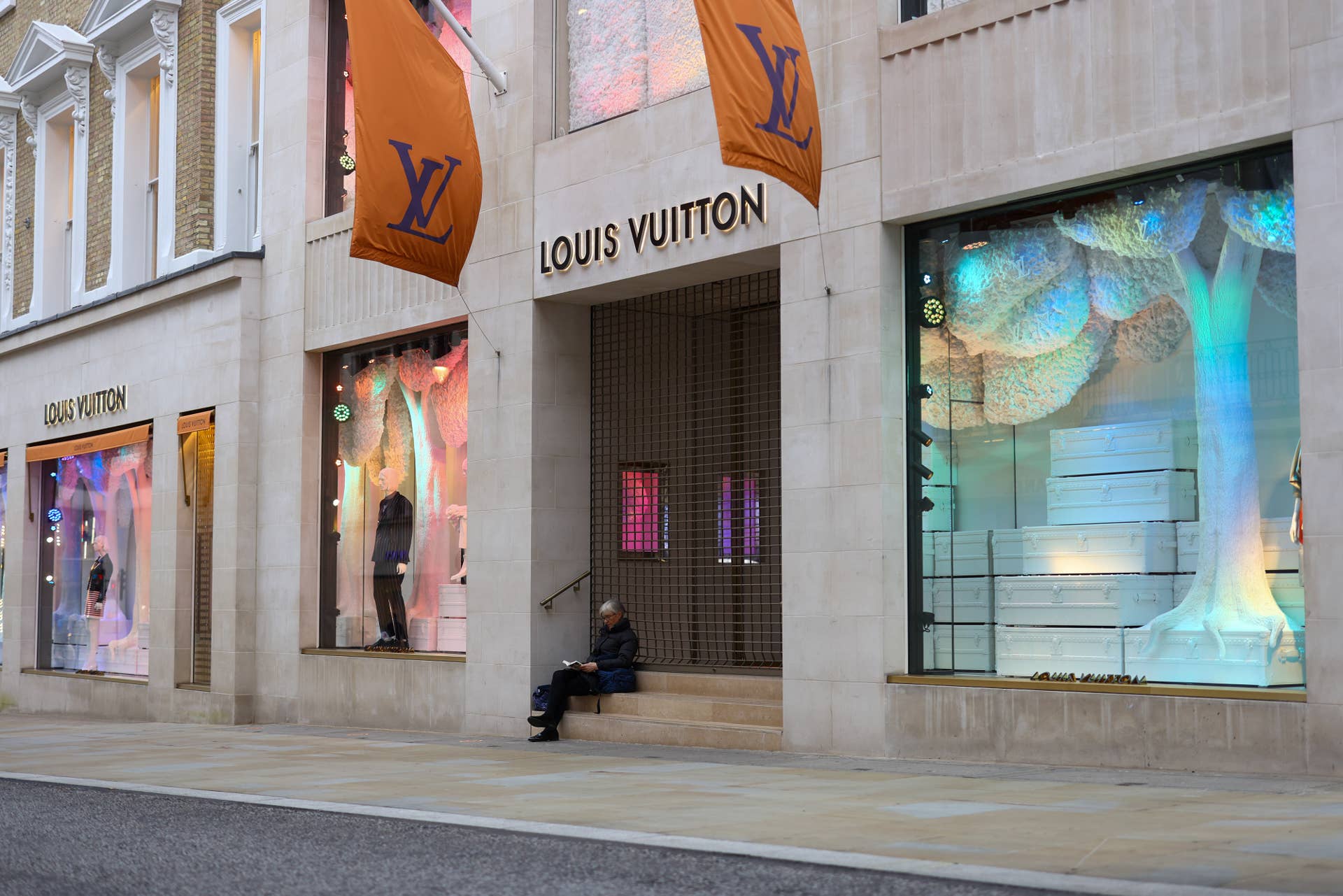
Simon Dawson/Bloomberg via Getty Images
Conflict-driven slowdown hits tourism and retail
The closures follow growing conflict after military strikes involving the U.S. and Israel targeting Iran on Feb. 28, 2026. Governments across the region responded with precautionary measures, including remote work policies and temporary school closures.
At the same time, security concerns, aerial attacks, and flight cancellations have begun to weigh on international travel, a critical driver of luxury consumption in the region.
The UAE’s retail sector was valued at $145.3 billion in 2024 and is projected to reach $227.1 billion by 2033, according to IMARC Group. Luxury spending in the region reached approximately $4 billion in 2023, supported by high disposable incomes and strong visitor traffic.
“If you assume that it’s a $5 billion to $6 billion (travel retail) market and let’s say it’s going to be shut down for a month, we are talking about hundreds of millions of dollars that are definitely at risk,” Kearney Senior Consumer and Retail Consultant Victor Dijon told Reuters.
A challenging outlook for luxury
Industry analysts warn that the duration of the conflict will be the defining factor.
“If the war was to end relatively shortly, this would not be a huge issue for the global luxury goods in the states,” Bernstein Senior Analyst of Luxury Goods Luca Solca told Fortune. “If the war was to continue, then I think if oil and gas prices were staying high, then I think there would be a higher probability of a recession.”
That distinction is critical. A short-lived disruption would likely result in deferred demand, while a prolonged conflict could trigger secondary effects from reduced tourism to weaker consumer spending and rising input costs.
Industry-wide pressures across retail
LVMH’s challenges are not isolated. Executives across the sector are reporting similar pressures tied to declining tourism and reduced foot traffic.
“There’s not many tourists or less tourists shopping. That’s clear. That has an effect on the shopping centers and so forth and for all the brands,” Hugo Boss CEO Daniel Grieder said during an earnings call.
More retail business coverage:
- H&M brings back popular designer collab after 20 years
- Apple closes all stores in fast-growing market
- Popular retailer drops expansion plans
According to McKinsey & Company’s State of Fashion 2026 Report, the sector is expected to grow at a low single-digit rate this year.
Macroeconomic uncertainty, tariff pressures, and conscious consumer sentiment, particularly in the U.S., continue to shape purchasing behavior.
A fragile luxury goods growth model
The Middle East conflict shows that its reliance on a small number of high-growth regions and globally mobile consumers is a deep vulnerability in the luxury sector.
When tourism flows weaken or geopolitical risks rise, the impact is amplified across retail, hospitality, and luxury goods simultaneously.
For LVMH and its rivals, the trajectory of the current conflict is not just a regional issue. It is a test of how resilient the global luxury model really is.
Related: 72-year-old mall retailer to close more stores in 2026
#LVMH #CEO #warns #fallout #Middle #East #tensions