
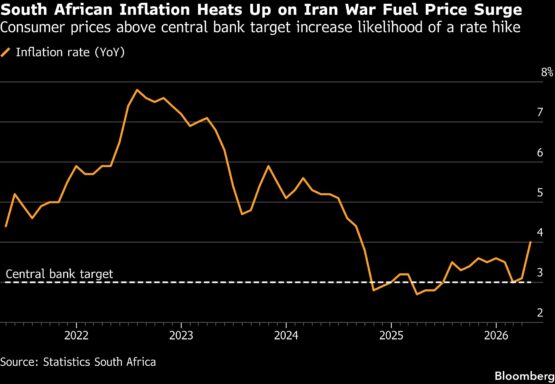
South African annual inflation accelerated to the highest level in 20 months in April, driven by sharp increases in domestic fuel costs stemming from the Iran war.
Consumer prices rose 4% compared with 3.1% in March, Pretoria-based Statistics South Africa said in a statement on its website on Wednesday. The increase matched the median estimate of 17 economists in a Bloomberg survey.
Read:
Oil holds decline as traders weigh Trump’s latest Iran threats
Trump threatens Iran with ‘big hit’ if there’s no deal soon
The data are the first to capture the steepest surge in pump prices since inflation targeting was introduced in South Africa in 2000. The central bank aims to keep inflation at 3%, with a 1 percentage point tolerance band on either side.
ADVERTISEMENT
CONTINUE READING BELOW
Fuel prices rose by 18.2% from March, feeding through into higher transport costs. The passenger transport services index within the CPI basket increased by 3.1% between March and April — the largest monthly rise since July 2022 — as airfares rose by 24.5%. That was the biggest monthly increase in ticket prices since March 2008.
The price of Brent crude has climbed about 50% since the US and Israel attacked Iran in late February, effectively closing the Strait of Hormuz, a key waterway for about a fifth of the world’s seaborne oil and liquefied natural gas. The jump will also impact South African inflation this month.
Forward rate agreements, used to speculate on borrowing costs, are pricing in a quarter-point increase when South African policymakers conclude their rate-setting meeting on May 28.
Economists polled by Bloomberg ahead of the release also expect a hike of that size to steer inflation back to target, taking the policy rate to 7%. That would mark the first rate increase in three years.
ADVERTISEMENT:
CONTINUE READING BELOW
Governor Lesetja Kganyago said earlier this month that although the central bank can’t do much about higher inflation right now, it’s committed to getting the rate back to 3%, “just where we had it before the shock hit.”
Core inflation, a measure of underlying price pressures, accelerated more than expected to 3.6% in April from 3.2% in the previous month.
Countries around the world are grappling with inflation shocks triggered by the conflict, rolling out measures from fuel rationing to tax cuts and price controls.
© 2026 Bloomberg
#Inflation #hits #fuel #shock #bites