
Global fishing company Oceana has protected its profits by paying off debt and maintaining a diverse range of businesses. This strategy shielded the group from a sharp drop in global market prices.
Announcing its unaudited interim financial results for the six months ended 31 March 2026, the Lucky Star brand revealed a 7.7% increase in headline earnings per share (Heps) to 349.8 cents.
The earnings growth was achieved despite a 6% contraction in group revenue to R4.9 billion, down from R5.2 billion in the comparative period.
A sharp drop in global fishmeal and fish oil prices, coupled with a stronger average rand exchange rate that negatively impacted foreign translation earnings by R18 million, dragged heavily on the group’s African and US industrial operations.
However, a substantial R45 million decrease in net interest expenses, unlocked by aggressive capital debt repayments, successfully defended the group’s bottom line.
The leverage transformation
Oceana executed an expansive cash generation cycle during the half-year, with cash generated from operations skyrocketing to R1.41 billion, up from just R10 million in the prior period.
ADVERTISEMENT
CONTINUE READING BELOW
This working capital release allowed the group to clear out massive chunks of its debt facilities across both South African and US operations.
The group’s net debt profile declined significantly to R1.73 billion, down from R3.49 billion. This balance sheet engineering saw Oceana’s crucial net debt-to-Ebitda leverage ratio drop to a highly conservative 1.1 times, down from 2.2 times.
Read:Oceana holds revenue steady as Lucky Star offsets fish oil slump
Oceana CEO Neville Brink underscored that building defensive safeguards into the asset base remains the group’s primary operational focus: “Investing in our fleet and factories, paying down debt and controlling what we can has ensured resilience in this unpredictable environment.”
Lucky Star and Wild Caught Seafood lead the rebound
The financial resilience was heavily supported by internal operational performance, which allowed high-performing sectors to bridge the shortfall of the industrial processing division:
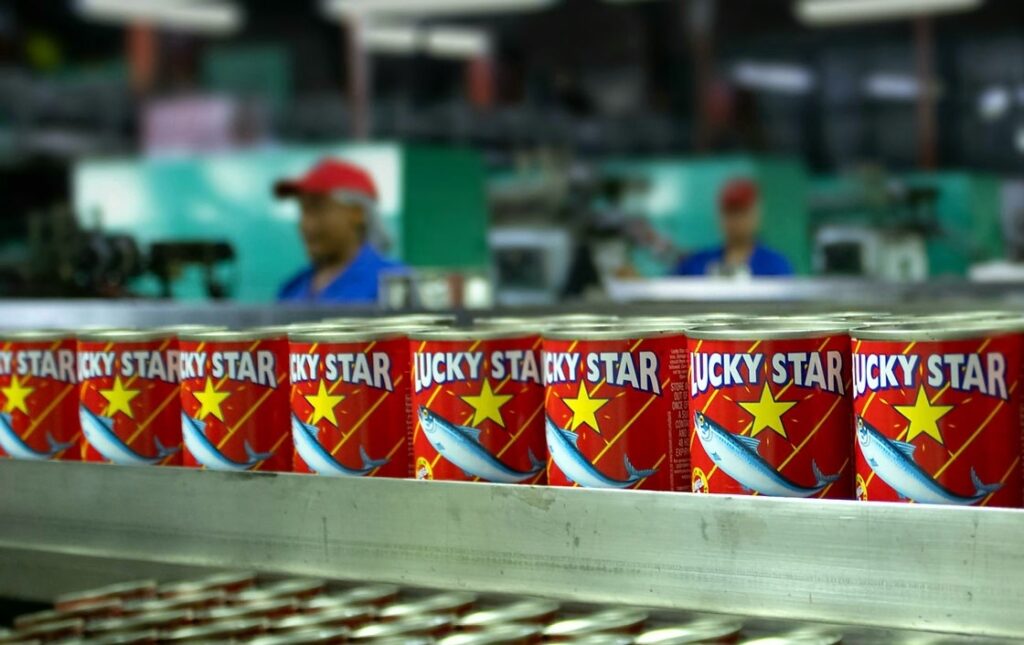
- Lucky Star Foods: Delivered a strong, margin-driven operating profit increase of 40.6% to R324 million. Canned fish volumes remained stable while canned meat volumes surged on heavy consumer demand, taking overall sales to 5.1 million cartons. The performance was further supported by lower fish procurement costs and a beneficial sales mix.
- Wild Caught Seafood: Operating profit surged by over 100% to R204 million. The hake operations logged a 10% volume increase to 6 133 tons, driven by fleet reliability upgrades that added active days at sea. Horse mackerel sales grew 13% to 21 962 tons, benefiting from better South African catch rates and a N$25 million fuel-hedging gain in Namibia.
- Fishmeal and Fish Oil (Africa & USA): Africa collapsed into a R139 million operating loss as a lack of an initial anchovy total allowable catch (TAC) caused sales volumes to plunge 90%. Meanwhile, the US Daybrook operations suffered a 26.7% decline in operating profit to R276 million due to weaker US Dollar pricing for fish oil and meal.
Capital reinvestment and cyclical outlook
Oceana maintained its interim dividend at an unchanged 110 cents per share. To sustain the long-term expansion of its wild caught fleet, capital expenditure during the period included a strategic deposit for a newly acquired dual-purpose vessel.
ADVERTISEMENT:
CONTINUE READING BELOW
The ship was delivered in May 2026 and will undergo a comprehensive refit to target both hake and horse mackerel fisheries, scheduled to become fully operational in January 2027.
Read: Brimstone sells 9.2% Oceana stake for R633m
Looking forward, the industrial division is positioned for a second-half pricing rebound. Global fishmeal and fish oil values are facing upward pressure following a massive 36% reduction in the Peruvian anchovy quota and emerging supply constraints linked to the El Niño climatic effect.
Brink remains highly confident that the group has established the necessary structural foundations to optimise performance during upcoming market upturns.
“Following investments in assets and moves to reduce unpredictability in the business in recent years, Oceana is in a good position to capitalise on cyclical improvements in resource availability, market demand and stronger pricing,” he said.
Read: Oceana slashes dividend as earnings fall
#Oceana #boosts #earnings #debt #reduction #cushions #global #price #slump