
Quantum Foods reported higher interim earnings for the six months ended 31 March 2026, supported by lower feed costs, stronger poultry demand and improved performances in its African operations, even as lower egg prices weighed on parts of the business.
The poultry producer increased headline earnings by 17% to R176 million, while headline earnings per share rose 16% to 86.5 cents from 74.8 cents.
Read:
Calls grow for Vat-free chicken
Quantum Foods rebounds sharply
Operating profit climbed 18% to R241 million from R205 million.
The board declared an interim gross cash dividend of 22 cents per share, compared with none a year earlier.
Quantum’s share price
Revenue declined 5% to R3.43 billion from R3.6 billion.
ADVERTISEMENT
CONTINUE READING BELOW
Quantum notes trading conditions in South Africa were generally more favourable than a year earlier, helped by higher demand for poultry products, lower feed input costs, reduced electricity disruption and ongoing recovery from earlier outbreaks of highly pathogenic avian influenza (HPAI).
Demand for poultry was also supported by reduced red meat supply following outbreaks of foot-and-mouth disease.
Listen/Read: State mismanagement drives worst foot-and-mouth crisis in SA history
The group itself was affected by an HPAI outbreak in early October 2025 at a Western Cape layer farm, which affected about 153 000 hens. It said no further outbreaks occurred during the reporting period, supporting improved throughput, flock stability and cost recovery.
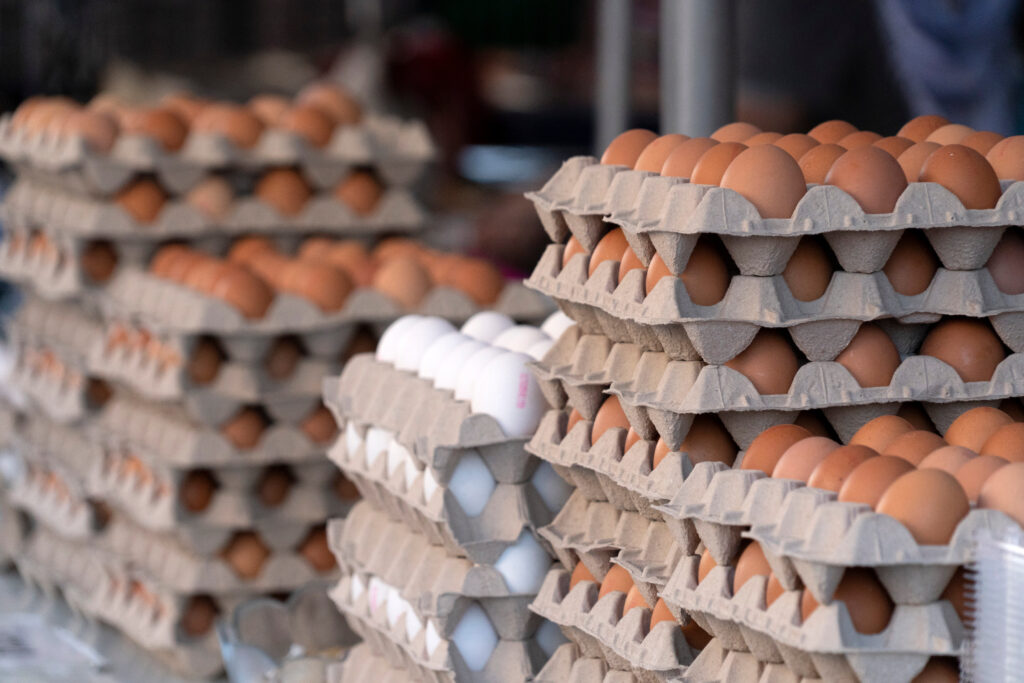
The egg division remained under pressure from lower prices. Although egg supply increased by about 4.4%, average egg selling prices fell by roughly 8.8%, which the company attributed mainly to a larger national layer flock and higher market egg availability.
External revenue in the segment declined to R584 million from R615 million, while operating profit before capital items dropped to R42 million from R72 million.
Lower feed costs helped cushion the impact of softer prices.
Quantum says average yellow maize prices declined more than 30% during the period, while the landed cost of soya bean meal also decreased. However, the strengthening of the rand against the US dollar delayed the full benefit of lower raw material prices.
ADVERTISEMENT:
CONTINUE READING BELOW
Outlook
Looking ahead, Quantum warns that the second half of its financial year is expected to be “significantly more challenging” due to the ongoing Middle East conflict and its impact on global supply chains and costs.
The group also cautions that higher fuel costs are expected to raise both its operating costs and pressure consumer disposable income.
However, feed input costs, excluding the immediate impact of higher fuel costs and medium-term impact of increased fertiliser costs, are expected to remain relatively low in the short term, supported by sufficient grain availability and stable international commodity prices, the group notes.
Egg prices in South Africa are expected to remain under pressure, though, as national flock levels remain elevated.
Quantum adds that HPAI remains a major operational risk for the poultry industry, with no commercially viable vaccination protocols yet agreed between the industry and government.
#Quantum #Foods #lifts #interim #earnings #declares #dividend