
Every generation of Wall Street workers learns the same lesson the hard way. The bank you joined is rarely the bank you retire from. Roles get reshuffled, divisions get sold off, and the career path that looked rock-solid on day one almost never matches the one that pays out at year 30.
For decades, the safe play inside a giant like JPMorgan Chase (JPM) was simple. Learn the products, build a book of business, climb the ladder. The senior bankers who shepherded clients through deals, financings, and downturns were the ones who got promoted, paid, and protected when the cycle turned.
That model still works. But it is being quietly rewritten in real time, and the man running the rewrite has spent the past few years warning anyone who would listen that the next decade in finance would look nothing like the last.
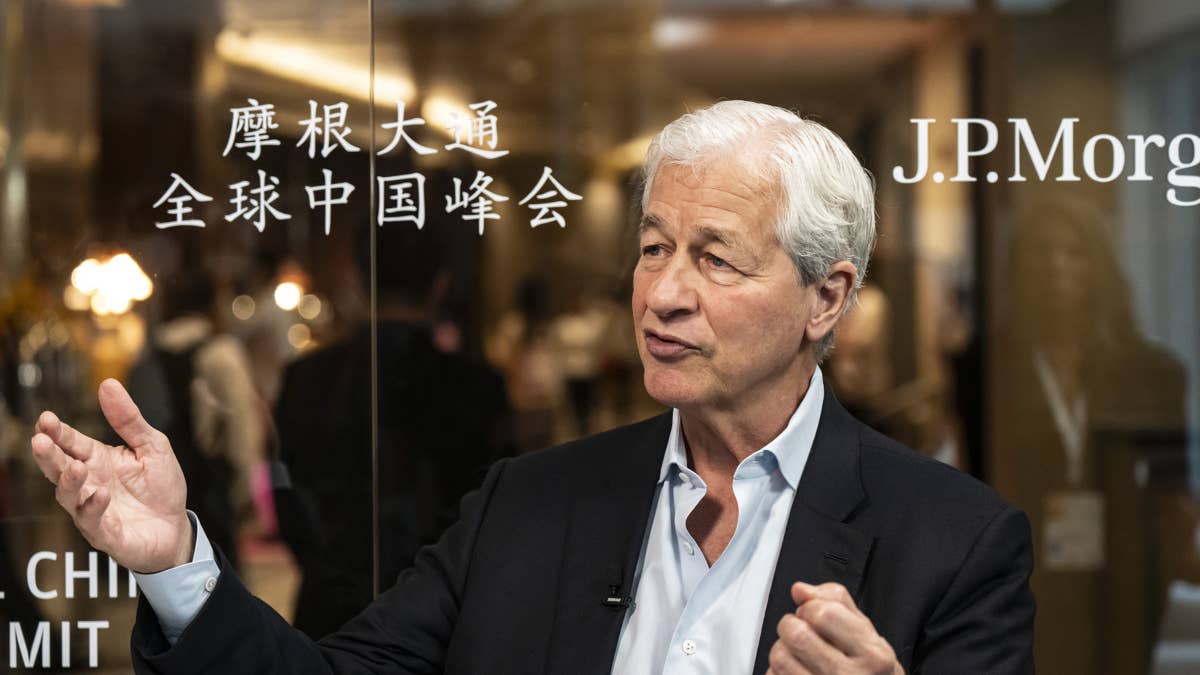
Now Jamie Dimon has put a sharper edge on what he means. The JPMorgan chief executive told Bloomberg Television that the bank will hire more artificial intelligence specialists and fewer traditional bankers in certain categories as automation accelerates across Wall Street.
Jamie Dimon said JPMorgan plans to reduce headcount, shift hiring
Speaking at JPMorgan’s China Summit in Shanghai on May 21, Dimon was direct about where headcount goes next.
“I think it will reduce our jobs down the road,” he said in the interview, according to Bloomberg.
“There will be all different types of jobs, and I think we will be hiring more AI people and fewer bankers in certain categories, and it will make them more productive,” Dimon added.
More AI:
- Micron sits at the center of a red-hot chip rally
- IBM CEO sends blunt message on AI and quantum computing
- Anthropic CEO makes shocking admission about AI
Dimon’s framing matters. He is not talking about a sudden wave of pink slips. He is talking about a steady reshaping of who gets a job offer in the first place, while existing staff get retrained, redeployed, or pushed toward early retirement.
JPMorgan’s annual attrition runs at roughly 10%, or about 25,000 to 30,000 employees a year, which gives leadership real room to shift the mix without dramatic layoffs, reported Bloomberg.
When I look at what JPMorgan has been quietly building over the past 18 months, the math behind Dimon’s comment becomes obvious. The bank’s tech budget sits near $20 billion, with roughly $2 billion of that earmarked specifically for AI, reported Fast Company. JPMorgan has also started tracking and ranking its engineers on internal dashboards based on how heavily they use AI tools.
That is not a bank trying to manage AI on the side. That is a bank rebuilding its operating model around it.
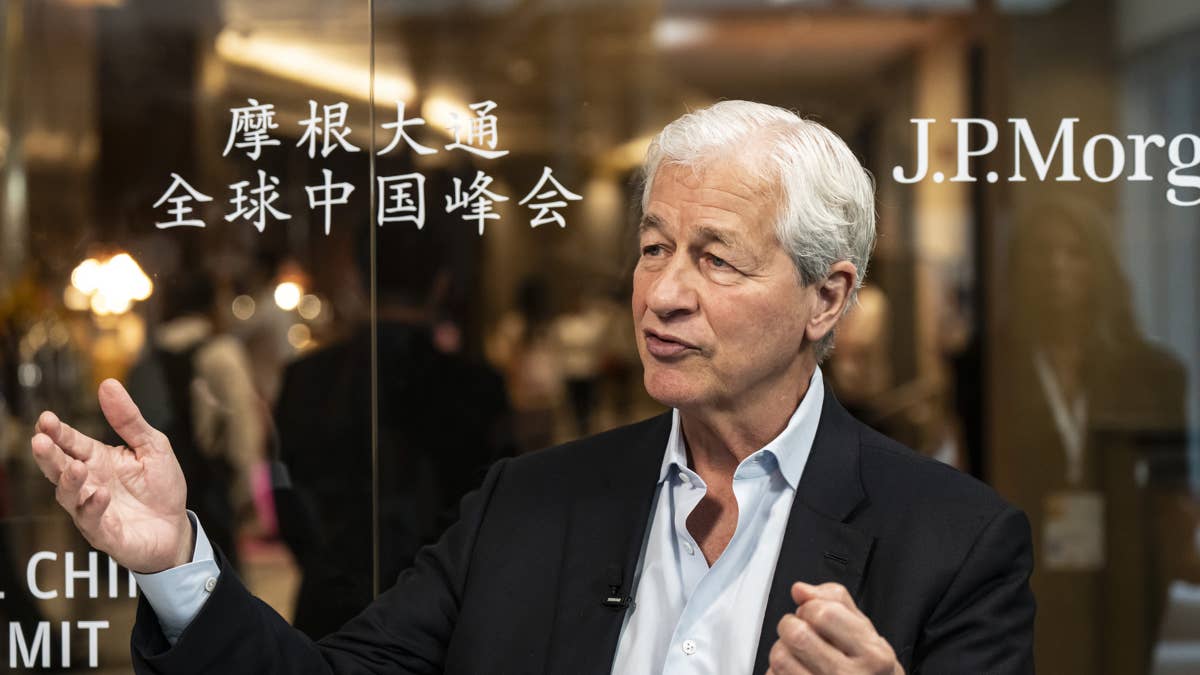
Photo by Bloomberg on Getty Images
Why JPMorgan is rewiring its hiring around AI
Dimon is not the only Wall Street chief making this call. He is just the loudest.
Wells Fargo (WFC) CEO Charlie Scharf said in December that the bank expected fewer employees in 2026 than 2025, with AI cited as a major reason.
Related: JP Morgan CEO has stark message for investors on stocks
Generative AI tools have already made the bank’s engineering teams “30% to 35% more efficient in terms of writing code today,” Scharf said, according to Reuters.
Across emerging markets, Standard Chartered chief executive Bill Winters has been even more blunt, telling staff the bank is replacing “lower-value human capital” with technology and eliminating 8,000 support roles over the next four years, reported Bloomberg.
A few data points stand out when I run them together:
- JPMorgan Chase: 318,153 employees as of September 2025, with annual attrition of about 25,000 to 30,000, Bloomberg noted.
- Wells Fargo: 275,000 employees in 2019 down to about 210,000 by Sept. 30, 2025, according to Reuters.
- Standard Chartered: 8,000 support roles slated to be cut over the next four years, Bloomberg confirmed.
- Six major U.S. banks: Combined $47 billion in a recent quarter, up 18%, while shedding 15,000 employees collectively, Entrepreneur reported.
- Global banks: Up to 200,000 jobs at risk over the next three to five years, according to Bloomberg Intelligence.
Tomasz Noetzel, the senior analyst who authored the Bloomberg Intelligence report, told Bloomberg that “any jobs involving routine, repetitive tasks are at risk,” adding that AI “will not eliminate them fully, rather it will lead to workforce transformation.”
That is the polite version of Dimon’s same point.
What the AI hiring shift means for your money
For consumer-investors, the AI banking story has two sides, and they pull in opposite directions.
On the equity side, Bloomberg Intelligence forecasts that AI could lift bank pre-tax profits by 12% to 17% by 2027, adding as much as $180 billion to the sector’s collective bottom line. Eight in 10 surveyed executives expect generative AI to boost productivity and revenue by at least 5% over the next three to five years, according to Bloomberg.
In plain English, that is a strong tailwind for the same megabank stocks held by every major S&P 500index fund and most retirement target-date portfolios. The earnings power inside your 401(k) is quietly being supercharged by what is happening to the people on these banks’ payrolls.
On the household side, the picture is less comforting. Citi previously found that about 54% of banking roles carry a high likelihood of AI displacement, the highest exposure of any sector studied, the Bloomberg Intelligence report noted.
What stood out to me when I lined those numbers up was the speed. Wells Fargo alone has shrunk by roughly 65,000 employees in six years. Six of the country’s largest banks dropped 15,000 jobs in a single recent quarter while booking record profits.
The compression was real before generative AI hit Wall Street’s desks. Now it is accelerating, the kind of shift TheStreet has been tracking inside the broader forever layoffs cycle.
If you bank with one of these giants, expect fewer humans on the phone, more chatbots, more automated underwriting decisions, and faster but less negotiable customer interactions. If you work in financial services, the safest seats look increasingly like the ones tied to client relationships, judgment calls, and direct revenue generation, not the ones tied to repeatable middle-office tasks.
Dimon’s message in Shanghai was not really about layoffs. It was about a hiring filter. Going forward, JPMorgan wants people who can build, deploy, and oversee AI more than it wants people who can simply run the existing process.
For shareholders, that is likely good news for margins. For ambitious junior bankers eyeing the next 10 years inside a Wall Street giant, it is a quieter reminder. The safest career in 2026 may not be the one their predecessors chose. It may be the one that did not exist three years ago.
Related: JP Morgan CEO has blunt inflation message
#Jamie #Dimon #bad #news #JPMorgan #bankers