
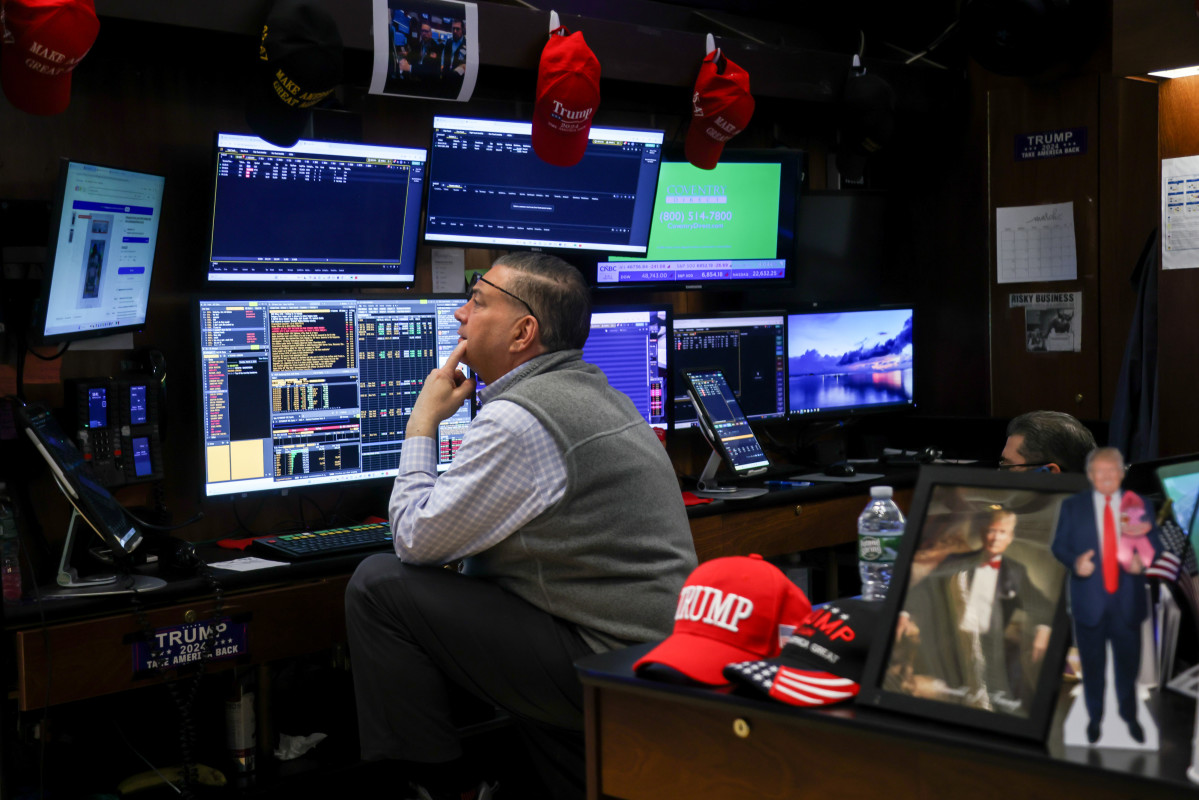
J.P. Morgan’s strategists say overall equity positioning “remains elevated and stands at its highest level since mid 2024,” even after some crowded trades were unwound in recent weeks, according to a note summarized by Investing.com.
They warn that these levels “leave equities currently vulnerable for the near term,” because investors have not meaningfully reduced their stock exposure, even as volatility has picked up.
That is the core of the “surprise opening” to which J.P. Morgan is pointing. The opportunity is not that stocks are cheap. It is that a lot of portfolios are already crowded on the same side of the boat, while bonds and the dollar sit quietly on the other side.
The team, led by strategist Nikolaos Panigirtzoglou, writes that “investors remain rather long equities and gold and rather short bonds relative to equities and the dollar (excluding the yen),” according to the note quoted by Investing.com.
If you are trying to navigate a turbulent tape, that setup matters more than any single headline on earnings or the economy.
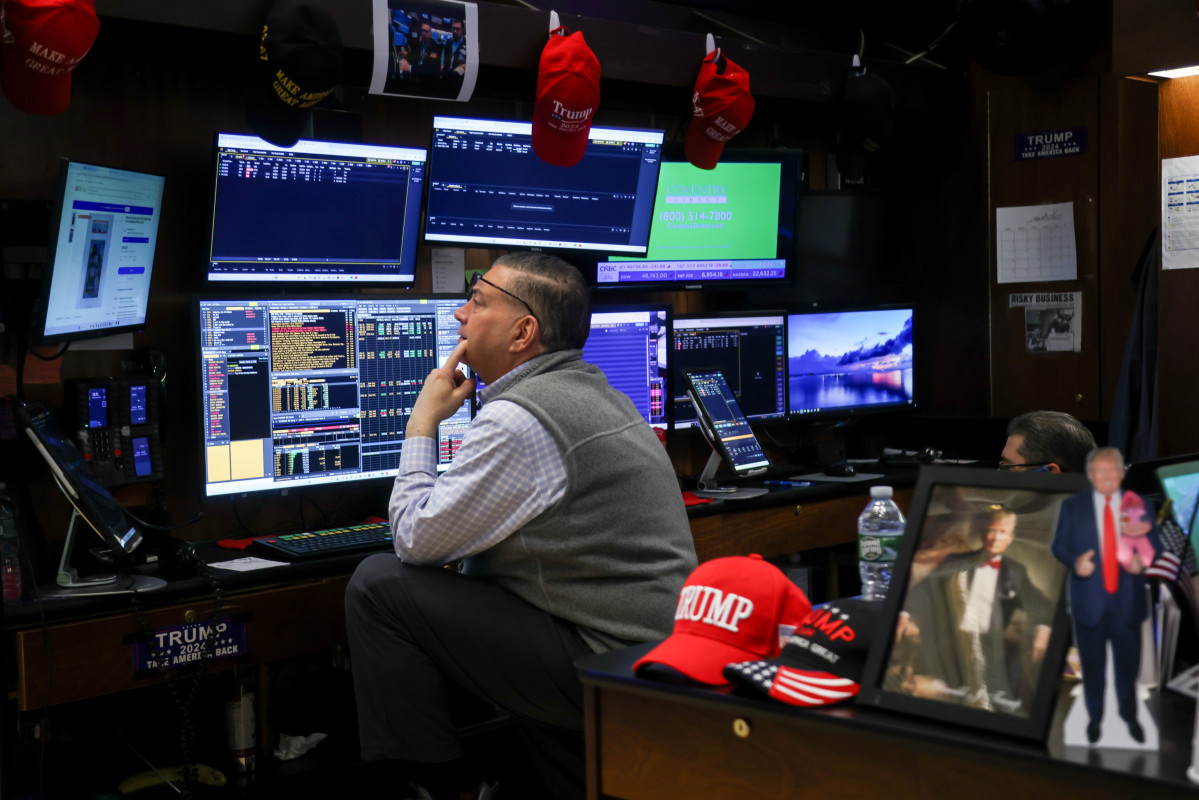
Photo by Bloomberg on Getty Images
How metals and bonds are pricing geopolitical risk
I always like to see how positioning in one asset class lines up with the story in another, and J.P. Morgan’s breakdown here makes that easy.
On the commodities side, the bank says momentum‑driven long positions in precious metals have started to come off, with silver seeing the biggest pullback. “While there has been severe reduction of previous longs in silver futures over the past week, the unwinding of longs in gold futures has been less severe,” the strategists wrote, according to Investing.com’s summary.
Related: J.P. Morgan revamps silver stock price target for 2026
In other words, fast‑money traders have been taking chips off the table in silver, but gold still has an “elevated long base” despite the recent trimming, J.P. Morgan said. That fits with a world where every geopolitical flare‑up sends investors back into “safe” hedges, even as they stay heavily in stocks.
The more interesting contrast, at least for me, is on the bond side.
J.P. Morgan notes that bond positioning “remains depressed by historical standards,” which has widened the gap between equity and fixed income exposure to levels last seen in late 2021, the strategists told clients. They argue that this divergence “implies a backdrop that increasingly favors bonds relative to stocks in the near term,” according to Investing.com.
More Wall Street
- Billionaire Dalio sends 2-words on Fed pick Warsh
- Top analyst bets these stocks will boost your portfolio in 2026
- Bank of America sends quiet warning to stock market investors
If you lived through the 2022 bond sell-off and never quite came back, this is the kind of signal that should at least get your attention.
In a world where geopolitical shocks tend to push money toward Treasurys and other safe assets, being structurally underweight bonds is another way of saying you are lightly hedged if something goes wrong.
The bank is not promising a bond rally, but it is saying that from a positioning standpoint, this is where the crowd is not.
Currency bets and the geopolitics of the dollar
On top of stocks, metals, and bonds, J.P. Morgan’s team also looked at how traders are positioned in currencies, and that part of the note adds another layer to the story.
According to the strategists led by Nikolaos Panigirtzoglou, currency positioning still reflects “a significant short base in the U.S. dollar when excluding the yen,” which suggests that many investors are positioned for a weaker greenback, despite recent swings in FX markets, Investing.com reported.
That is notable because a surprise move higher in the dollar tends to weigh on risk assets, particularly emerging‑market equities and commodities, and can tighten financial conditions faster than many stock investors expect.
Geopolitics ties directly into that.
Every time tensions flare, such as threats around the Strait of Hormuz, the dollar tends to catch a bid as global money rushes into the safest, most liquid assets. The same pattern shows up when Russia’s war in Ukraine escalates or when new trade restrictions hit China, because each of those shocks pushes investors out of riskier markets.
Put simply, the bank sees a market where traders are:
- Long equities and gold
- Short bonds relative to equities
- Short the dollar outside of the yen
That combination is fine as long as everything breaks right. It looks a lot more fragile if you get a shock in rates, growth, or geopolitics that sends investors scrambling for safer, more liquid assets.
Why liquidity helps but geopolitical shocks still bite
One of the more subtle parts of J.P. Morgan’s note, and one I do not see discussed enough, is its take on the Fed and liquidity.
The strategists argue that it is “unlikely” the strong “U.S. broad liquidity backdrop” that has supported equities in 2026 will change materially after the appointment of Kevin Warsh as Federal Reserve chair, even if the central bank moves to shrink its balance sheet. They say any such tightening would likely be offset by steps that make it more attractive for commercial banks to hold bonds.
The key line, in my view, is their reminder that “it is the size of commercial bank balance sheets rather than the Fed’s balance sheet that ultimately determines broad liquidity,” which they expect to “continue to act as a tailwind for equities,” Investing.com reported.
So the bank is threading a needle.
- On one side, it is flagging that equity positioning is stretched and vulnerable in the near term.
- On the other, it is telling you that the overall liquidity environment is still supportive enough to keep the whole system from seizing up the way it did in past crises.
For you as an investor, that translates into a message I have felt in my own portfolio this year. There is room for turbulence and pullbacks in stocks, but the bigger macro backdrop is not screaming “get out at any price.”
How I would apply J.P. Morgan’s take to a real portfolio
When I read a positioning note like this, I always ask myself what it actually means for the way I set up my own accounts.
J.P. Morgan is not handing out individual stock tips here, but the signals are still very usable.
Here is how I would break it down into practical steps.
- If your stock allocation drifted higher in the 2024-2026 rally, this is a good moment to see whether you have quietly become as “long equities” as J.P. Morgan says the overall market is.
- If you have been underweight bonds ever since rates started climbing, their comment that positioning “increasingly favors bonds relative to stocks” is a nudge to revisit whether your fixed income side is too thin.
- If you hold a lot of gold or gold miners as a hedge, the reminder that gold still has an “elevated long base” is a reason to check whether that slice of your portfolio has grown larger than you intended.
I like using this kind of macro insight as a sanity check, not as a short‑term trading signal.
For example, if you have a 70/30 stock‑bond target but market gains have pushed you to 80/20 or beyond, this is the kind of backdrop where I would seriously consider rebalancing.
I also think about risk management.
A market in which investors are long equities, long gold, short bonds, and short the dollar is one in which corrections can be sharp if something forces people to flip those positions in a hurry.
You do not need to time that exactly to benefit from having a bit more cash, a steadier bond ladder, or some high‑quality dividend payers in the mix.
Related: JPMorgan revamps Nvidia stock price target for rest of 2026
#J.P #Morgan #spots #surprise #opening #turbulent #stock #market