
Amazon cited AI efficiency when it eliminated 16,000 corporate roles. Microsoft cited AI when it cut more than 15,000 positions. Across Big Tech, the explanation for layoffs has become almost predictable: we are doing more with less, and AI is why.
Jensen Huang has a problem with that story. And he said so plainly.
What Huang said and the exact words he used
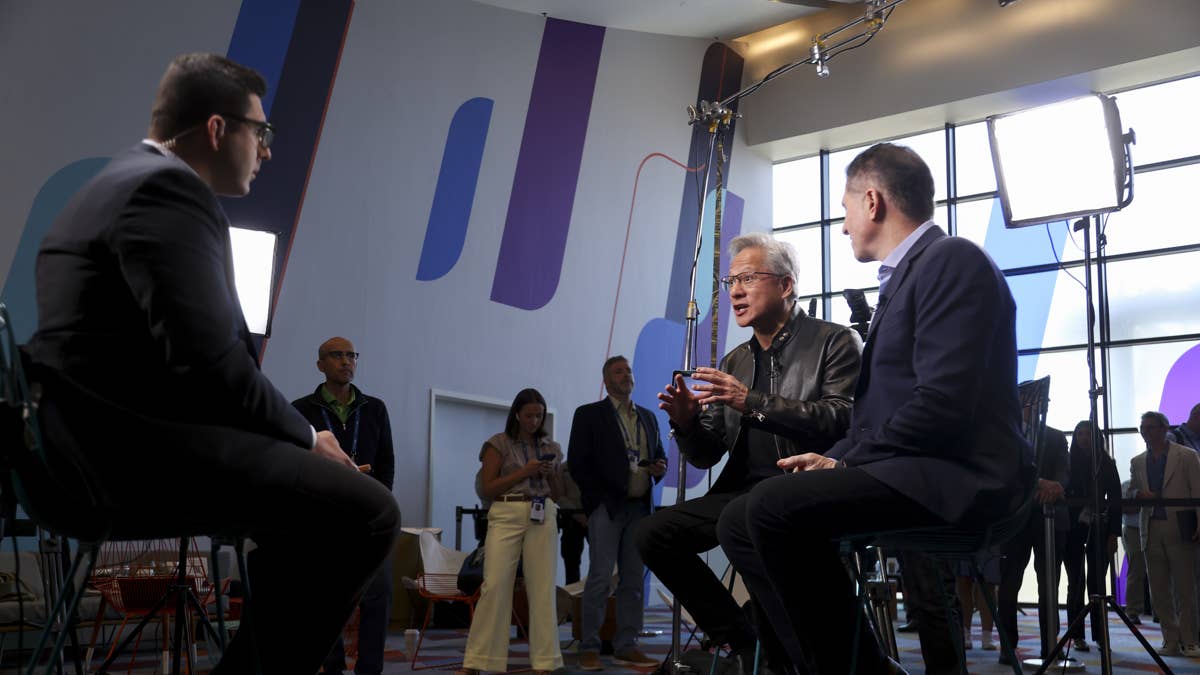
Nvidia CEO Jensen Huang pushed back directly on the practice of blaming AI for layoffs in an interview with Singapore broadcaster CNA on May 26, according to Business Insider.
“I think the narrative that connects AI to job loss for many of the CEOs that are doing it, it is just too lazy,” Huang said.
He pressed further on the timeline. “AI has just arrived. How is it possible they’re already losing jobs?” he asked. “How is it possible that AI became productive and useful only six months ago, and they were somehow laying people off two years ago because of AI?”
Huang said he “really hates” the way some leaders use AI as a talking point while scaring employees in the process. His view is that executives are reaching for a modern-sounding explanation for decisions that have older and more uncomfortable causes.
Why the timing argument is the sharpest part of his critique
Huang’s most pointed argument is not about AI’s capabilities. It is about chronology.
Generative AI tools only became widely useful and deployable for enterprise workforces within the last year or two. If a company was reducing headcount before that window, attributing those cuts to AI is not an explanation. It is a reframing.
More Layoffs:
- E-commerce giant shuts down office as layoffs rise
- Oracle signals massive AI opportunity as layoffs hit
- AI won’t trigger mass layoffs yet, Fed says
That matters because companies have real motivations for layoffs that they may not want to name directly: cost pressure, slowing growth, over-hiring during a period of cheap capital, or a strategic pivot away from a business line that is underperforming. Blaming AI lets executives describe those decisions in a way that sounds forward-looking rather than reactive.
Huang’s challenge is essentially: show your work. If AI is causing the layoffs, explain the mechanism. If it cannot be explained, the real reason is probably something else.
What Huang has said about AI and imagination at GTC
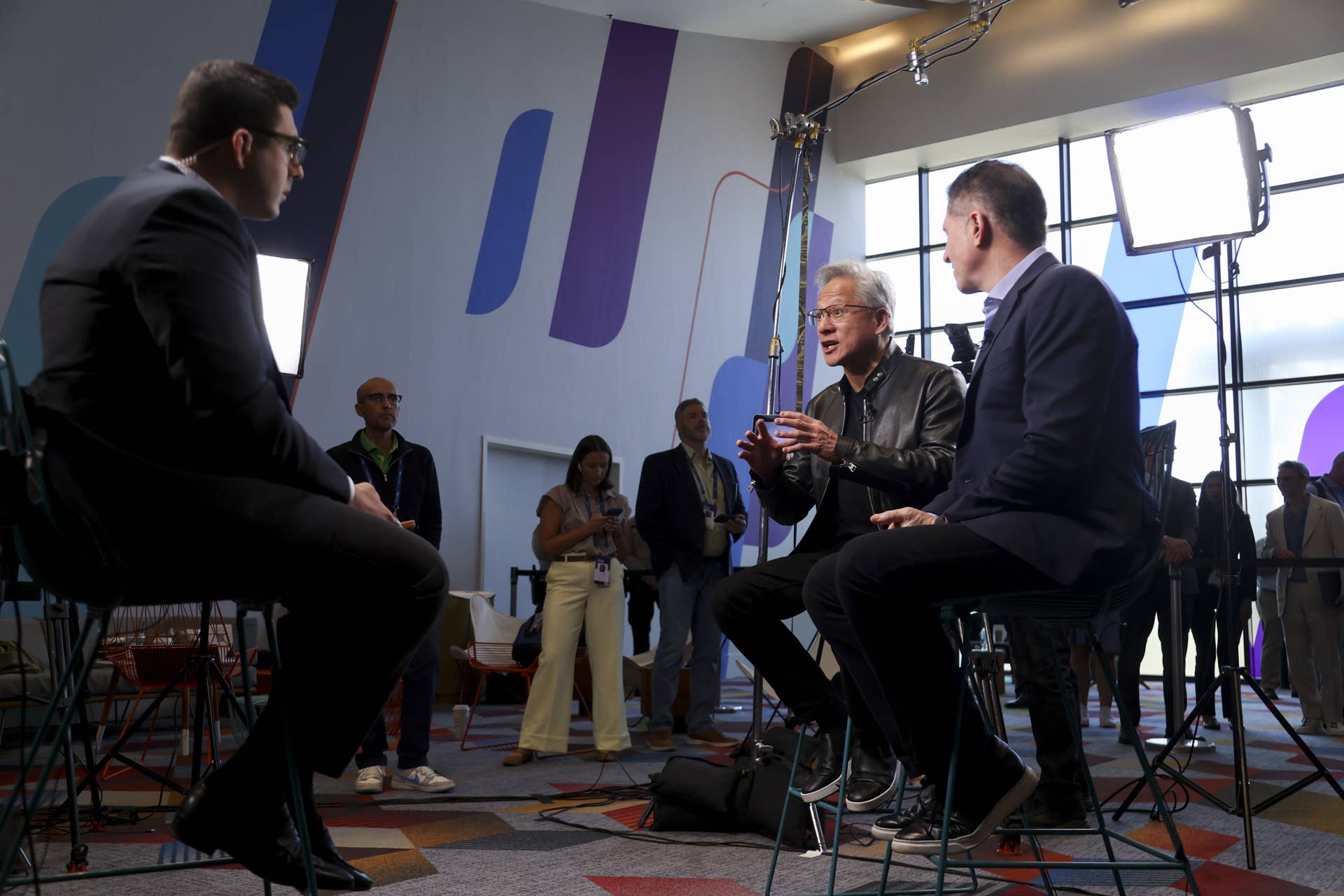
The CNA interview is not the first time Huang has made this argument. At Nvidia’s GTC conference earlier this year, speaking with CNBC’s Jim Cramer, he framed the issue as a failure of leadership vision rather than a technology constraint, according to Fortune.
“Because you’re out of imagination,” Huang told Cramer when asked why companies cite AI to justify fewer employees. “For companies with imagination, you will do more with more. For companies where the leadership is just out of ideas, they have nothing else to do.”
That framing is more aggressive than the CNA comments. It is not just that the AI explanation is lazy. It is that it signals a failure of strategic thinking.
Huang is drawing a distinction between companies using AI to grow and companies using AI language to shrink while presenting it as progress.
Maule/Getty Images
His message to workers and where he sees jobs going
Huang also addressed the workers on the receiving end of the AI narrative. His advice was direct: do not fear AI, learn to use it.
“You’re not losing your job to AI, but to someone who uses AI better,” he said, Business Insider noted.
He said it is “very likely” there will be more jobs in five years than there are today. He compared the current moment to the arrival of the personal computer, which did not eliminate work but changed which workers stayed competitive. Those who adapted thrived. Those who did not were left behind.
Key figures on Jensen Huang’s AI and layoffs message:
- Interview: Huang spoke with Singapore broadcaster CNA on May 26; comments reported by Business Insider and Let’s Data Science, according to Business Insider
- Key quote: “I think the narrative that connects AI to job loss for many of the CEOs that are doing it, it is just too lazy,” Huang said, according to Business Insider
- Timeline argument: “AI has just arrived. How is it possible they’re already losing jobs?” and “How is it possible that AI became productive and useful only six months ago, and they were somehow laying people off two years ago because of AI?” Business Insider confirmed
- GTC comments: “For companies with imagination, you will do more with more. For companies where the leadership is just out of ideas, they have nothing else to do,” Huang told Jim Cramer, according to Fortune
- Worker advice: “You’re not losing your job to AI, but to someone who uses AI better,” Business Insider confirmed
- Jobs outlook: Huang said it is “very likely” there will be more jobs in five years than today; compared AI transition to the personal computer era, according to Fortune
- Context: Amazon cited AI when eliminating 16,000 roles; Microsoft cited AI efficiency when cutting 15,000+ positions, according to Fortune
What this means for investors watching Big Tech and AI spending
Huang’s comments land with a specific irony. Nvidia is the company selling the chips that power the AI buildout. Its largest customers include Microsoft, Amazon, Google, and Meta, the same companies that have been citing AI to justify workforce reductions. Huang just publicly questioned their framing.
That is not a trivial thing to do. It suggests Huang believes the credibility of the AI narrative matters more than the short-term comfort of staying quiet. If executives keep overstating AI’s role in layoffs and that story eventually gets challenged, it could create a credibility problem for the broader AI investment thesis.
For investors, the more practical signal is in the distinction Huang is drawing. Companies using AI to grow headcount and expand capability are a different investment proposition than companies using AI language to shrink while calling it transformation.
Huang is telling investors that not every AI story is the same, and that the difference between them often comes down to whether leadership has imagination or is just out of ideas.
Related: Mark Zuckerberg sends stunning message to Meta employees
#Nvidia #CEO #blunt #message #layoffs