
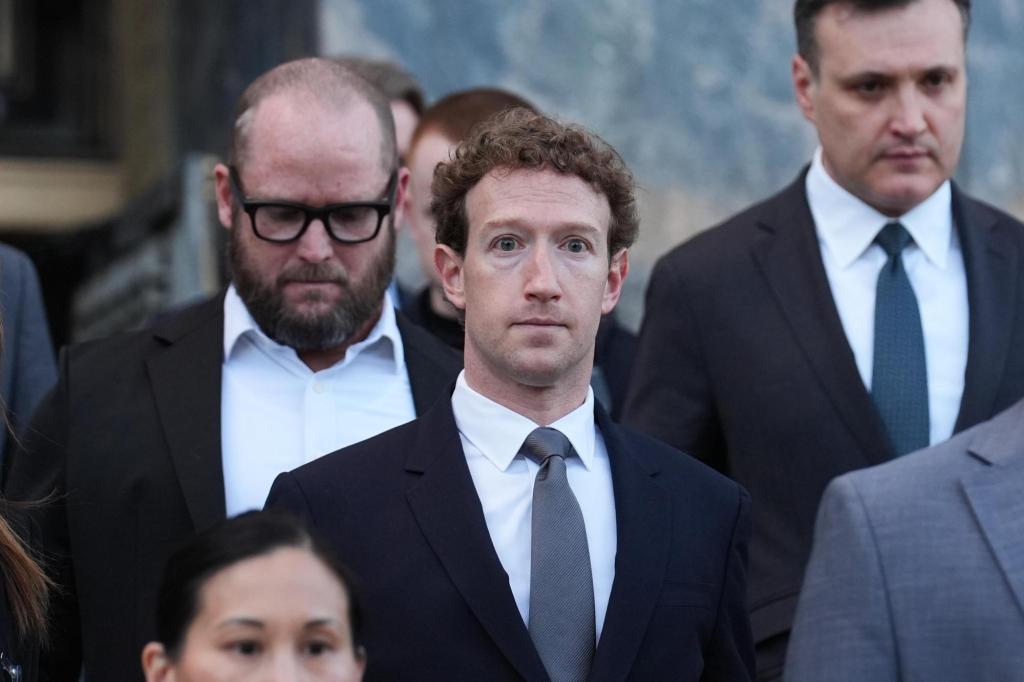

By MORGAN LEE, Associated Press
SANTA FE, N.M. — Prosecutors began presenting never-before-seen video depositions of Meta executives at a trial in New Mexico on Tuesday to bolster accusations that the social media conglomerate failed to disclose what it knows about harmful effects to children on its platforms, including Instagram.
New Mexico prosecutors are billing depositions from Meta CEO Mark Zuckerberg and Instagram leader Adam Mosseri as centerpieces of the state’s case against Meta, which owns Facebook, Instagram and WhatsApp. Prosecutors have accused Meta of violating state consumer protection laws.
Prosecutors say the dangers of addiction to social media as well as child sexual exploitation on Meta’s platforms weren’t properly addressed or disclosed by the company.
Meta attorney Kevin Huff pushed back on those assertions during opening statements on Feb. 9, highlighting efforts to weed out harmful content from its platforms while warning users that some content still gets through its safety net. He said Meta discloses the risks.
On Tuesday, the New Mexico jury watched a video in which prosecutors peppered Mosseri with questions about Meta’s approach to safety, corporate profits and social media features. They also asked him about policies for young users that might contribute to sleep deprivation, unwanted communications with adults and negative effects of cosmetic beauty filters.
Counsel for state prosecutors repeatedly asked whether Instagram should do everything it can to keep teens safe.
“I think we should do what we can,” Mosseri said. “I think that there’s over 2 billion people on Instagram, which means there are millions of teens on Instagram. So when you say everything, I want to be clear that we are a large enough platform that sometimes some things will — so for instance, problematic content will be seen.”
Under deposition, Mosseri also said that at Meta “we will prioritize safety over profits.” Prosecutors juxtaposed that assertion with the company’s internal audits, emails and messages about proposed social media features that might change the compulsive use of Instagram by teens or interrupt negative social comparisons, and weren’t always adopted.
Pressured about a decision by Instagram to continue recommending connections with teen accounts to adults amid concerns about child sexual exploitation, Mosseri described the company’s belief in “proportional risk mitigation.”
“We carved out a subset of adults that we thought might be more likely to be problematic,” he said. “We basically tried to identify a subset of adults that might be risky and then remove them from … accounts you should follow.”
Mosseri also talked about the positive powers of social media to connect people, including his own relatives living on different continents. But he also acknowledged that Meta platforms may offer unwanted recommendations — in one instance, content about babies to a woman after miscarriage — and cited Instagram’s “recommendations reset” as a creative solution.
The New Mexico case and a separate trial playing out in Los Angeles could set the course for thousands of similar lawsuits against social media companies.
Zuckerberg testified last month in Los Angeles about young people’s use of Instagram and has answered questions from Congress about youth safety on Meta’s platforms.
During his 2024 congressional testimony, he apologized to families whose lives had been upended by tragedies they believed were caused by social media. But while he told parents he was “sorry for everything you have all been through,” he stopped short of taking direct responsibility for it.
Mosseri testified at the California trial that he disagrees with the idea that people can be clinically addicted to social media platforms — an opinion repeated in the New Mexico courtroom by deposition.
“I’m not a scientist, but I don’t believe the latest science suggests that social media platforms are addictive,” Mosseri said.
#Trial #Meta #Mexico #highlights #video #depositions #top #executives #East #Bay #Times