
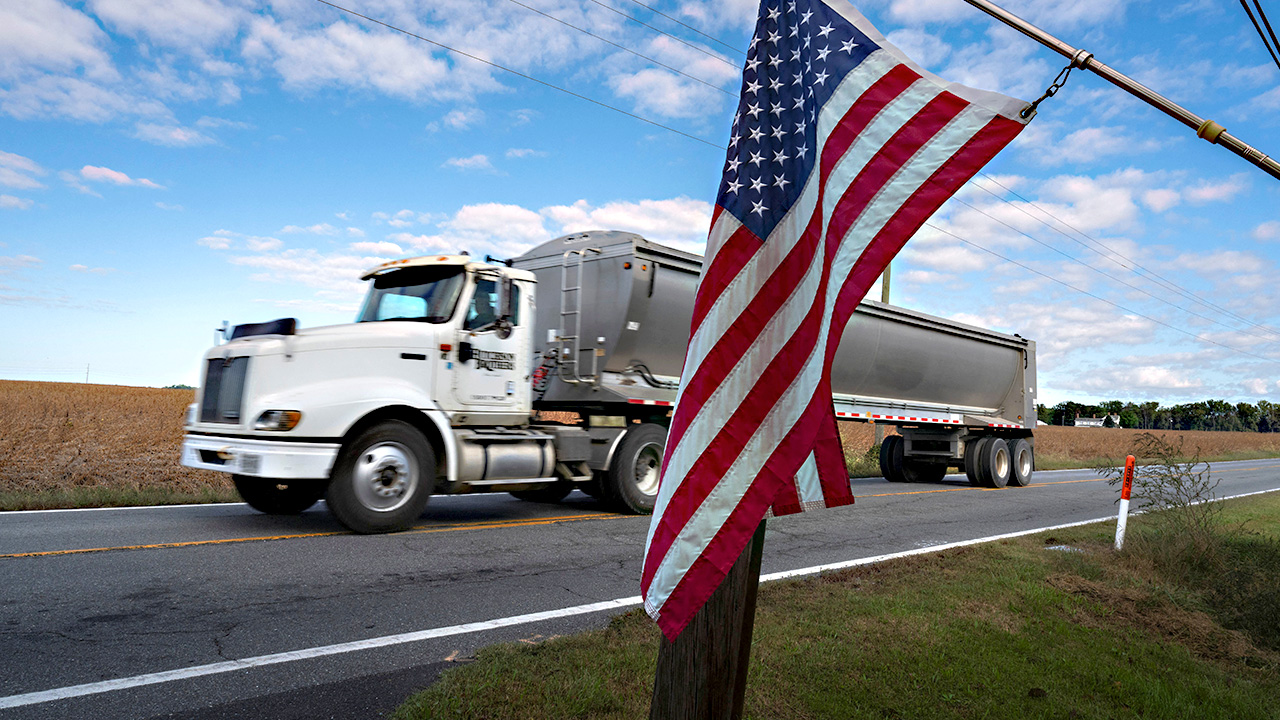
Under Secretary of Agriculture for Trade and Foreign Agricultural Affairs Luke Lindberg says the U.S. agricultural trade deficit fell from $50 billion to $29 billion in one year.
The U.S. Department of Agriculture (USDA) recently released a trade forecast showing the farm trade gap narrowing significantly during fiscal year (FY) 2026. The forecast shows the agricultural trade deficit falling from $43.7 billion in FY2025 to a projected $29 billion in FY2026, an improvement from last year’s level and the $37 billion that was projected in December 2025.
Under Secretary of Agriculture for Trade and Foreign Agricultural Affairs Luke Lindberg told Fox News Digital that while the gap tightening was a step in the right direction, the USDA is still working to get back to a surplus.
“American farmers and ranchers have historically exported vastly more than we’ve imported, including in President Trump’s first term, and we had an agricultural trade surplus,” Lindberg said.
“Unfortunately, in the four years under President Biden, we ended up with a $50 billion agricultural trade deficit forecast that his team forecasted right before he left office just about a year ago. Now today, we’re excited to be announcing that we’ve reduced that deficit to $29 billion. Now, we’re still on course, and we need to get back to a surplus, that’s the goal, but a 43% reduction in one year, it’s a great start,” he added.
BEEF PRICES IN FOCUS AS TRUMP SIGNS ORDER AIMED AT CONSUMER RELIEF
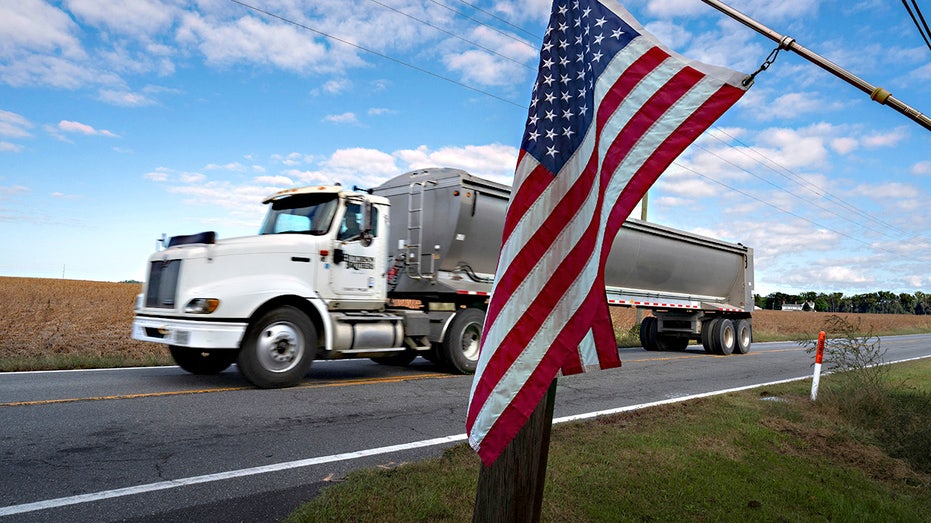
A soybean farmer drives his truck on a country road near his family’s farm in Cordova, Maryland, on Oct. 10, 2025. (Roberto Schmidt/AFP via Getty Images / Getty Images)
In order to return the U.S. to that surplus, the USDA is taking action, which Lindberg outlined as a three-step process: securing strong trade agreements that open markets for American farmers and ranchers, building buyer-seller relationships in those markets and holding trading partners accountable to the commitments they make.
The under secretary said that he is more optimistic than what the forecast articulates because of the “historic” trade deals that President Donald Trump has been able to secure. Lindberg said he believes the agreements have allowed U.S. farmers and ranchers to compete on a leveled playing field.
“I think the more that we can take advantage of the agreements the president has signed, the more we are going to see this number get even better from a trade deficit perspective,” Lindberg told Fox News Digital. “I’m excited to see how our producers take advantage of that access and significantly increased opportunities.”
Lindberg spoke about the opening of Malaysia’s market as an example of a market that was recently opened to U.S. farmers and ranchers. He said that during his visit to Malaysia, it was “very clear” that people wanted to buy American products. He said that buyers abroad trust American products to be safe and high-quality.
The under secretary recalled meeting a restaurateur in Malaysia who invested her own money in a processing plant in the U.S. so she could be the first one to have American beef in her restaurant.
“Those are the kinds of investments and forward-leaning conversations we’re having with buyers in these countries all around the world,” he said.
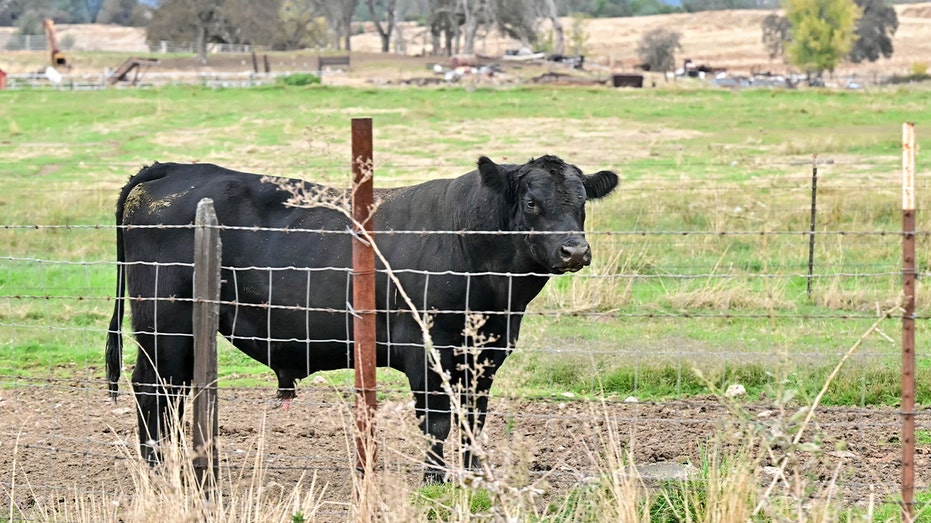
Cattle are seen on a farm in Jamestown, Calif., on Oct. 26, 2025. (Frederic J. Brown/AFP via Getty Images / Getty Images)
TRUMP CALLS ON TRACTOR COMPANIES TO LOWER PRICES, PLANS TO EASE ENVIRONMENTAL RESTRICTIONS ON EQUIPMENT MAKERS
While the administration has emphasized opening foreign markets, Lindberg said the impact could also be felt closer to home as U.S. farmers and ranchers supply more of the food Americans consume.
Beyond the narrowing trade gap, Lindberg said Americans could also see changes at the grocery store. He pointed to a projected decline in agricultural imports, including fruits and vegetables, and argued that increased domestic production could reduce the U.S.’s reliance on foreign suppliers.
“Producing things locally, lower transit costs, all of that combines to get to what the president’s goal and objective has been, which is reducing prices at the grocery store shelves,” he said.
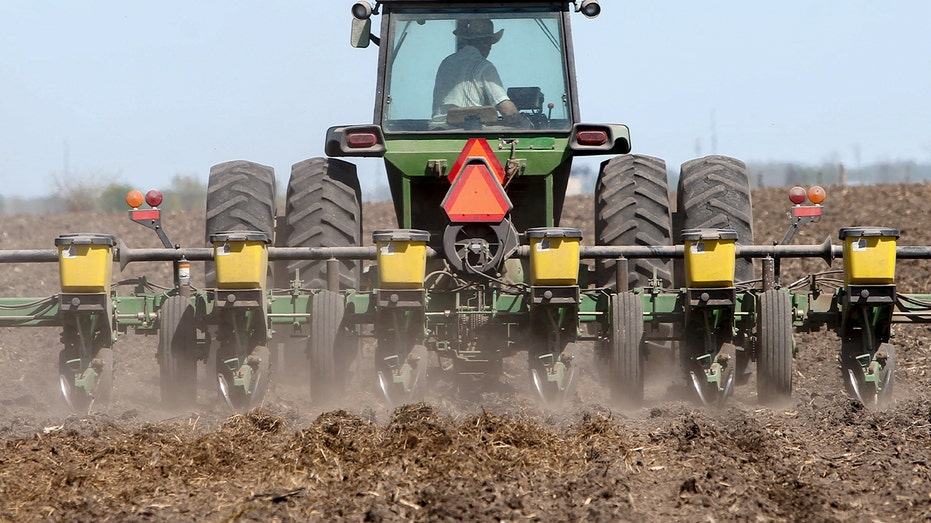
A worker uses a tractor to plant soybeans at Double G Angus Farms in Tiffin, Iowa, on Tuesday, May 6, 2025. (Benjamin Roberts/Bloomberg via Getty Images / Getty Images)
GET FOX BUSINESS ON THE GO BY CLICKING HERE
While the U.S. remains in a trade deficit, Lindberg said the narrowing gap signals progress toward the agricultural trade surplus that American farmers and ranchers have seen in previous years.
#USDA #forecasts #farm #trade #deficit #fall #billion #fiscal #year