
MongoDB reported fourth-quarter fiscal 2026 revenue of about $695.1 million, up 27% year over year, and non‑GAAP earnings of $1.65 a share, both ahead of Wall Street estimates, according to the company’s earnings release and summaries on Seeking Alpha.
Full‑year revenue reached roughly $2.46 billion, also up in the mid‑20% range, while the Atlas cloud database business grew about 29% year over year, the company said in its release.
Despite that, the stock cratered.
MongoDB shares dropped more than 20% in after‑hours trading after management issued guidance that fell short of analysts’ expectations and layered in some uncomfortable executive news, Seeking Alpha reported.
For the first quarter of fiscal 2027, MongoDB projected adjusted earnings per share of $1.15 to $1.19 and revenue below what the Street had penciled in, framing its full‑year outlook as a 17% growth baseline that investors read as conservative, Seeking Alpha said.
That combination of strong trailing results and softer‑than‑hoped guidance is exactly the kind of thing that can flip a growth stock from “must own” to “sell first, ask questions later,” especially after a big run.
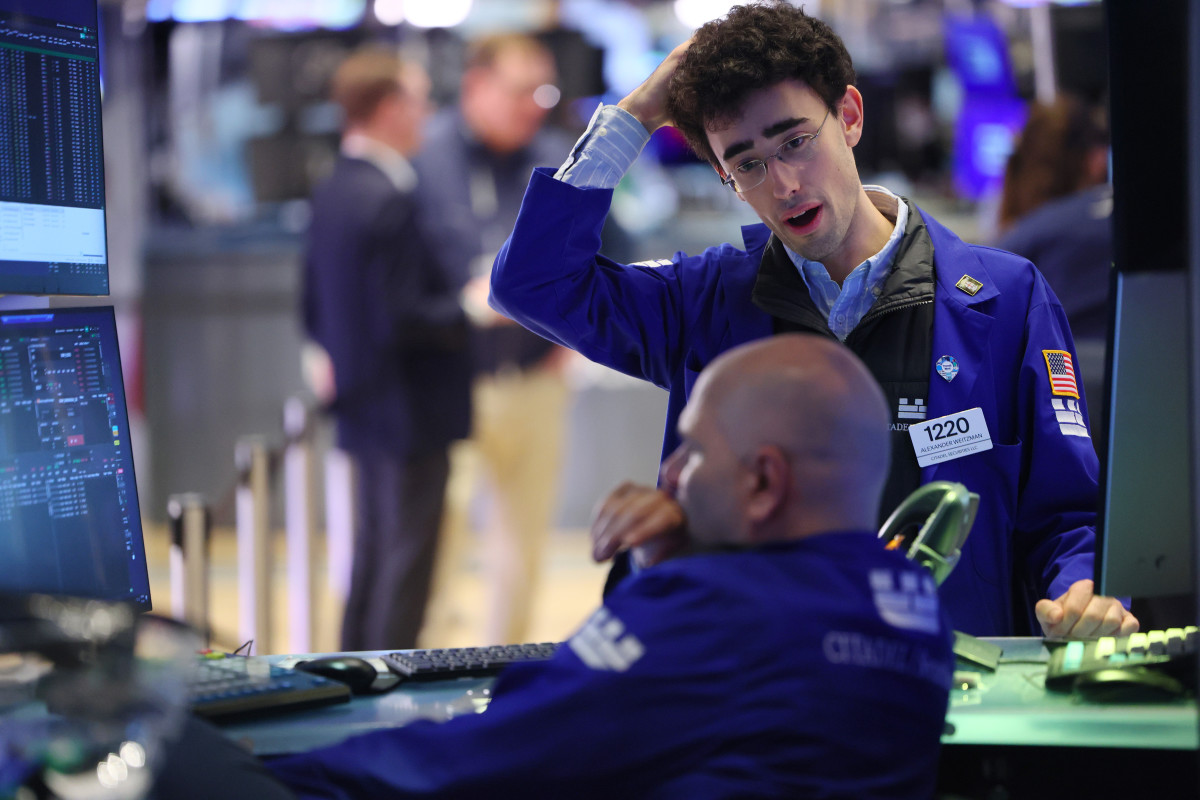
Photo by Michael M. Santiago on Getty Images
What the guidance really said about growth and AI
I always pay close attention to how management talks about the future when the numbers and the stock price move in opposite directions, and MongoDB’s commentary did not sound like a company in crisis.
On the earnings call, CEO CJ Desai told analysts that the company sees “broad‑based demand” across its products and that customers are “excited about the strength of the MongoDB platform” and the innovations it plans to deliver over the coming years, according to the call transcript on Investing.com.
Related: JPMorgan revamps Nvidia stock price target for rest of 2026
Desai framed the fiscal 2027 outlook as a “strong foundation” for future growth rather than a ceiling, Seeking Alpha added in its recap of the call.
The tension is around how quickly AI turns into real revenue.
Desai said enterprises are still moving from experimenting with AI to putting applications into production and that MongoDB expects that journey to be gradual, MarketWatch reported in a separate write‑up of the results.
He argued that AI ultimately should be a tailwind for MongoDB because many customers are using its database as the foundation for new AI‑driven applications, but he signaled that those benefits will be more visible over the longer term than in the next quarter or two.
Analysts took note of that nuance.
One firm described MongoDB as “the latest casualty of the worsening macro,” saying a broad‑based slowdown in consumption across customer cohorts and some sales execution issues forced the company to lower guidance. The firm’s description did, however, argue that both headwinds are likely to be temporary and that the model is now “largely de‑risked,” according to a research note summarized by MarketBeat.
From my perspective, this is the classic “great story, messy year” setup.
The underlying database and Atlas cloud business still look healthy, but the bar for AI‑linked software names had been set unrealistically high, and MongoDB’s guidance brought that back down to earth.
Inside the MongoDB executive shakeup that rattled investors
The guidance miss alone might have been enough to send MongoDB lower for a day or two, but the management changes layered on top of it turned a pullback into a crash.
MongoDB disclosed that Cedric Pech, its president of field operations, and Paul Capombassis, its chief revenue officer, are both leaving the company as part of what it called a “planned” transition, according to the earnings release and a company press release.
The company said those changes had been in the works “for some time” and praised both executives for helping build its go‑to‑market engine over the last decade.
More Wall Street
- Billionaire Dalio sends 2-words on Fed pick Warsh
- Top analyst bets these stocks will boost your portfolio in 2026
- Bank of America sends quiet warning to stock market investors
At the same time, MongoDB announced that Erica Volini, a veteran of ServiceNow and Deloitte, will join as chief customer officer, saying she “brings a rare blend of experience serving large enterprise customers and scaling partner‑led growth,” according to the company’s statement.
Investors still flinched.
The exits of two key sales leaders, on top of softer guidance, “rattled investors” and fed worries about whether MongoDB can maintain its growth trajectory in a tougher spending environment, a MarketWatch piece noted.
Constellation Research’s earnings write‑up put it more bluntly, arguing that “Q4 was strong, but outlook light amid exec departures,” and warning that any perceived instability in the go‑to‑market team can weigh on a stock that depends on consistent enterprise execution.
I have seen this movie before in high‑growth software.
Even “planned” changes in sales leadership can trigger a wave of concern that there is more to the story, especially when they arrive in the same paragraph as a lower outlook.
How Wall Street is retooling its MongoDB view
Once the dust started to settle, I wanted to see whether analysts were abandoning MongoDB or just adjusting their expectations. The early read looks more like a reset than a walk‑away.
Multiple firms cut their price targets but kept bullish or at least constructive ratings.
- Mizuho lowered its MongoDB target to $290 from a prior level above $320 after the report, but noted that the selloff was driven by “weak near‑term outlook and executive departures” rather than any collapse in the fundamental story, as highlighted by MarketBeat.
- Piper Sandler trimmed its target to $350 from $480 while maintaining an overweight rating, telling clients that weaker consumption trends could pressure Atlas growth but that the post‑earnings plunge “creates a more favorable risk/reward,” Seeking Alpha reported in a separate analyst roundup.
- Morgan Stanley analyst Sanjit Singh cut his price target to $320 from $455 and kept an overweight rating, saying MongoDB delivered a softer 2% revenue beat with a “surprising” cut to full‑year guidance as macro and sales execution weighed on growth.
For everyday investors like you and me, that kind of analyst cluster usually means the stock just moved from “priced for perfection” to “prove it.”
The story is not broken, but the margin for error has narrowed.
How I would think about MongoDB after its stock crash
Whenever a name like MongoDB drops 20% or more in a single shot, I try to move past the drama and ask a few simple questions about risk, reward, and my own time horizon.
First, this is still a volatile, high‑beta stock that lives at the intersection of cloud, AI, and enterprise software budgets. If you buy it here, you are signing up for more days like this, even if the business keeps growing.
Second, you now have more information than you did a week ago. You know that MongoDB can put up 27% revenue growth and a solid profit, but you also know management is comfortable guiding to a slower fiscal 2027 and swapping out key members of its sales leadership team.
If you are going to own it, you have to be comfortable with that version of the story, not the old one.
Here is how I would translate all of this into a simple checklist.
- If MongoDB was already a big position for you, this is a time to revisit your thesis and make sure you are not depending on a straight‑line rebound to prior highs.
- If you have been waiting for a chance to start a position, this drop gives you a better entry point, but only if you are willing to treat the next year as a rebuilding phase rather than a quick turnaround.
- If you are allergic to single‑stock volatility, it may make more sense to get your database and AI exposure through a broader software or cloud ETF.
For my own part, I see this as a classic “watch closely, size carefully” name after a crash.
MongoDB still has a differentiated product, a strong balance sheet, and a central role in how modern applications are built, and those are not things that disappear because of one guidance reset and an executive shuffle.
Related: Quantum stock surges: IonQ stock climbs after earnings beat
#MongoDB #reality #check #Wall #Street