
This year began with upbeat predictions by economists, including the International Monetary Fund, that Africa’s growth will, for the first time, outpace that of Asia.
This is good news for the continent. However, as Africa’s largest, most industrialised and technologically advanced economy, South Africa cannot afford to rest on this long-held status.
The country must embrace innovation and flexibility – and, most importantly, act swiftly to reform policy and position itself to capitalise on opportunities across Africa.
Read:
Mercedes mulls sharing SA plant with China’s GWM
As dust settles from Sona, the manufacturing crisis requires action
South Africa’s position as the economic powerhouse of Africa and gateway to the continent is becoming increasingly tenuous. According to the African Development Bank, 12 of the world’s fastest-growing economies are in Africa – and we are not listed among them.
Moreover countries such as Morocco, Kenya, Egypt and Nigeria are poised to accelerate and are positioning themselves to take advantage of the continent’s projected growth boom.
By contrast, South Africa faces growing deindustrialisation and the erosion of its manufacturing capacity, delays in policy reforms to support local industry, logistical inefficiencies, and persistent challenges in electricity, water, and sanitation infrastructure.
South Africa has lost 1.5 million jobs in manufacturing over the past 20 years.
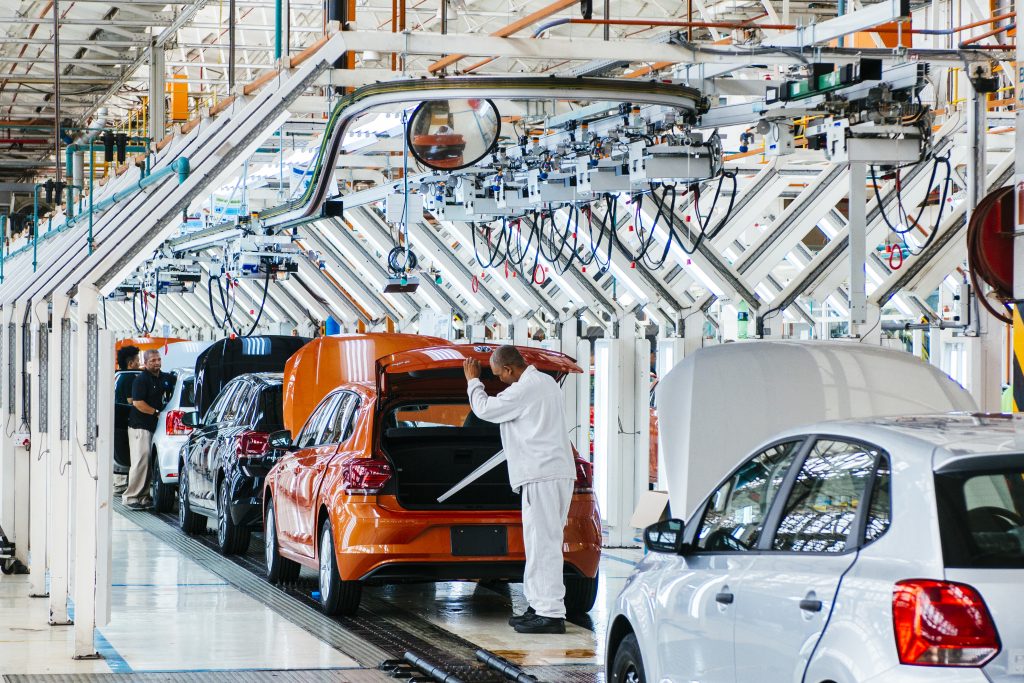
In the automotive sector, locally manufactured vehicles have declined from accounting for 80% of domestic sales in 2000 to just 33% last year, accelerating dramatically in just the last five years.
This is occurring against a backdrop of a domestic vehicle market that is not growing significantly. The rise in sales of imported vehicles from India and China does not represent overall sales growth; rather, it reflects the substitution of imports for locally manufactured vehicles.
The knock-on effect on jobs created by original equipment manufacturers, who undertake completely knocked-down (CKD) assembly in the country, should not be underestimated.
Read:
Standard Bank eyes Kenya, Ethiopia for future growth
Doubts emerge over Volkswagen’s future in South Africa
Car wars drive Motus to add new brands
General Motors exited its manufacturing operations in Nelson Mandela Bay in 2017, affecting the volumes and sustainability of a number of local components manufacturers.
While it is encouraging that Nissan’s plant in Tshwane has been sold to Chinese automaker Chery, clarity is needed on whether it will operate as a CKD or SKD (semi-knocked down) assembler, and on the extent of localisation in its operations.
SKD assemblers typically do not utilise locally manufactured components in their assembly processes.
The displacement of local vehicle manufacturers has a direct impact on the surrounding ecosystem, as seen in the tyre stream with the closures of Firestone, Conti-tech and more recently Goodyear.
According to the National Association of Automotive Component and Allied Manufacturers (Naacam), 13 components manufacturers have closed their doors over the last three years.
A very telling indicator in terms of the erosion of the ecosystem is the decline in localisation levels, which have fallen from 42% in 2021 to 35% in 2025.
ADVERTISEMENT
CONTINUE READING BELOW
South African auto manufacturing is largely export-driven, with 65% of production destined for export markets, primarily the UK and Europe.
Import tariff increases by the US and Mexico (both significant destinations for SA component exports) have effectively priced South African-made vehicles out of those markets, with the recent renewal of the African Growth and Opportunity Act (Agoa) by the US offering little benefit to the local auto sector, which continues to face 25% tariffs under different legislation.
Read:
Chinese vehicle manufacturer now number three in SA
Mahindra backs SKD production to attract major auto investment to SA
Chery to acquire Nissan’s Rosslyn plant in major SA auto shake-up
Alongside this, other countries are moving fast to secure trade deals, resulting in multinationals reviewing their manufacturing footprints around the globe to determine the most competitive locations for their assembly operations.
Europe’s shift to new energy vehicles (NEVs) and banning of internal combustion engines (ICEs), along with increased tariffs under the Carbon Border Adjustment Mechanism (CBAM), are a further threat to SA’s vehicle exports, particularly as uncertainty remains over domestic policy to support NEV manufacturing and consumer adoption.
This means that we need to be looking to the countries on our doorstep as our major growth opportunity, with ICE vehicles likely to be available for longer even as the rest of the world shifts to NEVs.
The opportunities lie in Africa’s growing, youthful population and rising incomes, and in meeting the rising demand for affordable vehicles designed and built for African road conditions.
South Africa has a relatively small internal economy in comparison to the Asian giants we compete against in our own markets. The only way we can get the economies of scale to justify investment is to expand our export footprint and volumes.
Where is SA in Africa?
China and India are rapidly expanding their presence in African markets, while South Africa, with a few exceptions, has little impact in a continental automotive market projected to reach five million vehicle sales annually over the next decade or so.
Read:
Chinese and Indian vehicles now make up almost 50% of CMH’s sales
Chinese SUVs are ‘iPhone moment’ for rest of motor industry
Last year, Morocco overtook South Africa as the continent’s leading auto manufacturer, reaching a production milestone of one million vehicles, versus SA’s output of approximately 600 000.
We were on almost equal footing in 2024, but a year later Morocco had almost doubled its output while SA’s production remained largely stagnant.
Algeria’s automotive manufacturing is showing strong growth off a low base, while Egypt, Ghana and Kenya are making new investments in manufacturing capacity.
Kenya, for example, is making strategic moves to shift from a predominantly used-vehicle market to a regional hub for local assembly and component manufacturing.
The “Buy Kenya, Build Kenya” initiative offers substantial tax incentives, exemptions and import duty mechanisms that are succeeding in attracting global auto brands such as Isuzu and Toyota to invest in boosting or establishing local assembly plants.
What has Morocco done right to achieve its lightening growth in automotive output?
ADVERTISEMENT:
CONTINUE READING BELOW
The country has leveraged its geographically strategic position to form a “manufacturing bridge” between Europe, Africa, and the Middle East. Global automakers like Renault and Stellantis have moved in, and today, Morocco is Africa’s largest car exporter, shipping hundreds of thousands of vehicles annually.
Advanced technology manufacturing, including aerospace, has followed.
Companies like Boeing and Airbus now source precision components and wiring systems from Moroccan factories.
This was possible because its automotive industry was established, with policy support, to build a robust manufacturing ecosystem.
The strategy was built on logistics and location, energy availability – particularly green energy – and creating the infrastructure to support it. This is exemplified by the growth and global prominence of the Tanger Med port, alongside free trade zones and improved rail and logistics networks.
Although the depth of value chains within Morocco is shallow, employment has been created through labour-intensive assembly of imported components.
The Moroccan message is one of reliability, proximity, and stability.
Today, exports of cars, aircraft parts, and electronics now outweigh tourism revenue.
Ports are key
Amid the current crisis in the Middle East, affecting oil and gas shipments in particular, South Africa is well-positioned on a conflict-free trade route – provided our ports can rapidly boost efficiency.
Without this, increased activity risks being hampered by congestion and delays, potentially disrupting the timing of SA exports to market and critical imports into the country.
Read/listen:
Iran conflict puts the emerging-markets revival to the test
Oil soars above $100 as Iran war forces more production cuts
Middle East crisis pressures SA trade, oil and rand
As a measure of port efficiency in cargo handling and turnaround times, the backbone of global supply chains, the 2025 World Bank Container Port Performance Index (CPPI) highlights the declining performance of South African ports.
While it is positive to see two South African ports – Cape Town and Ngqura – in the top five showing greatest year-on-year improvement from 2023 to 2024, due to targeted investments and operational reforms, our key ports of Durban, Cape Town, Ngqura and Port Elizabeth were still ranked in the bottom 10, among the world’s worst-performing ports.
In contrast, Port Said in Egypt and the deepwater port Tanger Med in Morocco ranked in the top five highest-performing ports in the world for 2020-2024.
Read:
How Durban is clawing its way off the ‘world’s worst port’ list
Durban comes dead last in 2024 World Bank port rankings [Sep 2025]
The two ports as well as Alexandria (Egypt) and the growing West African transshipment hub, the Port of Lomé in Togo, all rank in the global top 100 most efficient ports.
South Africa is also being outpaced by ports in Mogadishu (Somalia), ranked East Africa’s most efficient, and Dakar in Senegal.
ADVERTISEMENT:
CONTINUE READING BELOW
Closer to home, Walvis Bay in Namibia, as well as Maputo and Beira in Mozambique, have emerged as strong contenders to challenge Durban and other SA ports as gateways into Africa.
Encouragingly, since the release of the CPPI, Transnet has recorded improvements in turnaround times, cargo movements, and reduced delays and congestion across several ports.
It is critical that this upward trajectory continues at pace, and that mooted public-private partnerships in port operations (as well as rail) are brought to fruition as soon as possible to further improve efficiency and competitiveness.
Unlocking African opportunity
In a positive development, the African Union last month signed off on the rules of origin for automotive products under the African Continental Free Trade Area (AfCFTA) – a step described the African Association of Automotive Manufacturers as a “defining milestone toward creating a unified and globally competitive African automotive market”.
The rules provide the benefits of duty-free and quota-free trade across the continent, with opportunities arising from the requirement that vehicles and components contain a minimum of 40% African-originating content.
Listen/read:
AfCFTA, business unusual?
The core fundamentals of manufacturing in South Africa remain in place, but this foundation now needs to be overlayed by technological advancements in digitally driven manufacturing, alongside the skills development required to support it.
The African rules of origin present opportunities for greater localisation of automotive components – an area in which South Africa has established strengths and advanced technical capabilities in meeting global standards.
This is also the sector where the greatest jobs multiplier effect is located.
This a base where SA can play a strategic role, leveraging its automotive value chains and technical expertise to become an anchor for regional, cross-border supply chains, in which each country plays to its strengths rather than duplicating efforts.
South Africa’s depth of expertise in first-tier/original equipment automotive manufacturing, along with the depth of our mineral resources, present significant competitive advantages over Morocco.
If Africa is to advance in the beneficiation of its mineral resources – creating value-added products rather than remaining a net exporter of raw materials that are subsequently re-imported as finished goods – SA has a key strategic role to play in unlocking this opportunity through a collaborative, continent-wide effort.
However, we must move far more rapidly to respond to global geopolitical, energy, and trade shifts, implementing policies that support the retention and growth of local manufacturing, investment and employment.
Read: How SA auto manufacturers can take advantage of global shifts
At the same time, we need to firmly entrench South Africa as a key role player on the African continent by strengthening intra-continental supply chains, driving implementation and participation in the AfCFTA, and building continent-wide beneficiation of minerals and raw materials.
Denise van Huyssteen is CEO of the Nelson Mandela Bay Business Chamber.
#South #Africa #retain #industrial #position #continent