
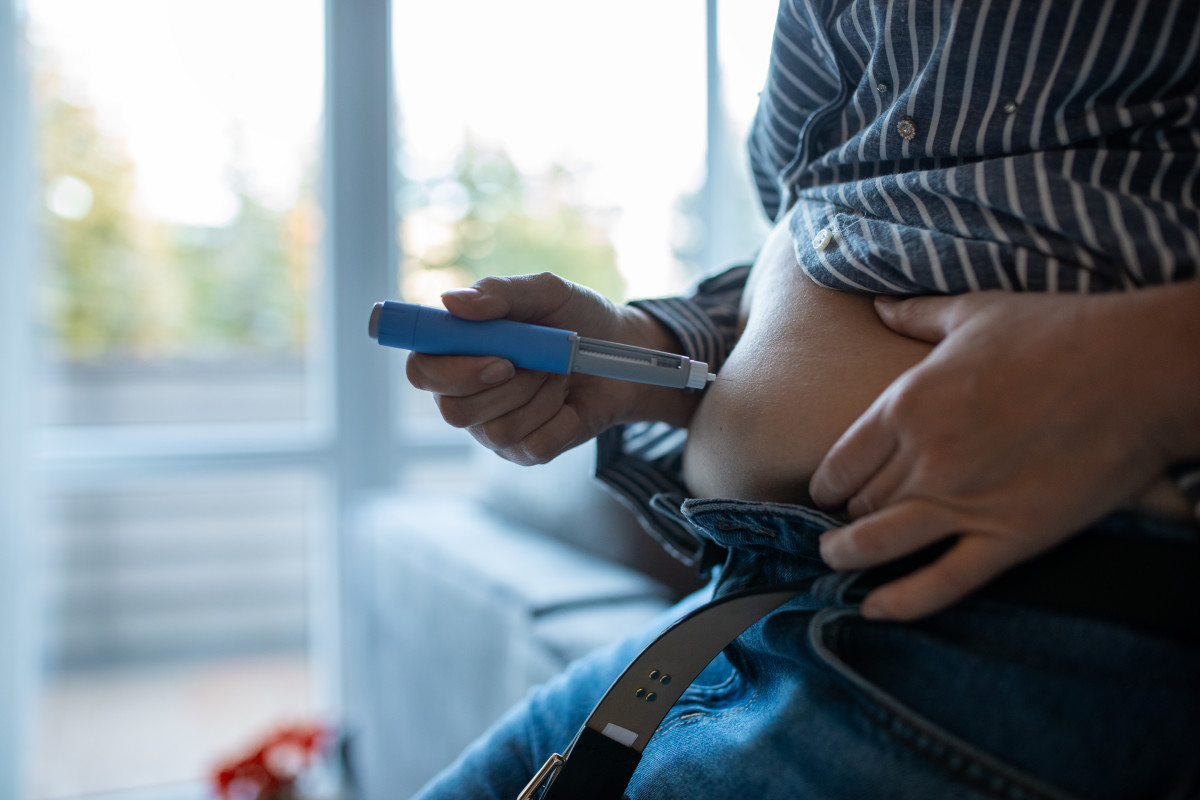
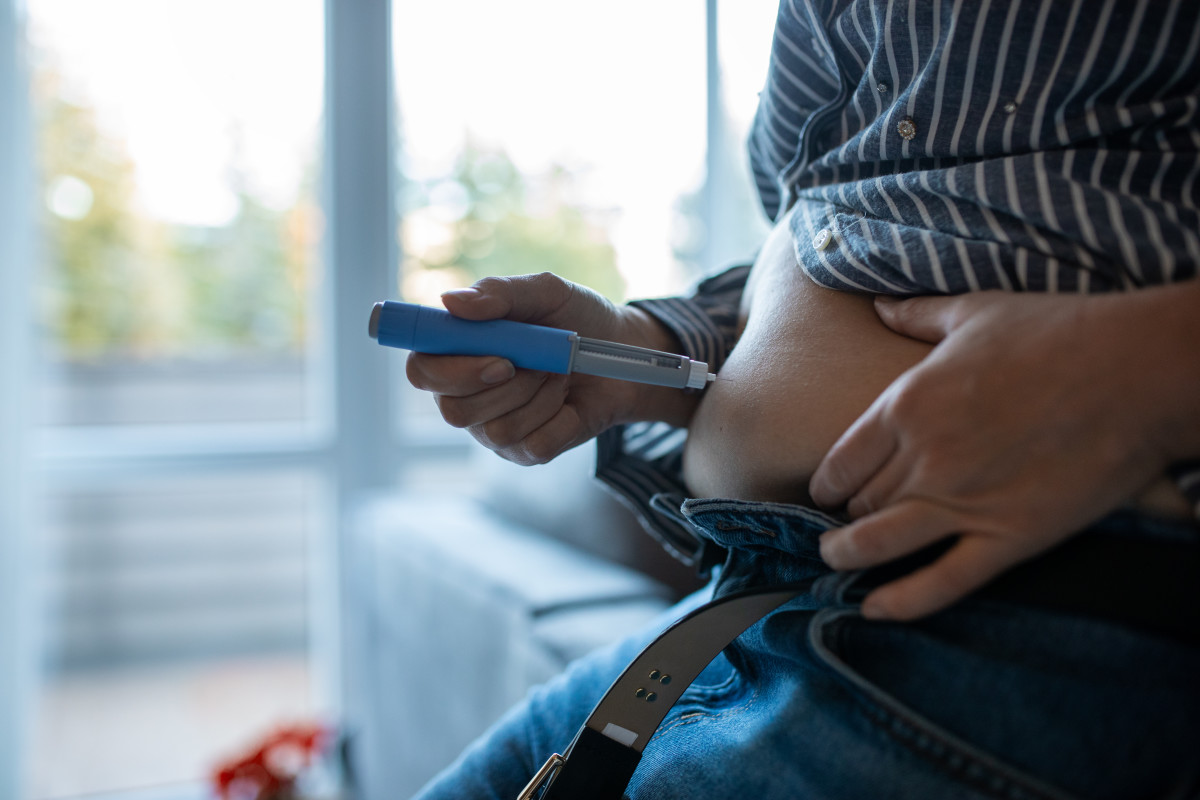
Wegovy costs $1,350 a month without insurance, and Zepbound runs $1,086. If you’re on Medicare, you’ve either been paying those prices out of pocket or going without. This is because federal law has barred Medicare from covering weight-loss medication since 2003.
Starting July 1, eligible Medicare beneficiaries will pay $50. Fifty dollars for the same medications that have cost retirees more than their monthly grocery budget.
The Centers for Medicare & Medicaid Services (CMS) finalized the details of its Medicare GLP-1 Bridge program on March 3. When I went through this update, I found that the gap between the headline and the reality was wider than I expected.
What the Medicare GLP-1 Bridge program covers and how it works
The Bridge covers two drugs at launch: Wegovy (semaglutide) from Novo Nordisk and Zepbound (tirzepatide) from Eli Lilly. Both injectable and oral formulations are included.
CMS manages the entire program through a single central processor. So your Part D plan has nothing to do with it.
Your doctor submits a prior authorization request to CMS’s central processor, not to your insurance company. If approved, you pick up the drug at your pharmacy and pay $50. CMS reimburses the pharmacy at wholesale acquisition cost, minus your copay, plus a dispensing fee.
How Medicare’s price compares to what you’d otherwise pay for GLP-1s
Without the Bridge, your options for Wegovy or Zepbound look like this: the full retail price of roughly $1,350 (Wegovy) or $1,086 (Zepbound), or the manufacturer discount programs that bring self-pay prices down to $349 to $499 per month, depending on the dose.
At $50, the Bridge eliminates more than 95% of the sticker price. For retirees on fixed incomes, that’s the difference between access and nothing.
GLP-1 Bridge program eligibility criteria are tighter than you’d expect
You need to be enrolled in a Part D plan for 2026, either a standalone PDP or Medicare Advantage with drug coverage. Beyond that, eligibility is based on BMI and related health conditions.
Who is eligible?
- BMI of 35+: No additional conditions needed
- BMI of 27+: Must also have prediabetes or a history of cardiovascular disease
- BMI of 30+: Must have heart failure with preserved ejection fraction, uncontrolled hypertension, or chronic kidney disease
Who is not eligible?
If your doctor already prescribes you Wegovy or Zepbound for type 2 diabetes, cardiovascular risk reduction, or sleep apnea, those prescriptions stay with your Part D plan. You can’t move them to the Bridge to score a lower copay. The clinical indication on your prescription determines which pathway applies.
A KFF analysis estimated roughly 14 million Medicare beneficiaries had a diagnosis of overweight or obesity in 2020. The Congressional Budget Office pegs the broader eligible pool at around 29 million.
Not all of them meet the Bridge’s specific criteria, but demand will be substantial.
The $50 doesn’t count toward your Medicare Part D spending cap
This is the part most people will miss. Because the Bridge operates outside Part D, your $50 monthly copay does not reduce your Part D deductible (up to $615 in 2026), does not count toward your $2,100 out-of-pocket cap, and does not interact with your Part D benefit in any way.
It is an additional cost, separate from everything else.
That also means Medicare’s Low-Income Subsidy (Extra Help) does not apply. If you qualify for Extra Help and pay little to nothing for your other medications, you’ll still owe the full $50 each month under the Bridge. Over six months, that’s $300 in out-of-pocket costs for someone who may be living almost entirely on Social Security.
Existing GLP-1 users through Medicare Part D face an odd double standard
If you’re currently on Zepbound for sleep apnea through your Part D plan, you could be paying more per month than a neighbor who gets the same drug for weight loss at $50 under the Bridge.
CMS has drawn a hard line and says it will monitor Part D plans to prevent them from shifting existing prescriptions to the Bridge to offload costs.
More Medicare/Medicaid
- AARP raises a red flag on Social Security, Medicare
- If your Medicare plan was canceled, do this now
- AARP explains huge new Medicare change coming soon
If you have multiple conditions and your doctor is considering a GLP-1, make sure the prescription is written for the specific indication that gives you the best coverage pathway.
Wegovy for cardiovascular risk is covered under Part D. Wegovy for obesity is covered under the Bridge. Those are two different claims with two different cost structures.
The six-month clock is the real risk
The Bridge expires Dec. 31, 2026. After that, GLP-1 coverage for obesity is supposed to shift to a longer-term model called BALANCE, which launches for Part D plans in January 2027. The problem: BALANCE is voluntary for plans.
If your current Part D plan doesn’t opt into BALANCE, you’d need to switch plans during open enrollment to continue GLP-1 coverage. Switching plans can change the cost of every other medication you take and may affect your pharmacy network. KFF has flagged this transition risk as one of the program’s biggest potential problems.
And there’s the clinical risk. A study published in the New England Journal of Medicine found that participants who stopped semaglutide regained about two-thirds of the weight they’d lost within a year.
Starting a GLP-1 in July with no plan for January is a gamble with your health, not just your coverage.
Five things to do before the GLP-1 Bridge program launches
- Talk to your doctor now: Prior authorization takes time. If you want access in July, the paperwork should be in motion well before the launch.
- Budget $300 for six months: The $50 monthly copay is added to your existing Part D premiums and medication costs. Plan for it.
- Find out if your Part D plan is joining BALANCE: If it hasn’t indicated it will participate, start researching alternatives now.
- Don’t start a drug you can’t continue: If there’s no viable path to continued coverage after December, weigh that against the benefits of six months of treatment.
- Watch for spring CMS guidance: Additional details on prior authorization and logistics are expected before July. Those will shape how quickly you can get enrolled.
The 23-year Medicare coverage gap closes in
The prohibition on Medicare covering weight-loss drugs dates back to 2003. That was before GLP-1s existed, before obesity rates crossed the 40% line, and before clinical evidence showed these medications could reduce cardiovascular events.
More than 70% of American adults now qualify as overweight or obese, according to the CDC’s National Center for Health Statistics. Obesity costs the U.S. health care system an estimated $173 billion per year, also according to the CDC.
The CBO has estimated that broad Medicare coverage of anti-obesity medications would cost $35 billion over a decade. Proponents say those projections don’t account for reduced spending on diabetes treatment, cardiovascular care, and orthopedic surgeries down the road.
Whether the Bridge and BALANCE become permanent depends on cost data, political will, and manufacturer pricing negotiations. For now, if you’re a Medicare beneficiary with obesity who has watched these drugs change other people’s lives while being unable to afford them, this is the first real opening.
Six months is not forever, but it’s a start.
Related: Daily Wegovy pill brings GLP-1 weight loss treatment to U.S. adults
#Medicare #covering #weightloss #drugs #month