
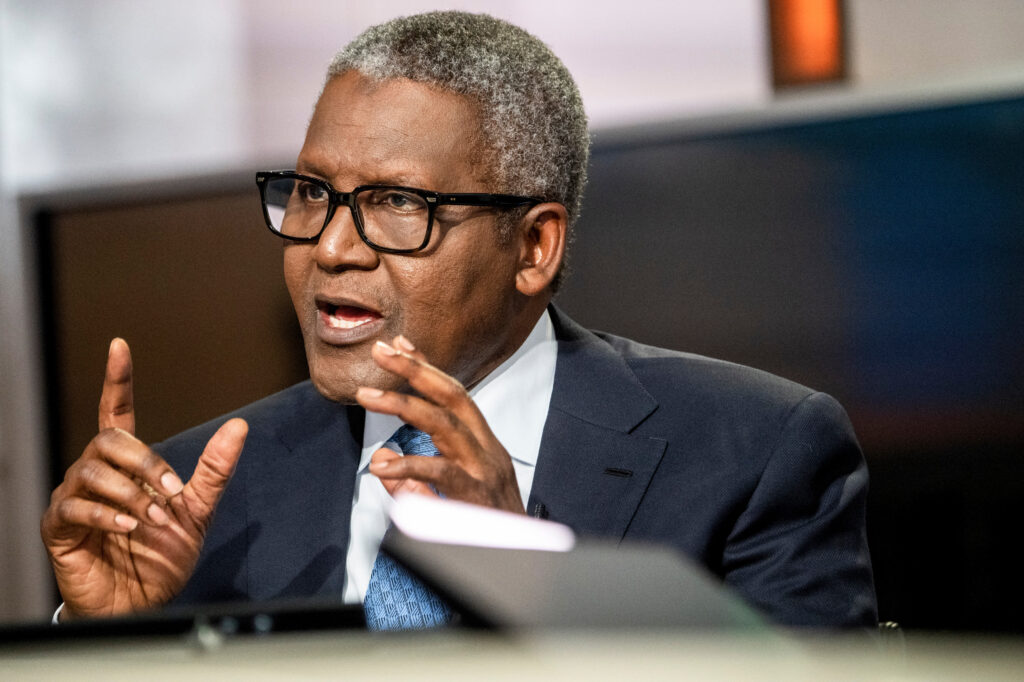
Nigerian billionaire Aliko Dangote’s refinery is being flooded with inquiries as African governments scramble to secure fuel supplies after the Iran war disrupted flows.
Dangote Petroleum Refinery and Petrochemicals has been approached by South Africa and many other countries, a company executive said in a text message. South Africa is seeking a standard contract for 12 months with Nigeria, people with knowledge of the matter said, asking not to be identified as the discussions are private.
From cooking gas shortages in India to dwindling naphtha supplies in Japan, the US-Israel war on Iran is exposing vulnerabilities across the global economy.
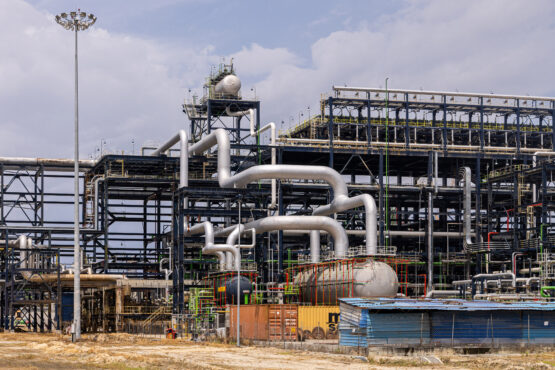
The Dangote Industries oil refinery and fertiliser plant in Lagos, Nigeria. Image: Benson Ibeabuchi/Bloomberg
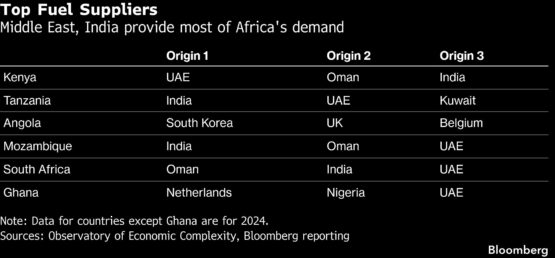
In Africa, the strain may be most acute in east and southern parts of the continent, where about 75% of refined-fuel imports come from the Middle East, according to Elitsa Georgieva, executive director at energy consultancy CITAC.
South Africa “is actively coordinating with industry stakeholders to secure both crude oil and refined petroleum products from a diversified range of sources,” the government said in a statement on Wednesday. “A comprehensive plan is in place to manage potential supply risks.”
ADVERTISEMENT
CONTINUE READING BELOW
About 75% of Dangote’s 650 000 barrel-a-day facility is reserved for Nigeria, with the remainder available for export. Ghana and Kenya have also reached out to Dangote, one of the people said.
“Right now it is not about pricing, it’s about availability,” Dangote said in an interview with the Economist. “I think the situation will continue for a while.”
South Africa said it had enough for the “coming weeks,” while Kenya requires oil marketing companies to keep three weeks of stock, and officials said there’s no immediate concern over shortages.
As a benchmark, the International Energy Agency requires members to hold at least 90 days of net oil imports. No African country is a member of the global energy watchdog.
In Ethiopia, authorities ordered fuel stations to prioritize public-transport providers and asked citizens to use energy sparingly. Meanwhile, in the Somali capital, fuel prices have almost doubled.
South Africa has about 8 million barrels of strategic crude oil stocks, according to the state-owned Central Energy Fund, but virtually no dedicated fuel reserves. Lawmakers last year found such stockpiles lacking.
ADVERTISEMENT:
CONTINUE READING BELOW
Africa’s biggest economy has lost about half its refining capacity in recent years after accidents and years of underinvestment left plants unable to meet cleaner-fuel standards, increasing on reliance on imports.
Fuel marketers do hold some stocks as a distribution buffer, Jacob Mbele, director-general at South Africa’s Department of Mineral Resources, said in an interview Monday. The government has been looking into keeping its own strategic reserves since the country has become a net importer of oil products, but the process is at an early stage, he said.
Some businesses are taking measures to avoid shortages. That’s resulted in a surge in demand for coal. Exxaro Resources, the biggest producer of the dirtiest fuel in South Africa, said prices have shot up about 20% to $112 a ton, according to Chief Executive Officer Ben Magara.
At the same time, the miner faces higher freight and insurance prices to ship manganese, along with potential fuel supply issues across operations, he said.
“Making sure we have enough fuel inventories for a crisis like this is also quite important,” Magara said. “So we are putting a lot of business continuity management plans in place because you just, you never know.”
© 2026 Bloomberg
#Dangote #faces #surge #fuel #demand #war #disrupts #Africa #supply