
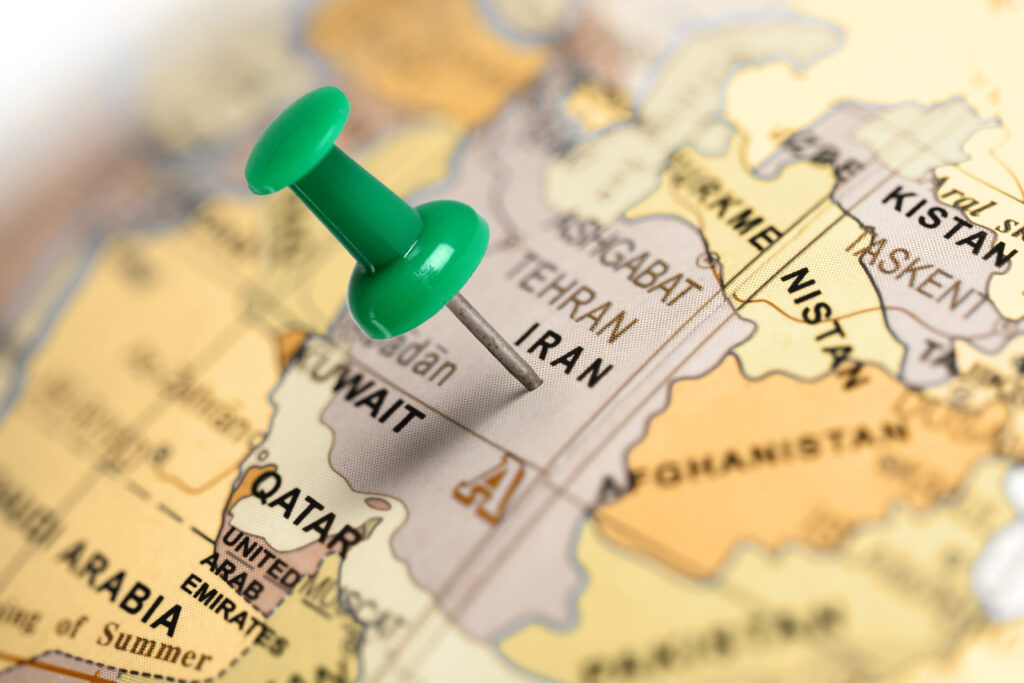
The escalating conflict involving Iran is no longer just a Middle Eastern crisis. It is rapidly becoming a global economic shock – one that could reshape energy markets, disrupt shipping routes and test geopolitical alliances.
For South Africa, the consequences could be both immediate and complicated. In the short term, the country may actually benefit from the very instability shaking global markets. Geopolitical conflict almost always drives investors toward safe-haven assets, particularly gold.
Listen/read:
Strait of Hormuz: Is SA missing an opportunity?
‘Gold doesn’t go up or down’
Gold, stock markets plunge as war in the Middle East escalates
As tensions rise, gold prices typically surge. For a commodity-driven economy like South Africa, that can translate into stronger export revenues and a temporary boost to the rand.
But the good news likely ends there.
South Africa remains heavily dependent on imported oil, and the current conflict is already disrupting some of the world’s most critical energy shipping routes.
The strategic Strait of Hormuz — through which roughly a fifth of the world’s oil flows — sits at the centre of the geopolitical risk, while instability in the Red Sea has already forced shipping companies to avoid the Bab el-Mandeb Strait and limit passage through the Suez Canal.
When these routes become unstable, global fuel supply effectively tightens. Tankers must travel further, deliveries take longer and energy prices rise. For South Africa that ultimately means higher petrol prices, increased transport costs and renewed inflationary pressure across the economy.
There is also an interesting secondary effect. As vessels avoid the Red Sea and Suez Canal routes, more ships may divert around the Cape of Good Hope.
ADVERTISEMENT
CONTINUE READING BELOW
Read:
Trump leaves allies and foes guessing on endgame for Iran
Middle East conflict an opportunity for SA ports – Ramaphosa
Government ‘closely watching’ the oil price and jet fuel situation – Creecy
April fuel prices set to rocket
Mantashe wants to ramp up local fuel refining capacity, but has that boat sailed?
In theory this could increase maritime traffic along South Africa’s coastline and create opportunities for ports, bunkering operations and maritime logistics.
But this assumption exposes another uncomfortable reality: South Africa’s ports are already struggling to handle existing trade volumes.
Years of operational inefficiencies, infrastructure constraints and logistical bottlenecks have left the country’s port system under severe pressure. Delays at major container terminals have become routine, and exporters frequently face long turnaround times.
The idea that South Africa could suddenly benefit from a surge in global shipping traffic assumes the country has the port capacity and logistical efficiency to handle it.
At present, that assumption is doubtful. If anything, additional maritime traffic could simply expose the structural weaknesses in South Africa’s port and logistics system even further.
There may also be a small tourism upside. In times of geopolitical instability travellers often seek destinations perceived as far removed from conflict zones. South Africa’s geographic distance from the Middle East may therefore make it appear relatively safe and attractive to international visitors.
Read:
Port of Cape Town secures FFS Tank Terminals for 25-year liquid bulk concession
SA’s harbours are slowly recovering
Destination South Africa: A year that will reward clarity and coordination
Transnet receives R16.1bn to improve the state of its network
Yet the most serious risks for South Africa may not be economic — but geopolitical.
ADVERTISEMENT:
CONTINUE READING BELOW
South Africa has maintained historically cordial relations with Iran. While diplomatic engagement with all nations is part of international relations, the global geopolitical environment is becoming increasingly polarised.
If tensions between Iran and Western powers intensify, South Africa’s diplomatic alignment could come under closer scrutiny from key trading partners in Europe and North America.
That matters because South Africa’s economy remains deeply integrated with Western markets and financial systems. Access to export markets, foreign investment and global capital flows remain critical to the country’s economic stability.
In simple terms, South Africa’s economic relationship with Iran is relatively small, while trade with Western economies runs into hundreds of billions of rand.
This raises a difficult but necessary question.
In a world increasingly shaped by geopolitical blocs, is South Africa positioning itself on the wrong side of the Iran conflict?
The answer could carry consequences far beyond commodity prices.
Maarten van Doesburgh is an economist, consultant and geopolitical commentator. He is also a former financial director in JSE-listed companies.
#War #oil #diplomacy #South #Africa #wrong #side