
Three weeks and still counting, the U.S.-Israel war against Iran seems nowhere close to a conclusion. Maybe it will end soon, maybe not. But here is what’s on the table. It has become very costly, and oil prices have surged.
Geopolitical tensions are also still rising with exchanges of missiles and drones. And that gets us here, looking at how interesting energy stocks have been lately.
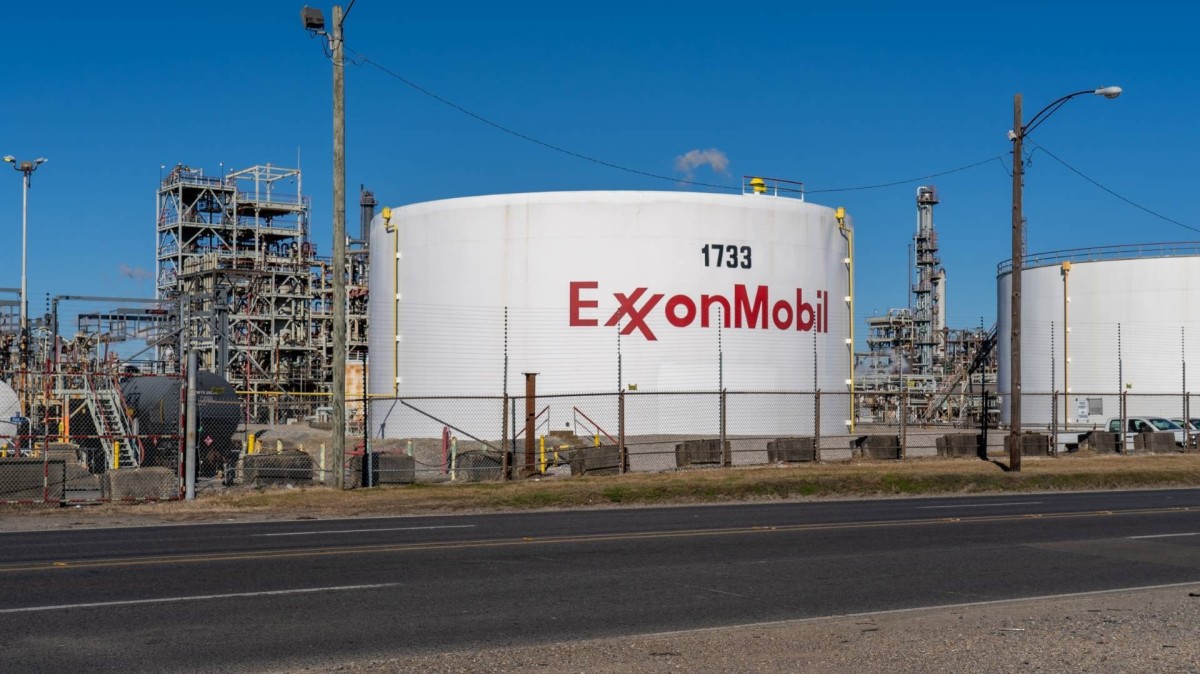
So where does that leave ExxonMobil (XOM), the 156-year-old oil and gas corporation giant based in Texas?
Wall Street appears cautiously optimistic. According to MT Newswires via MarketScreener, Analysts at Goldman Sachs raised their price target on ExxonMobil to $158 from $150, while maintaining a neutral rating on the stock.
The move reflects growing confidence in the company’s outlook while also suggesting that, after a strong run, upside may be more limited than before. You might also ask this one more question: What’s driving the shift, and why are analysts still holding back?
Goldman Sachs raises ExxonMobil target but keeps neutral stance
Goldman Sachs’ latest update has a familiar theme in today’s energy market. Strong fundamentals paired with valuation caution.
The firm’s new $158 price target puts it broadly in line with other Wall Street estimates. For instance, RBC Capital Markets also recently raised its target on Exxon to around $160.
Although analysts broadly agree on Exxon’s improving outlook, Goldman stopped short of issuing a bullish rating. Why? Let’s find out.
After a powerful rally, Exxon’s stock may already reflect much of the good news. Shares of Exxon Mobil have surged impressively both in the short and long term, as per Yahoo Finance:
- 34.6% year to date
- 44% over the past year
- 72.42% over the last 3 years
- 253% over the past five years
That performance has significantly outpaced the broader S&P 500. With impressive gains like that, analysts could be asking: How much upside is left?
JHVEPhoto Via Shutterstock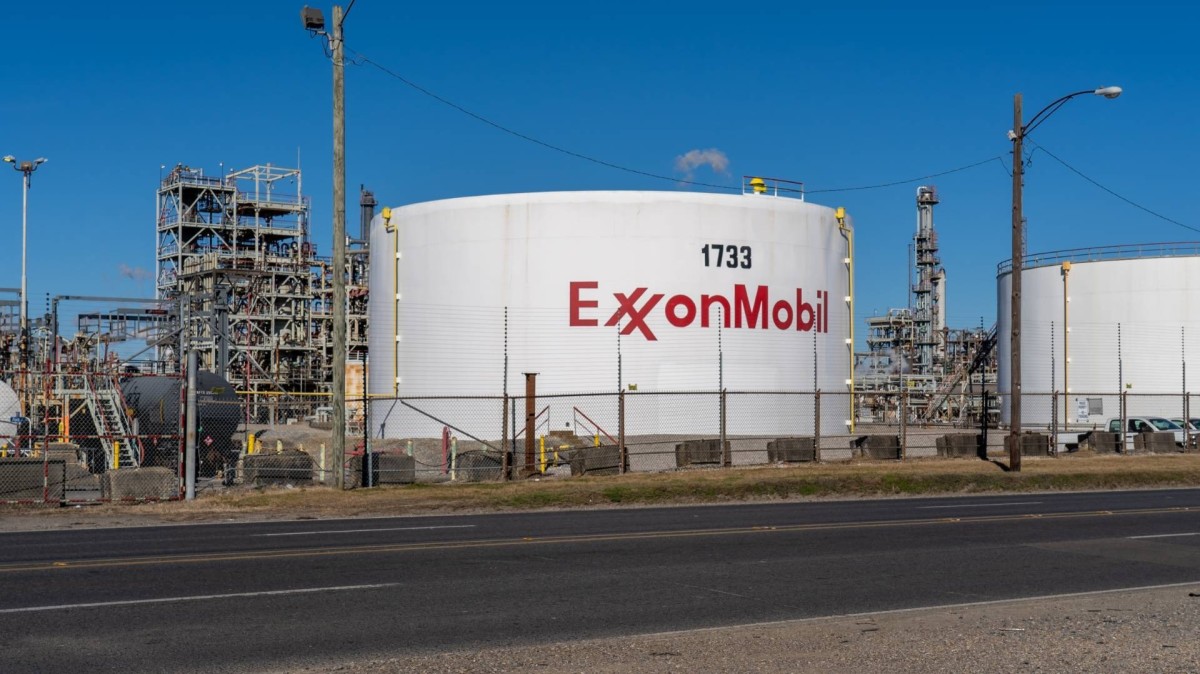
Oil prices and geopolitics continue to fuel Exxon’s momentum
A major driver behind Exxon’s recent rally has been the surge in oil prices tied to the Middle East chaos. Conflict involving Iran, Israel, and the U.S. has disrupted flows near the Strait of Hormuz, a critical route that handles about 20% of global oil supply.
The risk to oil supplies has pushed crude oil prices higher, triggering a rotation into energy stocks to capitalize on rising revenue and profits.
More Oil and Gas:
- The world’s biggest gas field matters just as much as oil right now
- Goldman Sachs reveals top oil stocks to buy for 2026
- U.S. economy will show resilience, despite rising oil prices
For many investors, Exxon represents a stable, U.S.-based energy giant that can benefit from higher oil prices without the same geopolitical risks faced by producers operating in volatile regions.
ExxonMobil is still affected, as evidenced by XOM’s evacuation of non-essential staff from the Middle East. Still, the “war factor” is only part of the story, and the company’s assets outside the Middle East are significant.
ExxonMobil’s long-term growth story remains intact
Beyond short-term geopolitical boosts, Exxon’s fundamentals have been steadily improving.
XOM has focused heavily on high-margin production assets. That’s particularly in Guyana and the Permian Basin — two regions that continue to drive strong cash flow.
The company’s 2025 financial results released January 30, 2026, show Exxon delivered:
- $28.8 billion in earnings.
- $52 billion in operating cash flow.
- Production of 4.7 million barrels per day, the highest in over 40 years.
ExxonMobil has also prioritized shareholder returns
Exxon has maintained its commitment to returning cash to shareholders with;
- $37.2 billion returned to investors in 2025,
- Including $17.2 billion in dividends,
- And $20 billion in share buybacks.
As reported by Stock Analysis, Exxon has an annual dividend of $4.12 per share, with a yield of 2.56%. The dividend is paid every three months, with the last ex-dividend date on Feb 12, 2026.
At the same time, Exxon has aggressively reduced costs. In fact, since 2019, it has achieved $15.1 billion in structural cost savings, with a target of $20 billion by 2030.
During the earnings call interview, CEO Darren Woods emphasized that the company is becoming more efficient and profitable.
What comes next for ExxonMobil stock?
Looking ahead, Exxon is betting on continued growth. The company’s long-term plan includes:
- 13% annual earnings growth through 2030
- $145 billion in surplus cash flow over five years
- Expansion in key regions like Guyana and the Permian
A more favorable regulatory environment in the U.S. could also support production growth.
Recent approvals for major offshore drilling projects signal a continued push toward “energy dominance,” which could benefit large producers like Exxon.
As per the New York Times in mid March, the Trump administration approved a $5 billion oil drilling project in ultra-deep waters of the Gulf of Mexico over protests from Democrats and environmental activists who said the venture posed significant risks to wildlife and communities.
Related: 156-year-old energy giant to pay $17 billion in dividends as oil spikes to $110
#Goldman #Sachs #Resets #Price #Target #energy #giant