
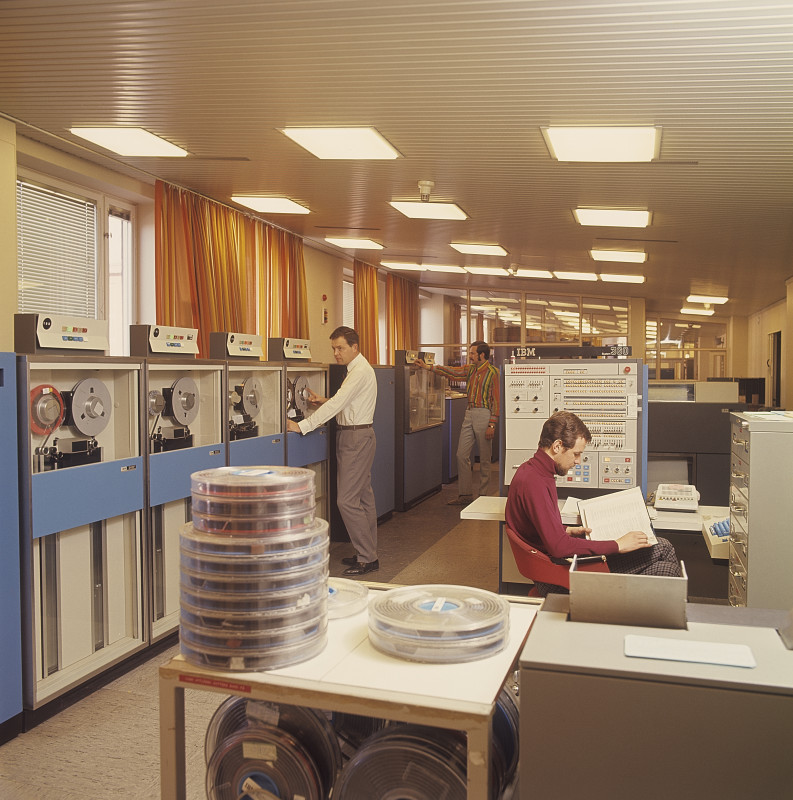
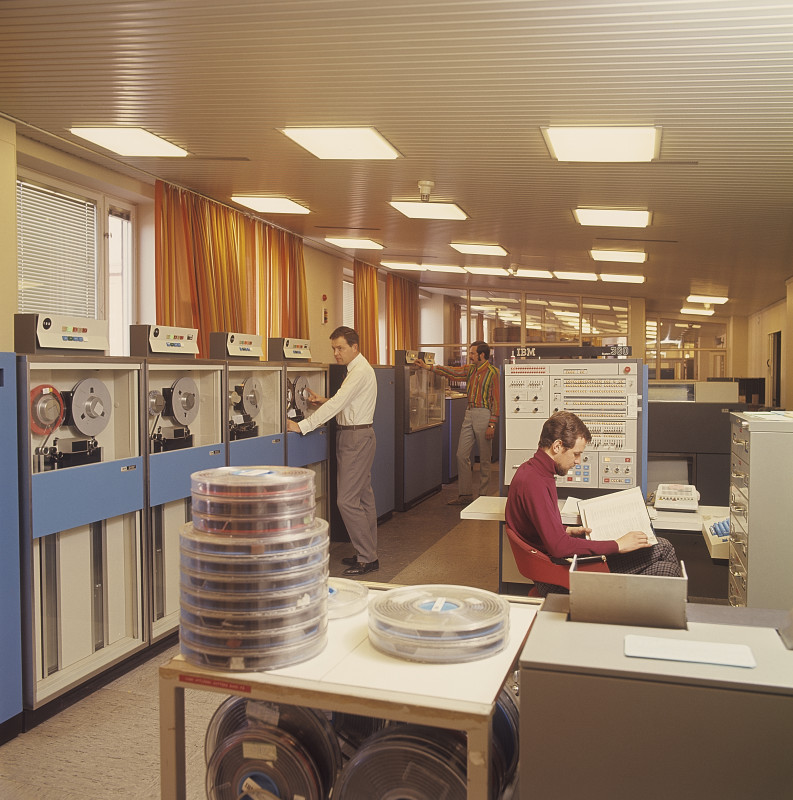
Think about IBM, and you might picture mainframe computers. The company rose to fame through the IBM System/360, the world’s first unified mainframe computer system, introduced over 50 years ago in 1964.
Then, in 1981, it launched the IBM 5150 PC, which changed the way people worked, played, and communicated.
Today, IBM has evolved beyond hardware, becoming a leader in cloud and enterprise AI. Since its 2019 acquisition of Red Hat, the open-source software giant, IBM’s shares have risen 78%.
But IBM doesn’t only develop breakthrough technologies; it also builds the systems that make these innovations scalable.
And that makes all the difference. Here’s what you need to know about IBM and what it does in the modern day.
What did IBM do originally & how has it innovated?
Since its earliest days, IBM has been synonymous with high-quality and reliable technology.
The company was founded in 1911 by financier Charles Ranlett Flint, who chose Thomas J. Watson to be its first CEO. Watson was a visionary who understood that managing data was the key to the future of business. (He even created the company’s “THINK” motto, which inspired generations of employee innovation.)
When he first came on board, IBM was producing scales and time clocks, but Watson shifted the company’s focus to electric tabulating machines.
Thanks to IBM’s innovative 80-column punch card, these machines could record, sort, and total massive amounts of data, helping businesses become more efficient.
It also made IBM hugely successful, and by the 1950s, punch card sales comprised roughly 20% of IBM’s revenue and 30% of its profits.
IBM’s research division has also been responsible for some of the computer industry’s greatest hits, like the hard disk drive, Dynamic Random-Access Memory (DRAM), and copper-based semiconductors: Two of its researchers, Drs. Leo Esaki and Gerd Binnig, were even awarded the Nobel Prize for their breakthroughs.
Related: How many employees work at IBM in 2026? Job locations & recent layoffs explained
In the 1960s and 1970s, IBM was the only tech company among the top 10 companies in the Fortune 500. In the 1980s, it dominated the personal computer market, selling over 3 million PCs, and by 1987, IBM became the first company to achieve a $100 billion market valuation.
In 2011, IBM’s Watson, named in honor of the company’s first CEO, competed on the game show Jeopardy, defeating its human counterparts and marking a breakthrough in machine learning.
What IBM does today
In 2026, IBM employs 286,800 workers in 170 countries across Europe, Asia, the Americas, Africa, and Australia.
Its team includes software engineers and developers, cloud architects, data scientists, and AI engineers, to name a few.
Watsonx, IBM’s next-generation LLM, along with other new hybrid technologies, helps businesses manage data, modernize systems, and “scale across increasingly fragmented environments,” as stated in a release from IBM’s annual THINK event.
Related: Who owns IBM? Top insiders & institutional shareholders
Just like in the past, as its customers’ needs become more complex, IBM responds by creating fully integrated solutions.
For instance, in the 20th century, not only did IBM lease out tabulating machines; it also provided punch cards, training, and customer support. The same went for the company’s mainframes and, later, its PCs.
This helped IBM evolve from a hardware manufacturing business into one that designed and managed IT systems, effectively becoming a “one-stop shop” that helped businesses move forward.
Its consultants play a key role in making this happen.
How are consultants central to IBM?
As other companies are discovering, technology alone doesn’t create value — implementation and measurable outcomes do.
Dow company histories:
- History of Microsoft: Company timeline & facts
- History of Coca-Cola: Timeline, facts & milestones
- History of Nike: Company timeline and facts
That’s why IBM employs over 20,000 consultants — a core segment of its business — who work with clients to integrate their systems with AI and other enterprise solutions and then train teams on how to adopt them. After all, as Thomas J. Watson said, “design must reflect the practical and aesthetic in business but above all… good design must primarily serve people.”
Related: Is Chevron a good long-term investment? Its buy-and-hold prospects explained
#IBM #cloud #amp #consulting #business