
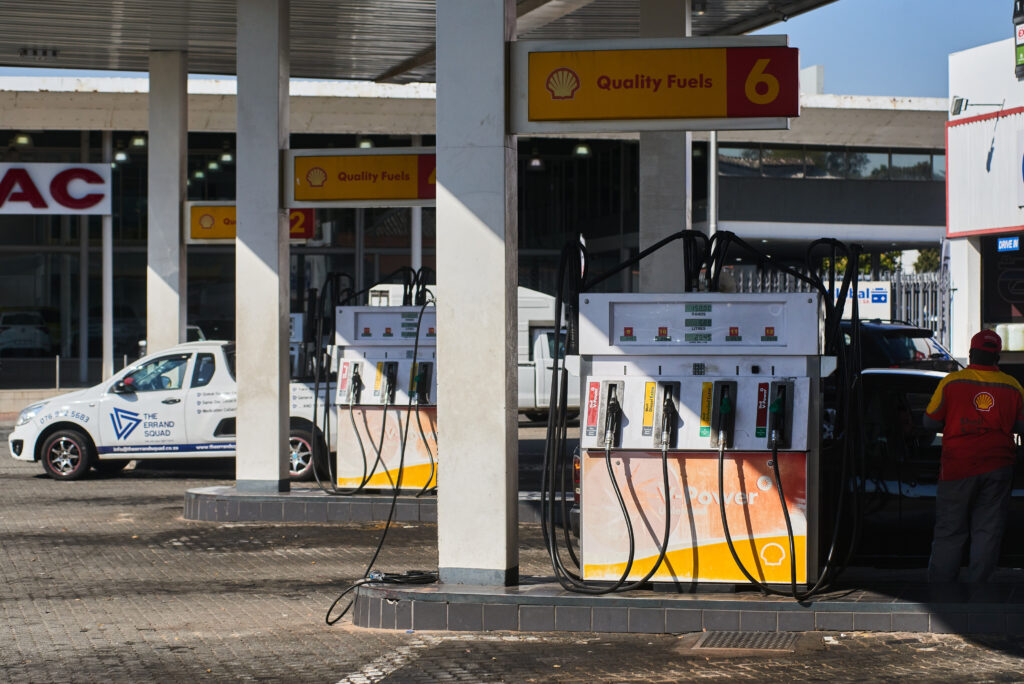
South African consumers and businesses are bracing themselves for a significant hike in fuel prices on Wednesday (1 April) as the Department of Mineral and Petroleum Resources responds to the pressures of the ongoing war in the Middle East.
Energy markets tend to respond to geopolitical shocks quickly, with oil traders pricing in the risk of supply interruptions long before shortages materialise. The result is often an immediate surge in global crude prices, which filters through to local fuel costs within weeks.
More than a month since the initial attack by the US and Israel on Iran, the price of Brent crude remains elevated, trading above the $100-a-barrel mark on Sunday (3pm).
As a result, fuel prices are tipped to go up by between R5 and R9 per litre – with petrol on the lower end of the projections and diesel at the higher end.
Fuel (usually) sits quietly inside the price of almost everything in the economy.
It powers trucks that transport food across the country, machinery used in agriculture and manufacturing, and the logistics networks that keep supermarkets stocked. When petrol and diesel climb sharply, the cost of moving goods rises across the board. Businesses absorb some of the pressure, but much of it eventually reaches consumers.
This means the adjustments will trigger a chain reaction of higher food and transport costs, rising inflation, and renewed pressure on interest rates.
The South African Reserve Bank’s Monetary Policy Committee has already paused the rate cutting cycle at a repo rate of 6.25%, as it continues to assess the risks to inflation.
Read:
Sarb ties SA rate path to Iran war timeline
Morgan Stanley sees SA rate hike in May amid Iran war
ADVERTISEMENT
CONTINUE READING BELOW
Chris Coetzee, a debt counsellor and CEO of FinFix, says for already stretched households this could be the tipping point from financial strain into over-indebtedness.
“Inflation might become South African consumers’ biggest hurdle when conflicts like this disrupt global energy markets,” he says.
“We’re worried that this conflict and the rise in fuel prices may mark the start of a higher inflation period. Interest rate increases would become a real possibility in that environment.”
Coetzee says debt becomes the next pressure point.
“South Africans carry significant levels of household debt, ranging from home loans and vehicle finance to personal loans and credit cards. As living costs rise, the portion of income available to service that debt begins to shrink,” he warns.
Read: SA’s fuel forecourts evolving into ‘lifestyle’ destinations?
Years of slow economic growth, rising living costs and repeated interest rate increases have already weakened household balance sheets. Many families have little financial buffer left to absorb another round of price shocks.
“This can be catastrophic for some consumers,” says Coetzee. “People who are managing today may find themselves over-indebted tomorrow.”
Results
ADVERTISEMENT:
CONTINUE READING BELOW
On the corporate front it will be a very quiet week, with fourth quarter results from ASP Isotopes on the cards. The US-based advanced materials company has its primary listing on the Nasdaq and secondary listing on the JSE.
ASP Isotopes (Tuesday): In the third quarter of 2025, revenue surged to $4.89 million from $1.09 million in the preceding year, primarily driven by the inclusion of the Hong Kong business which was non-operational in the prior period. Divisionally, product revenue was up 16.8% to $1.27 million, and the new Construction Services segment generated revenue of $3.6 million. For the final period of 2025, the market anticipates revenue to surge 56% to R33 million.
Economic data
On Tuesday, the Quarterly Employment Statistics for the final three months of 2025 will be published. In the third quarter, the report showed that 29 000 formal jobs were created. However, employment was down by 0.7% on a year-on-year basis, with mostly full-time jobs lost. Job creation remains concentrated in public services and mining, while manufacturing and construction continue to shed jobs, and earnings growth is still largely driven by service-sector activity despite subdued hiring conditions.
Read: SA unemployment falls to lowest level since 2020
Wednesday will see the release of manufacturing purchasing managers’ index (PMI) data for March. The manufacturing PMI (seasonally adjusted) fell to 47.4 in February. Business activity fell back into contraction, while employment weakened further and weighed on the headline index. Manufacturing conditions remain constrained by port delays, electricity disruptions and weak demand.
Also on Wednesday, new vehicle sales data for March will be released. New vehicle sales volumes rose strongly to 53 445 units in February, driven mainly by higher commercial vehicle demand, while passenger car sales also improved. Annual growth of 11.4% at that point reflected an ongoing replacement cycle, stable inflation, recent interest rate cuts, and resilient demand for more affordable vehicles.
Read: Joburg invests R14m in new EV charging pilot network
#week #ahead #Severe #pain #pumps #economy #takes #strain #Middle #East #war