
My last general report reflected on the outcomes of my office’s audits over the term of the 6th administration. I encouraged the 7th administration to build on the successes and address the challenges of those who came before them.
I called on the new administration to improve the capability of institutions to deliver on their mandates and strategic government programmes and priorities. I highlighted that trust in public institutions could be strengthened by ensuring that institutions across the national, provincial and local government spheres collectively plan and systematically and purposefully work within a culture of performance, accountability, transparency and institutional integrity.
Read/listen: AG report reflects inconsistent implementation and accountability
However, the rate at which the new administration is addressing institutional capability, governance and accountability weaknesses is too slow.
The poor quality of spending is not receiving the urgent attention it requires. With the limited funds available, wastage should not be tolerated and any opportunity to recover money lost should be prioritised. High levels of non-compliance with legislation continue with little consequence. A culture of disrespect for the rule of law not only undermines public trust but also demonstrates to the public that such behaviour is tolerated.
The growing trend in government to downplay the importance of disclosing and dealing with irregular expenditure as procedural or technical issues is in stark contrast to the principles of transparency and accountability.
ADVERTISEMENT
CONTINUE READING BELOW
As an office, we have advised multiple administrations that credible financial reporting is not an accounting issue – it is fundamental to managing resources and preventing financial mismanagement. Yet, we continue to see poor-quality financial statements and ongoing reliance on my office to identify material errors and omissions for correction – which any auditee with basic controls in place should be able to prevent, detect and correct. A similar approach of relying on others instead of addressing control and process breakdowns is evident in reporting on service delivery.
Many auditees remain in the unqualified outcomes with findings category. These auditees display a minimum compliance mindset and have a false sense of achievement despite them not having embedded basic financial, performance and compliance disciplines. Without addressing the root causes of underlying weaknesses and attaining and maintaining a clean audit, the ability of these auditees to make a solid contribution to the lived experiences of our citizens is negatively impacted.
The slow response to dealing with irregularities, waste and service delivery failures is also evident in delayed responses to the material irregularities we identify. In the past year, I invoked my powers multiple times as accounting officers and authorities failed to comply with their legislated obligations to deal swiftly with losses, misuse and harm.
During the year and in the run-up to tabling this report, my office and I shared insights broadly, offered tailored recommendations and urged leadership at all levels to play their part in shifting the culture in national and provincial government.
I am encouraged by the commitments made in response by ministers, premiers and members of executive councils. Committees in Parliament and legislatures have also demonstrated responsiveness. However, if commitments and good intentions do not translate into significant improvements at institutional level, the public will not experience increased service delivery and an improvement in their lived experience.
The people of South Africa and the vision of the country’s Constitution demand that we remain steadfast in restoring trust in public institutions to improve the quality of life of all citizens. National and provincial government are instrumental in building such trust by delivering basic services such as education, healthcare, housing, safety and security, social security and water and sanitation; and for ensuring an environment that is not harmful to the health and wellbeing of South Africans.
ADVERTISEMENT:
CONTINUE READING BELOW
In line with the strategic priorities of the 7th administration, building a capable, ethical and developmental state is fundamental to also delivering on the priorities of promoting inclusive growth and job creation, reducing poverty and dealing with the high cost of living.
I therefore encourage leaders in government, Parliament and legislatures to use the information and insights presented in this report to enable the envisaged improvement in national and provincial government and in the lives of the country’s citizens. As the Auditor-General of South Africa, we will continue to execute our mandate without fear, favour or prejudice.
Read: Auditor-General’s war on waste and corruption yields R4.5bn
I wish to thank the audit teams from my office and the audit firms for their diligent efforts in helping us fulfil our constitutional mandate and for continuing to strengthen cooperation with government leadership. I also want to thank the leadership of all institutions across national and provincial government and legislatures for working with us during the audit process.
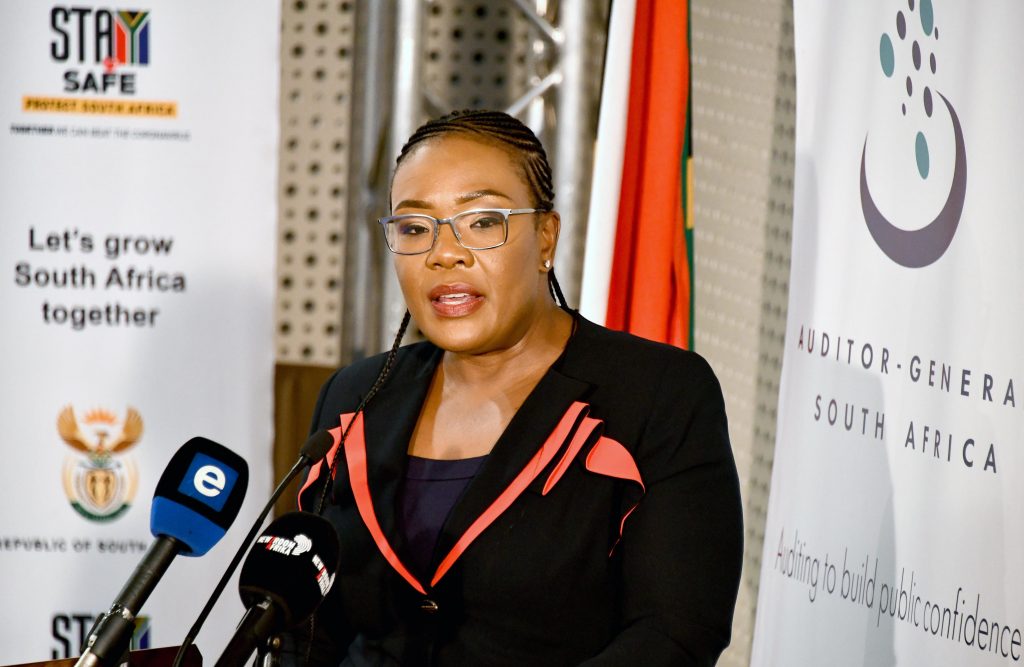
The above is Tsakani Maluleke’s foreword extracted from the Consolidated general report on national and provincial audit outcomes. Read the full report here.
#AuditorGeneral #warns #reform #pace #slow #restore #trust