
Cape Town’s 2026/27 budget proposes lower property rates and tariff increases kept closer to inflation, following last year’s backlash and ongoing legal challenges to its tariff structure.
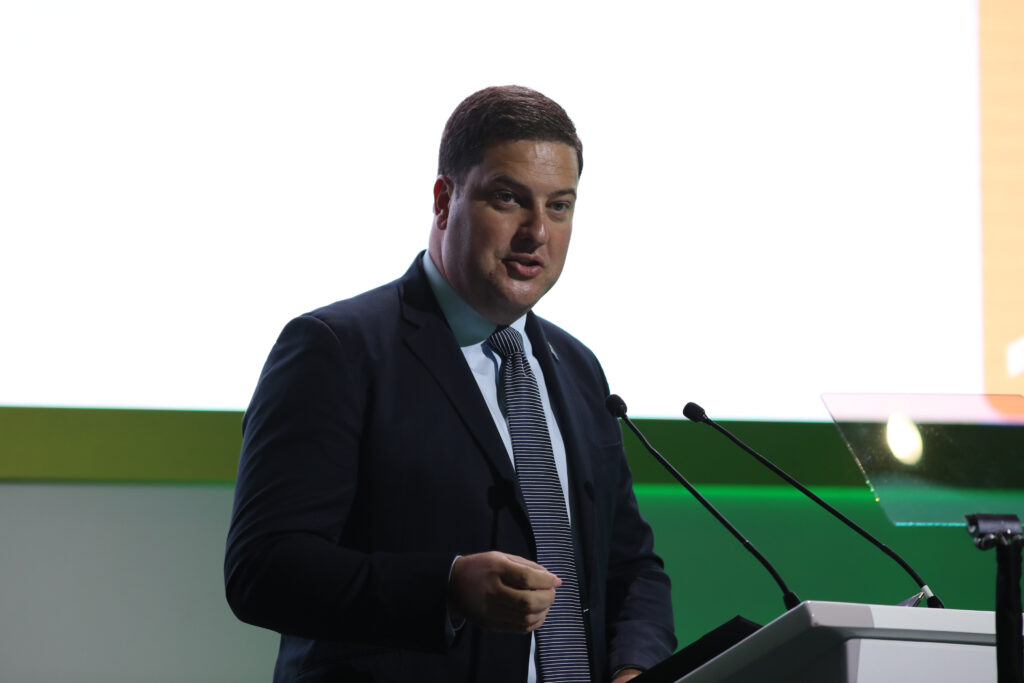
Tabling the city’s final budget of the current administration on Wednesday (31 March), Mayor Geordin Hill-Lewis said around 60% of households would see no increase – and may even see a reduction – in their rates bills, despite rising property values.
Read:
Cape Town affordable housing projects inch forward
Rising rates rage: Cape Town homeowners push back
Cape Town punts growing middle class to sustain services
This comes after months of public anger and court action over the city’s tariff structure, particularly the linking of fixed charges for water, sanitation and cleaning to property values – a move ratepayer groups say unfairly impacts the middle class.
Under the new proposals, the city will:
- Cut the rate-in-the-rand by 10.2%;
- Keep the first R500 000 of property value rates-free (extended to homes worth up to R8 million); and
- Limit increases in key services to modest levels.
“In this budget, we have managed to keep increases to water, sanitation, refuse collection and city cleaning to a minimum,” the mayor said.
Water and sanitation tariffs will rise by 4.5%, refuse and cleaning charges by about 3.75%, and electricity by 6.67% – “below Eskom’s increase to municipalities” he added.
The city has also widened its rebate criteria to ensure vulnerable households are not pushed out by higher property valuations, while pensioners and low-income residents continue to benefit from expanded relief measures.
Read: Property owners, ignore the new valuation at your peril
Tariff issue far from settled
The city’s broader tariff framework is still facing a legal challenge.
ADVERTISEMENT
CONTINUE READING BELOW
Property industry body Sapoa and lobby group AfriForum are contesting the legality of linking fixed service charges to property values, arguing this may contravene municipal legislation and disproportionately affect homeowners who cannot pass on costs.
Read:
Court to hear Cape Town property tariff case
Geordin Hill-Lewis hits back at Sapoa tariff court challenge
The dispute has already triggered a prolonged standoff, with the Western Cape High Court hearing arguments late last year on whether the city’s tariff model is lawful and constitutionally sound.
Hill-Lewis has defended the approach as necessary to fund infrastructure while protecting lower-income households, describing it as a “pro-poor” model.
Infrastructure push continues
Alongside the tariff adjustments, the 2026/27 budget continues the city’s infrastructure investment programme, with the capital budget more than doubling over the current term to over R13 billion.
Read:
Cape Town goes private to boost electricity and water supply
Cape Town opens electricity grid to private energy [Mar 2025] trading
The bulk of spending is directed towards lower-income areas, with 75% of infrastructure investment benefiting poorer households, the mayor said.
Key allocations include:
- R5.4 billion for water and sanitation in 2026/27;
- R3.3 billion for the MyCiTi bus expansion;
- R3.7 billion for roads and pothole repairs; and
- R6.8 billion for safety and security.
Over the medium term, the city will also invest R6 billion in electricity grid upgrades and alternative energy to reduce reliance on Eskom.
ADVERTISEMENT:
CONTINUE READING BELOW
Strandfontein Pavillion and N2 Edge barrier
The budget continues to prioritise basic services, with R1 billion set aside for streetlight maintenance and R1.2 billion for refuse collection vehicles.
Additional funding has been directed at community infrastructure, including sports facilities and public spaces, alongside the ambitious R300 million redevelopment of the Strandfontein Pavilion.
(Strandfontein, some 8km from Muizenberg, is situated on the False Bay coastline along Baden Powell Drive – the road linking Muizenberg and Khayelitsha.)
The upgrade will include new shops and restaurants, concert and event spaces, and a base for the National Sea Rescue Institute (NSRI).
Hill-Lewis called on the business community in nearby Mitchells Plain to bring proposals for the Strandfontein Pavillion upgrade. “We are building the space. But the businesses, the restaurants, the cafes must be yours,” he said.
The budget also makes provision for the N2 Edge barrier, with R114 million allocated to design and construction along parts of the highway.
Listen/read: Cape Town defends N2 wall and property rates recalibration
The project, which entails a security barrier wall plus lighting and pedestrian safety upgrades along the N2, is aimed at improving safety for motorists and nearby communities following a rise in violent incidents along the route.
“We are paying no attention to those posturing and grandstanding on this project, especially those urging us to pursue ‘healing’ and ‘hand-holding’ with the criminals,” Hill Lewis said in reference to criticism from the ANC and Good Party, which have questioned both the intent and priority of the barrier.
#Cape #Town #trims #rates #caps #tariff #hikes #latest #budget