
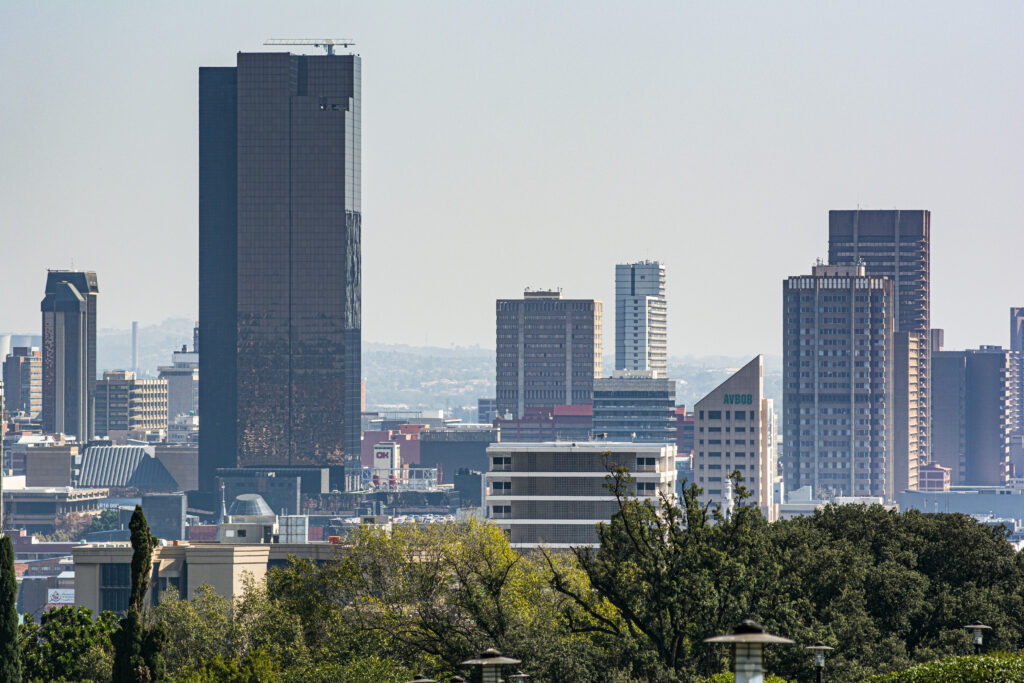
The City of Tshwane has slammed well-known Harlequin sports club in Groenkloof, Pretoria, with a notice to remove all its advertising boards within seven days and “all material related to” its alleged unlawful use of its property within 28 days.
The council accuses the club of using the land at 62 Totius Street in contravention of its unspecified zoning and demands that the land be restored to its original condition within the same 28 days.
Read:
Tshwane ‘wilfully ignoring’ its own property rates policy – Rates Watch
And then it was the seventh day – and still no power in Silvertondale
Tshwane CFO given 7 days to avoid precautionary suspension
It seemingly requires the club – with its two rugby fields, two bowling greens, cricket field, squash court, various clubhouses, pavilions and restaurant – to demolish buildings and facilities worth millions and “restore” it to farmland.
This is even though, according to club chair Chaka Croukamp, the club applied in 2021 to have the land rezoned and is still awaiting the council’s approval.
The notice served on the club by the council carries threats of fines, criminal prosecution and the levying of property rates on a punitive scale.
Ben Espach, director of valuations at Rates Watch, says the property is currently valued at more than R32 million according to the council’s own valuation roll. It is classified as a Public Benefit Organisation for property rates purposes, but this does not change the zoning.
ADVERTISEMENT
CONTINUE READING BELOW
Read:
Tshwane VIP protectors to earn big bucks
Tshwane to unilaterally implement allowance for VIP protectors
Tshwane must pay up for ‘sinkhole’ losses suffered by Crawdaddy’s
Broke Tshwane wants to cut a deal on R1.5bn salary backpay
According to Espach, the council could increase Harlequin’s property rates bill from R8 109 per month at the current discounted rate to R243 387 per month at the legally approved punitive rate.
Croukamp says the news the club’s management expected from the council was that its rezoning application had finally been approved.
“I don’t understand why it takes five years to tell us we must remove our restaurant, sports fields, pavilions and all sports buildings,” he says. “All we want to do is keep our sports fields and provide sports facilities to the community.”
The well-known Harlequin rugby club was established as far back as 1902. Initially, the club leased the land from the city council, but in the 1990s the Pretoria City Council – of which the Tshwane Metropolitan Council is the legal successor – offered it for sale to the club, and they accepted the offer.
Today it houses several other sports clubs with a combined membership of between 500 and 700, as well as a rugby academy where children “from eight to 18” are coached, says Croukamp.
ADVERTISEMENT:
CONTINUE READING BELOW
Schools in the area use the sports facilities, and any member of the public can use the restaurant or other facilities.
AfriForum called in
The Harlequin board decided at its meeting a week ago to tackle the issue together with AfriForum as a community project.
Maree van den Berg, AfriForum’s district coordinator for greater Pretoria South, says: “The Tshwane metro’s failure to fulfil its administrative duties could now lead to a club, which has played an important role in the community since 1903, being closed. We are already consulting with our legal team about our next steps.”
He says that in addition to the important role the Harlequins sports club plays in local sport and youth development, the economic impact of this sports club cannot be underestimated. It provides a steady income to about 10 individuals over the course of a year.
Espach advises the club to search through its archives to determine whether it may previously have worked with a town planner and possibly has records showing that the council approved a consent use for the property.
He adds that if the building plans for the structures on the property were approved by the council, it would give the club ammunition to show that the council was fully aware of the land use on the property.
ADVERTISEMENT:
CONTINUE READING BELOW
The City of Tshwane did not respond to questions from Moneyweb about the matter.
City formalising illegal developments
In the meantime, the council is engaged in a comprehensive process to formalise 17 illegal developments in and around Pretoria.
Although the council currently levies little, if any, property rates on the luxury homes in many of these developments, it has decided against imposing property rates on a punitive scale there, which it is entitled to do based on the unlawful land use.
Read:
Tshwane must enforce law in illegal Afrikanerdorp Kleinfontein – court
Questions about illegal Kleinfontein settlement’s own bank
Multimillion-rand houses mushroom in illegal Tshwane development
Sapoa calls for action on illegal developments in Tshwane
Broke City of Tshwane forfeits billions as illegal developers get free ride
Tshwane moves to ‘standardise approach to illegal developments’
Tshwane to consider demolishing houses in illegal developments
City of Tshwane to clamp down on illegal property developments, but when?
City of Tshwane clamps down on illegal land use
Tshwane asks court to validate roadmap for Kleinfontein formalisation
Kleinfontein ‘troublemakers’ broker deal with Tshwane
#Tshwane #throws #book #historic #sports #club