
- Crude oil prices are spiking due to the Trump administration’s 8:00 PM ET deadline for Iran to reopen the Strait of Hormuz.
- A severe supply shock is being priced in following reported strikes on Iran’s Kharg Island and a threat to close the Bab al-Mandeb Strait.
- The physical market indicates panic over immediate availability, as evidenced by WTI prompt spread backwardation widening to over $16/bbl.
- The immediate price outlook is determined by three scenarios: further escalation (targeting $140/bbl), a diplomatic ceasefire (pulling back to $100/bbl), or a prolonged, rangebound stalemate ($105–$115).
Most Read: Chart alert: WTI crude oil whipsawed above 20-day MA ahead of Trump’s speech and US-Iran ceasefire hopes
Crude oil prices have undergone massive price swings this Tuesday, with WTI Crude piercing the $106/bbl mark and Brent trading firmly above $111/bbl reaching a high around $114.30/bbl.
As we have seen so often in recent months, the market remains entirely headline-driven, but today’s developments have added a layer of geopolitical risk that is difficult to overstate.
The Catalyst: A Looming Deadline
The primary driver behind today’s spike is the 8:00 PM ET deadline set by the Trump administration for Iran to reopen the Strait of Hormuz. President Trump’s rhetoric at yesterday’s press conference suggesting that Iran’s infrastructure could be “taken out in one night”, has sent a wave of risk aversion through global markets.
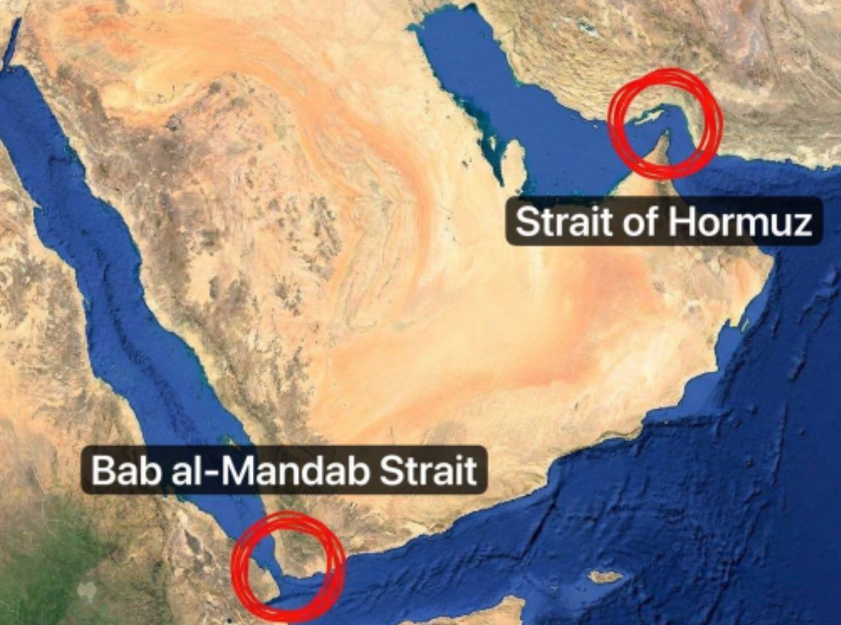
The threat is no longer just theoretical. Reports of strikes targeting Iran’s Kharg Island oil export hubs have traders pricing in a severe supply shock. Given that the Strait of Hormuz carries roughly 20% of global oil and LNG flows, the “fear premium” is back with a vengeance.
After the strikes on Kharg island a Reuters report stated that Iran officially threatened to close the Bab al-Mandeb Strait “if the situation gets out of control”.
The stakes for the global economy are staggering, as the Bab al-Mandeb Strait currently facilitates approximately 12% of all global seaborne trade. Market analysts warn that a total closure of this chokepoint could send crude oil prices soaring toward the $150 per barrel mark.
With the Trump administration’s deadline now less than 10 hours away, the market is bracing for a potential supply shock that could redefine the global energy map overnight.
Risks and Potential Scenarios
Moving forward, we are looking at three distinct scenarios that could dictate price action over the hours and days:
- The Escalation Scenario (The Bull Case): If the 8:00 PM deadline passes without a resolution and we see further military strikes on Iranian energy facilities, oil could easily scream through $120/bbl toward $140/bbl. The damage to infrastructure like the Al Taweelah smelter and Kharg Island suggests that even if a ceasefire is eventually reached, the supply side will remain constrained for months.
- The Diplomatic Breakthrough (The Bear Case): US allies including Egypt and Turkey are reportedly pushing for a 45-day temporary ceasefire. If Tehran softens its stance on the Strait of Hormuz, we could see a massive “long squeeze,” sending prices back toward the $100 psychological level almost instantly.
The Grinding Stalemate: Iran has so far rejected the 45-day proposal, demanding permanent sanctions relief and reconstruction guarantees. A prolonged standoff with sporadic headlines would likely keep oil rangebound but elevated between $105 and $115, supported by the ongoing SPR releases from the US Department of Energy to curb price pressures.
Technical Outlook: Where to Next?
From a technical standpoint, WTI crude is exhibiting strong bullish momentum on the H4 chart, currently trading near the $106 handle. The price has successfully cleared the psychological $100.00 mark, which now serves as a primary support level.
The immediate trend is supported by the 100-period SMA (blue) at $96.13, while the 200-period SMA (gold) remains far below at $85.56, underscoring the aggressive nature of this rally. With price action making higher highs and holding above previous resistance-turned-support zones, the technical path of least resistance remains skewed to the upside, targeting the $110.00 level next.
Physical Tightness: It’s not just speculative noise; the physical market is screaming tightness. The NYMEX WTI prompt spread has widened to a backwardation of over $16/bbl, nearly double where it sat at the end of March.
When you see a prompt spread widen to a $16/bbl backwardation, the market isn’t just “bullish”, it’s in a state of panic over immediate availability. In a normal market (contango), future prices are higher to cover storage costs.
In extreme backwardation, the premium for “oil right now” skyrockets.
WTI Crude Oil Four-Hour Chart, April 7, 2026

The Bottom Line
The short-term trend is turning cautiously bearish. If the price fails to hold above $106.00, we could see a deeper retracement toward the $104.22 support level. However, given the geopolitical risks, any further supply shocks could quickly invalidate this technical pullback and push prices back toward $120.00.
Follow Zain on Twitter/X for Additional Market News and Insights @zvawda
Opinions are the authors’; not necessarily that of OANDA Business Information & Services, Inc. or any of its affiliates, subsidiaries, officers or directors. The provided publication is for informational and educational purposes only.
If you would like to reproduce or redistribute any of the content found on MarketPulse, an award winning forex, commodities and global indices analysis and news site service produced by OANDA Business Information & Services, Inc., please refer to the MarketPulse Terms of Use.
Visit https://www.marketpulse.com/ to find out more about the beat of the global markets.
© 2026 OANDA Business Information & Services Inc.
#Hours #Oil #looming #deadline #threatening #Strait #Hormuz