
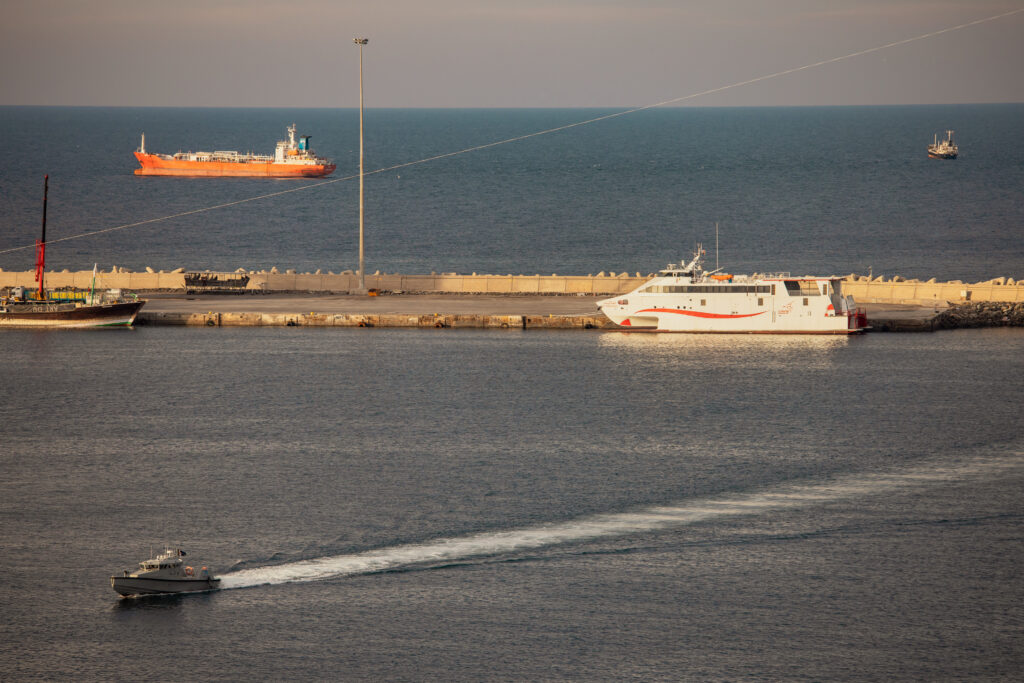
Shipowners are rushing to understand the fine print of a US-Iran ceasefire that could temporarily unblock the Strait of Hormuz, potentially opening an exit for more than 800 vessels trapped in the Persian Gulf.
The vital waterway has been virtually closed since US and Israeli strikes at the end of February prompted Iran to tighten its control, triggering an unprecedented energy-supply crunch. Then, hours before a deadline set by President Donald Trump ran out during the US evening on Tuesday, the two sides agreed a ceasefire in exchange for a reopening.
Key details remain uncertain: Iran says it has agreed to two weeks of safe passage in coordination with its armed forces and within “technical limitations”, while Trump announced a “COMPLETE, IMMEDIATE, and SAFE OPENING”. Trump said in a separate social-media post that the US would be “helping with the traffic build up” and “hangin’ around” to ensure smooth flows.
Shipowners in Asia, the Middle East and Europe, however, greeted the possibility of a reopening with both relief and caution. There was little immediate change in traffic around the strait on Wednesday, though several said they were calling insurers and security advisors, and had put vessels on standby. They asked not to be named given the sensitivity of the issue.
“We will closely monitor the situation,” a spokesperson for Tokyo-based Nippon Yusen Kabushiki Kaisha, one of the world’s largest shipping companies, said by phone.
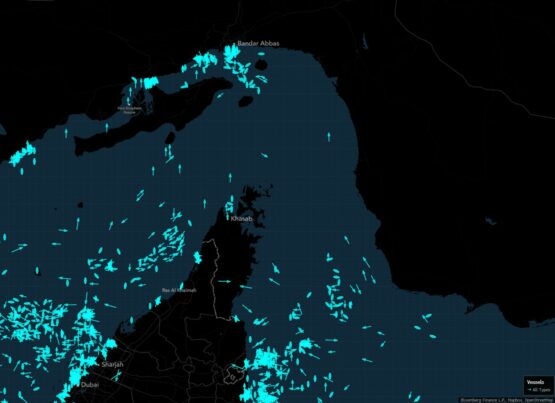
Ships of all types were seen on Wednesday morning clustered on either side of Hormuz, around Dubai in the Persian Gulf and Khor Fakkan in the Gulf of Oman.
ADVERTISEMENT
CONTINUE READING BELOW
In the past six weeks, traffic through one of the world’s busiest energy thoroughfares has slowed to a trickle, relative to the 135 or so vessels that transit daily in peacetime.
“You don’t switch global shipping flows back on in 24 hours,” said Jennifer Parker, adjunct professor at the University of Western Australia Defence and Security Institute. “Tanker owners, insurers and crews need to believe the risk has actually reduced — not just paused.”
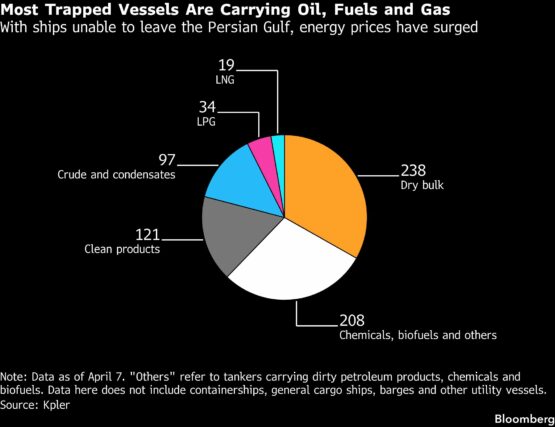
Ships that transport energy make up a large part of the fleet that’s stuck inside the gulf, data from intelligence firm Kpler show. There are currently 426 tankers hauling crude oil and clean fuels, plus 34 liquefied petroleum gas carriers and 19 liquefied natural gas vessels. The remainder are carrying dry commodities, like agricultural or metal products, or containers.
Ceasefire plans are a necessary step, but only an initial one, said Lewis Hart, head of marine in Asia at insurance broker Willis Towers Watson. “Even within a two‑week window, we expect activity to restart in a measured manner rather than all at once,” he said.
Traders and shipowners will now be closely monitoring which ships start making their way to transit the strait in either direction and how they fare. As of Wednesday morning, more than 1,000 vessels are waiting on both sides, in clusters around Dubai and Khor Fakkan, in the Gulf of Oman.
“It’s good to see that the market is reacting the way it is, but this is day one of a tentative ceasefire,” Michael Pregent, a former US Intelligence advisor, told Bloomberg Television. “We are likely to see the regime control who moves through, who is charged what, and who is denied.”
ADVERTISEMENT:
CONTINUE READING BELOW
The first two ships to attempt an exit since the announcement appeared to be sailing as a pair toward Iran’s Larak and Qeshm islands on Wednesday morning, ship-tracking data show. One of them is the Tour 2, a US-sanctioned Suezmax that’s flagged to Iran.
Sailing next to the tanker is a Greek-owned bulk carrier, NJ Earth, whose voyage history within the Persian Gulf suggests either spoofing to hide location or interference by electronic warfare. There were no contact details listed on the database Equasis for its owner, NJ Earth Marine Ltd., and manager, NJ Trust Marine Ltd.
Other ships with links to Iran appear to be heading toward Hormuz from within the Persian Gulf. None has been observed crossing in the opposite direction.
Movement of LNG ships will also be particularly closely monitored, as no loaded carrier has made it through the strait since the war began and one recent attempted transit by two tankers ended in a last-minute U-turn. About 20% of global LNG traffic went through Hormuz last year.
According to an International Maritime Organization tally at the end of March, some 20,000 civilian seafarers are stuck on board trapped ships and other utility and support vessels. Those crew members have been facing dwindling supplies, fatigue and psychological stress, the United Nations agency warned.
© 2026 Bloomberg
#Shipowners #eye #Hormuz #truce #vessels #trapped