
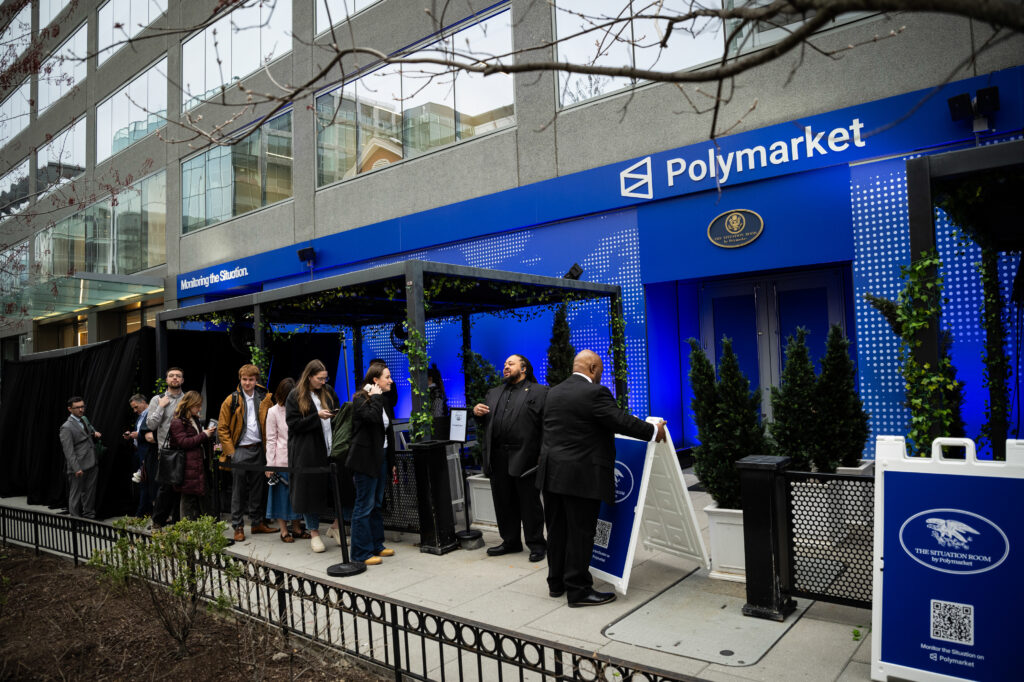
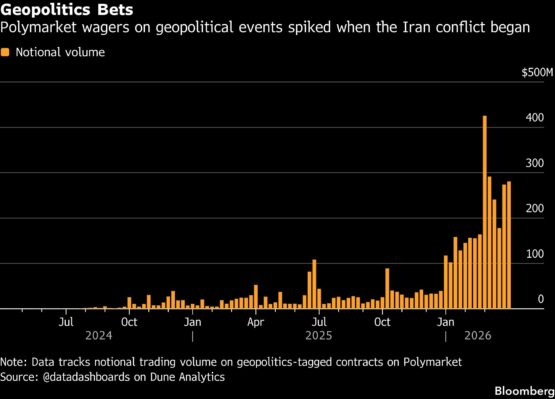
Bets on a ceasefire between the US and Iran have sent more than $170 million coursing through Polymarket, making it one of the largest geopolitical wagers in the short history of prediction markets.
Now, the aftermath is raising the same questions that have dogged the platforms for months: whether bettors are trading on inside information, and whether the platforms can cleanly settle the contracts they broker.
A series of well-timed Iran wagers placed on Polymarket by freshly created anonymous accounts have generated hundreds of thousands of dollars in profits so far, prompting analysts to scour the trades for tell-tale signs of insider activity. Some payouts on Middle East-related bets are now frozen in a dispute, with traders unable to collect as users debate what constitutes a ceasefire.
Together, they expose the growing pains of an industry that is still building the infrastructure to match its ambitions.
Almost all of the recent cases that raised insider trading concerns have been based on circumstantial evidence, with no smoking gun pointing to specific insiders at work. On Wednesday, blockchain analytics firm Lookonchain highlighted three recently created accounts that secured more than $480,000 in profits by betting on a ceasefire by April 7 and selling the positions at high prices.
The final result of the April 7 contract remains under dispute, a process that will force most traders to wait for more than two days for payouts. Total volume on the market has topped $60 million and remains open for trading while the dispute is resolved.
The contracts highlight a persistent problem in prediction markets, where real-world events don’t always resolve according to black-and-white criteria. What’s more, the growing array of suspicious activity is adding urgency to efforts to address the new risks opened up by prediction markets at a moment when Wall Street is moving to legitimize them and everyday users are piling in.
ADVERTISEMENT
CONTINUE READING BELOW
Prediction markets offer a way to make yes-or-no bets on events ranging from sports to elections and awards shows. Polymarket also uses its operations outside the US to list contracts tied to military conflict, resulting in heavy scrutiny from lawmakers. There’s growing momentum in Congress to rein in the nascent industry.
Polymarket and its largest rival Kalshi have sought to crack down on insider trading as their platforms grow in popularity. Both firms have signed partnerships with third-party companies to help monitor the issue, and tightened their own rules to define more clearly when bets would be considered as having acted on inside information.
Polymarket did not immediately respond to a request for comment.
Resolving disputes
Disputes over how markets resolve are frequent, even if they only affect a small fraction of the thousands of contracts offered on Polymarket every day.
On the platform, anyone can propose how a market should resolve by posting a small amount of collateral. If there’s a disagreement, another user can dispute the outcome. The matter is then put to a vote among holders of a cryptocurrency called UMA, with traders debating the evidence in a public Discord chatroom.
Some traders have argued that the ceasefire deal between the US and Iran would fall under a “temporary tactical stand-down,” which wouldn’t count under the rules drawn up by Polymarket. Others pointed to a statement from Iranian foreign minister Abbas Araghchi which said Iran would halt its “defensive operations,” arguing that he hadn’t ruled out offensive maneuvers.
Other Polymarket contracts that track truce dates as far ahead as December 31 have already resolved in favor of a ceasefire, complicating the matter further.
ADVERTISEMENT:
CONTINUE READING BELOW
The search for a pattern
Bettors on Polymarket can trade anonymously as the exchange doesn’t conduct identity checks, but their activity is visible on Polymarket’s website and in blockchain transactions. Traders can also wager across multiple accounts, meaning losses elsewhere may not always be immediately apparent.
The challenge of identifying insider activity on a pseudonymous platform has spawned an emerging cottage industry of digital sleuths. There are several hallmarks that analysts have learned to associate with insider trading — a brand new account with successful bets concentrated in a single market tends to fit the bill.
A recent academic study from Columbia Law School and the University of Haifa examined Polymarket’s blockchain ledger for patterns consistent with the use of nonpublic information, flagging transactions that generated profits of around $143 million over two years. The researchers cautioned that well-timed trades aren’t proof of privileged access.
That tension was evident on Wednesday when blockchain forensics firm Bubblemaps SA highlighted a set of suspicious trades, but cautioned they may not have been made by insiders. Three accounts that correctly predicted previous attacks against Iran had placed fresh bets on a truce before April 15, resulting in profits of more than $560,000. Still, the accounts do not have a perfect record, having lost money on similar markets in the past.
The ceasefire itself came together in a matter of hours, raising questions about how much advance knowledge anyone outside small group of negotiators could have had.
“We cannot say for certain that these accounts are insiders,” Bubblemaps said in a social media post. “Still, their track record of correctly calling surprise attacks on Iran suggests they may have access to better information than most.”
© 2026 Bloomberg
#Polymarket #Iran #bets #draw #fresh #dispute #insider #scrutiny