
You can also listen to this podcast on iono.fm here.
Artificial intelligence (AI) has become so good that it is increasingly difficult to tell whether you are looking at the real Elon Musk or a fake.
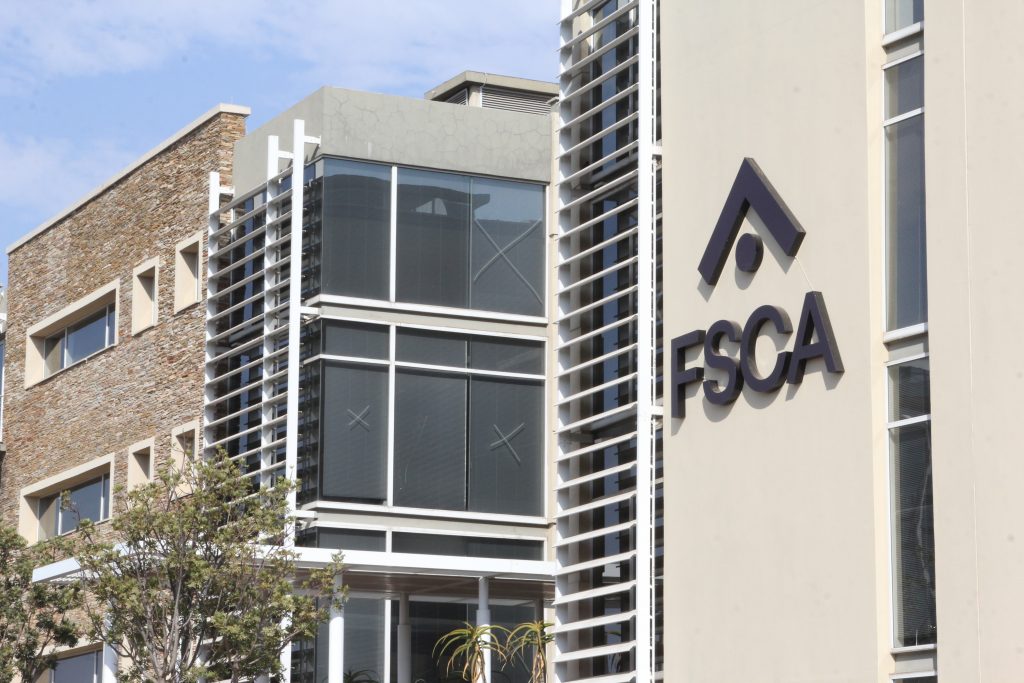
A new and growing trend among scammers is impersonating senior executives at the Financial Sector Conduct Authority (FSCA), using deepfake videos that endorse some or other investment scheme.
Listen/read:
How to spot a crypto scam
Celebrity impersonation using AI is the new scam
How to talk to a family member caught up in an online scam
“The [scammers] get the money in for selling signals, and it’s all nonsense. We can’t say it enough: people must stay away from that,” says FSCA head of enforcement, Gerhard van Deventer, speaking on Moneyweb’s Crypto Pod.
Signal sellers appear to have a trading system that works, but if you take the time to investigate, you’ll find that their profit track record is completely fictitious.
Another scam involves impersonating FSCA executives, with promises to help recover money you may have lost. Social media has been a gift for those who would part you with your money.
“My advice is always: don’t do investment business on social media,” says Van Deventer.
Read:
Deepfake imposter scams are driving a new wave of fraud
Luno impersonation scammers suck R700k from victim
FSCA warns against agents claiming to help recover lost Banxso funds
‘AfriMarkets onboards 80 clients daily from fake ads’ – former employee
The setup is all too familiar: a picture of a guy standing next to a luxury car, apparently living the life we all dream of.
As ridiculous as this may seem to those with some financial sense, it still works on thousands of people who are unable to spot the tell-tale signs of a scam.
We have now entered the era of ‘finfluencers’ – social media personalities who rope people into often questionable business schemes.
Most of these are wholly unfit – never mind licensed – to give financial advice of any kind.
Listen: FSCA Update: Cracking down on ‘finfluencers’
While some finfluencers perform a valuable service by warning the public about scams, many are effectively offering disguised financial advice (for which a licence is required), either by sharing personal experiences or promoting paid content.
When it comes to the crypto sector, Van Deventer notes that it is behaving surprisingly well.
There are now more than 300 Crypto Asset Service Provider (Casp) licences in issue, and we are roughly two years into the new crypto regulatory regime. This has weeded out most of the bad players, and any unregistered crypto businesses are quickly identified – usually by the Financial Intelligence Centre (FIC).
The regulation of SA’s crypto sector was a key milestone in the Financial Action Task Force (FATF) decision to remove the country from the grey list.
Many of the new Casp licences have been granted to banks and other entities already accustomed to a regulated environment.
Van Deventer also delves into some recent court victories for the FSCA, including the Pretoria High Court’s ruling last month that Fusion Guarantees – which provided construction guarantees to government contractors – was operating unlawfully without an insurance licence.
Another victory was the final liquidation of Banxso and the imposition of R2 billion in fines on two of its directors. Van Deventer says R100 million in funds had been preserved and released to the liquidators.
Read:
Banxso victim launches liquidation application [Oct 2024]
FSCA slaps Banxso and directors with R2bn penalty, refers matter to police [Dec 2025]
Liquidators seize documents and laptops in raid on Banxso offices [Dec 2025]
Has the Banxso case tarnished the reputation of online trading firms in SA, especially those involved in CFD trading?
“It harms everybody’s reputation,” says Van Deventer.
“It certainly harms the CFD traders’ reputation, and it will make people more wary of it. Let me hasten to add that’s not a bad thing. CFDs, by their very nature, are very high-risk investments. If I can get that message out.”
CFD trading is a zero-sum game, explains Van Deventer, where the company is effectively betting against its clients. In other words, when clients lose, the company wins.
A new development that will assist the FSCA in alerting the public to scams and other red flags in the financial sector is the I-Scan platform, operated by the International Organisation of Securities Commissions (Iosco).
This is a centralised database of regulatory warnings from around the world, not just SA. It helps identify unlicensed, fraudulent, or scam-related operators globally and is expected to be operational within the next few weeks.
“There was a time when you and I could see a scam a mile away because the English was bad, the information was incorrect, the website was one dimensional, et cetera.
“Those days are over. These are now very sophisticated operations run by experts, and it’s often syndicates that operate across the world,” says Van Deventer.
“We have certain areas that we flag. Cyprus is a good example of that. Israel is a good example of that. So it is problematic. But it is so very sophisticated today, so it’s best is to stay away from that type of thing on social media.”
For previous Moneyweb Crypto Pod episodes, click here.
You can also sign up for our crypto newsletter.
#Selling #trading #signals #scam #jour #FSCA