
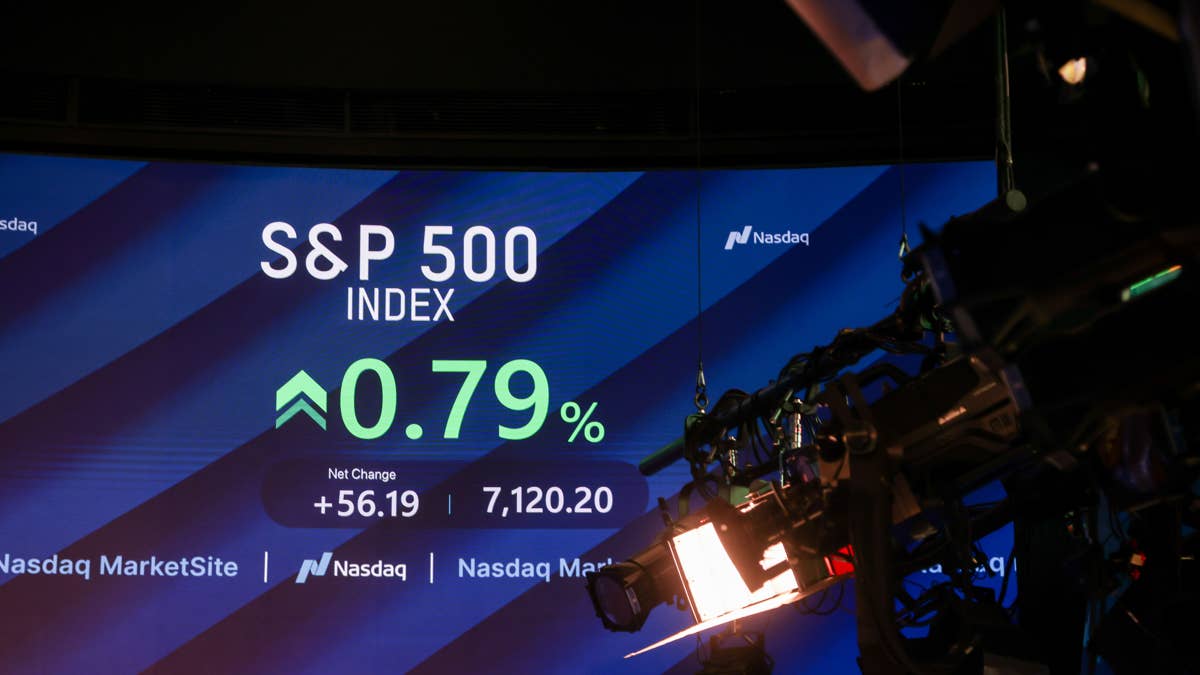
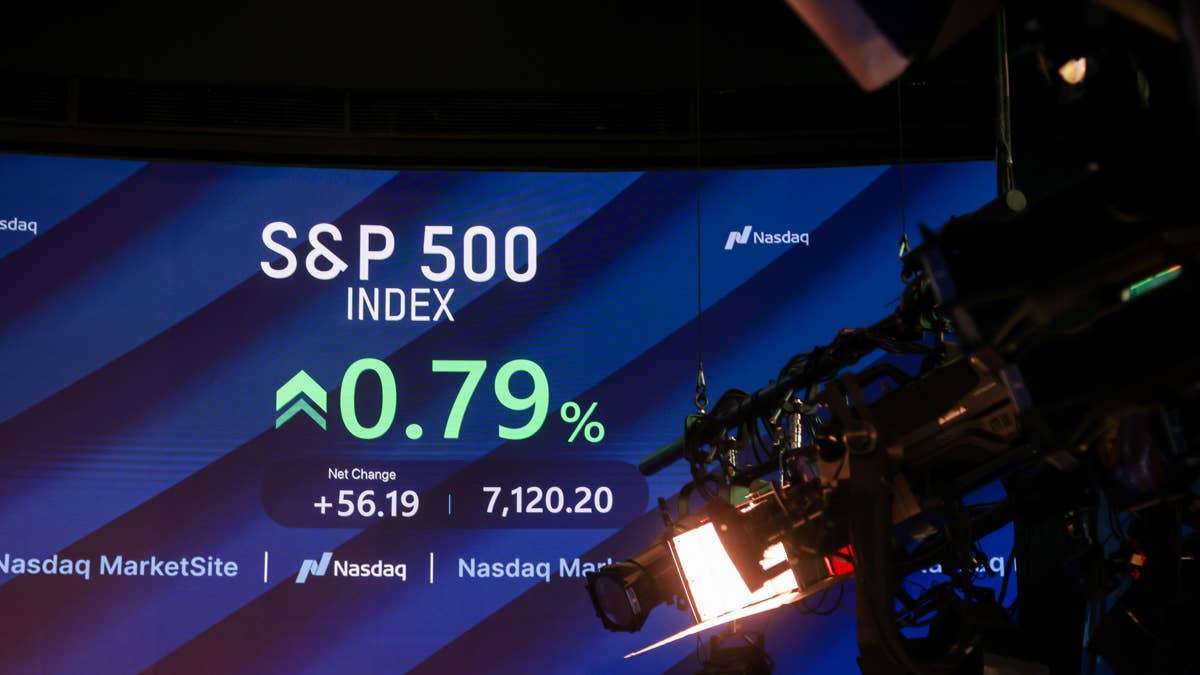
Wall Street’s most closely watched banks have been adjusting their market calls all year. Some have turned more cautious. Some have turned more bullish. Goldman Sachs is doing something more nuanced than either.
The firm is keeping its year-end S&P 500 target intact. But tucked inside that optimism is a warning that investors may not be watching closely enough.
What Goldman Sachs is projecting for S&P 500
Goldman Sachs is maintaining its year-end S&P 500 target of 7,600, a call that implies meaningful upside from current levels. The forecast rests on a specific earnings thesis: S&P 500 EPS is projected to rise from $275 in 2025 to $309 in 2026, a 12% year-over-year increase, and then to $342 in 2027, according to Jianshi.
The forward price-to-earnings multiple is held at 22x throughout. Goldman is not asking investors to pay more for the same earnings. It is betting that earnings themselves will be strong enough to justify current valuations and carry prices higher.
More Wall Street
- JPMorgan resets S&P 500 price target for the rest of 2026
- Vanguard challenges the S&P 500 as a one-stop strategy
- Goldman Sachs resets Broadcom stock forecast
Chief U.S. equity strategist Ben Snider framed the call as a maturing bull market, not an overheating one. “The rally is maturing rather than overheating,” Snider said, according to FinancialContent.
His message to investors is that the next leg of this bull market will be driven by tangible earnings growth, not further valuation expansion.
AI is central to the earnings thesis
Goldman’s bullish case leans heavily on AI-driven productivity. The firm believes AI adoption is boosting corporate margins and operational efficiency in ways that can sustain earnings growth, even as the broader economy navigates uncertainty.
Six major technology firms are expected to contribute nearly half of the S&P 500’s total earnings growth in 2026, according to ROIC News. But Goldman’s outlook also emphasizes a broadening of the rally beyond mega-cap tech. Semiconductors, financials, and other sectors that lagged in previous years are now expected to contribute meaningfully to profit growth.
The Fed provides an additional tailwind. Goldman expects the central bank to continue easing toward a terminal rate of 3.0% to 3.25%, which would provide the liquidity conditions needed to support elevated valuations, FinancialContent noted.
The warning inside the bullish call
Despite the constructive target, Goldman is not giving investors an all-clear signal. The firm has explicitly flagged “hot valuations” as a risk that could trigger increased volatility in the second half of the year.
The forward P/E of 22x is historically elevated. That means the market is not cheap, and any disappointment in earnings growth could remove the fundamental support holding current prices in place. Goldman is essentially telling investors that the easy part of the rally may already be behind them.
Snider’s message is equally pointed: Investors should shift from “growth at any price” to “growth at a reasonable price.” The next gains will require real profit delivery, not just optimism about AI or Fed easing.
Key figures from Goldman’s S&P 500 outlook:
- Year-end S&P 500 target: 7,600, maintained by Goldman Sachs, according to FinancialContent.
- 2026 S&P 500 EPS forecast: $309, up 12% from $275 in 2025, according to Jianshi.
- 2027 S&P 500 EPS forecast: $342, up 10% year over year, Jianshi reported.
- Forward P/E multiple: 22x, held unchanged throughout the forecast, FinancialContent noted.
- Bear case S&P 500 target: 5,400, outlined as a downside scenario, according to FinancialContent.
- Six major tech firms projected to contribute nearly 50% of total S&P 500 earnings growth in 2026, ROIC News noted.
- Goldman sentiment indicator recovered from -0.9 on March 27 to +0.8 currently, driven by renewed institutional buying, according to Jianshi.
Nagle/Getty Images
Economic risks Goldman is watching closely
Goldman’s constructive outlook does not come without clearly stated downside scenarios. The firm has flagged oil price shocks, geopolitical tensions, slower Federal Reserve easing, and valuation compression as risks that could break the earnings story underpinning the 7,600 target.
JPMorgan cut its own S&P 500 target to 7,200 earlier this year on similar concerns before subsequently revising back higher.
Geopolitics is a specific concern. Goldman notes that stock market fluctuations remain highly linked to geopolitical dynamics in the short term, with the Iran conflict among the variables being watched most closely, Jianshi noted.
The firm’s own sentiment indicator, while recovering, remains well below the historical peak of +2.8 recorded during periods of excessive market optimism.
Margin pressure is another watch item. Goldman has identified slower Fed easing and input cost inflation as potential headwinds that could compress corporate profit margins even if top-line revenue holds up. That would undercut the earnings-per-share growth projections on which the 7,600 target depends.
There is also a specific AI risk embedded in the call. If AI-driven revenue fails to materialize in the bottom lines of non-tech companies by early 2027, the 7,600 target could face a sharp correction and Goldman’s bear case of 5,400 could come into view, FinancialContent noted.
What Goldman’s take on S&P 500 means for investors
Goldman’s message to investors is not bearish. But it is not a simple buy signal, either. The firm is telling the market that the conditions supporting higher prices remain in place, while also making clear that the margin for error has narrowed significantly.
Broad market exposure may still make sense. But Goldman’s framework implies that stock selection and earnings quality matter more now than they did earlier in the cycle, when valuations were lower and the rally was less mature.
The practical read is that investors should watch Q2 and Q3 earnings reports closely. Those numbers will determine whether the AI productivity gains Goldman is counting on are actually showing up in operating margins across the S&P 500, or whether the 7,600 target is a best-case scenario rather than a base case.
Related: JPMorgan resets S&P 500 price target for the rest of 2026
#Goldman #Sachs #stark #message #SampP