
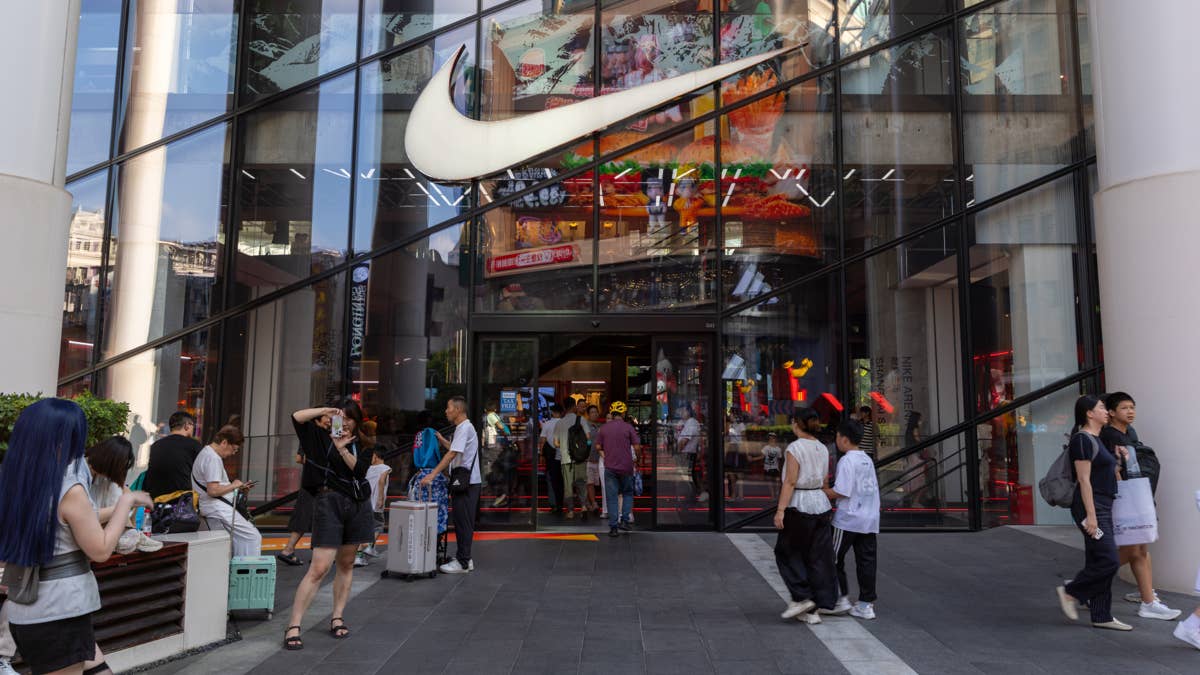
The jacket your nephew begged you to spend $700 on last winter probably has a Canadian flag on it somewhere. The trail running shoes a coworker won’t shut up about were designed in France. The tennis ball your kid hits at Saturday lessons came out of a factory traced back to Chicago.
None of that is wrong. None of it is the whole truth either.
I have been watching the sportswear business for a while, and the labels stitched into your closet are no longer telling you who actually owns the company that made them. There was a time, not that long ago, when global sportswear meant Nike, Adidas, and a handful of household names from Oregon, Bavaria, and a few familiar zip codes. Investors got used to that arrangement. Consumers did too.
That arrangement is breaking apart faster than most American shoppers realize, and the company forcing it apart is one almost nobody in the United States can name out loud. The Chinese owner of Arc’teryx, Salomon, and Wilson is now coming straight for Nike’s crown, and it just bought a piece of Puma to drive the point home.
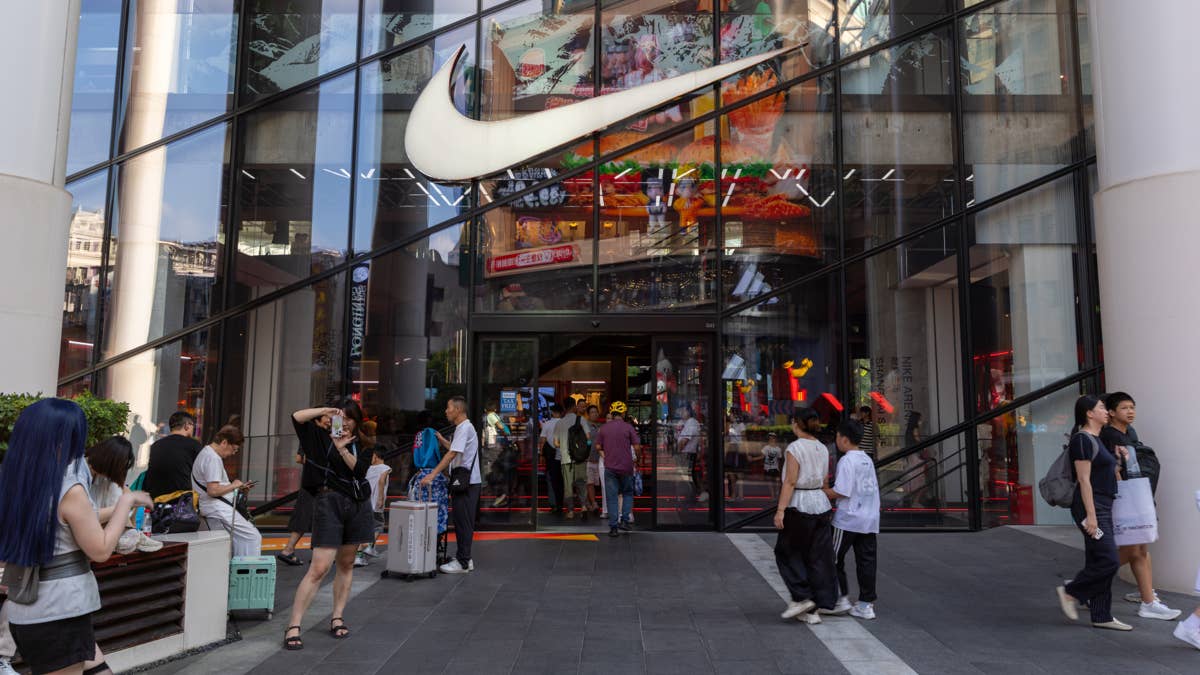
Photo by winhorse on Getty Images
Why Nike’s China problem keeps getting worse
Nike’s last earnings report told the story plainly. Sales in Greater China “fell 7%” during the quarter, with management warning of an expected “20%” drop in the current period, according to CNBC. Shares dropped more than 15% in a single session and hit a nine-year low.
CEO Elliott Hill told analysts the comeback “is taking longer” than he’d like, but said the direction “is clear”, reported CNBC. That has not been comfort enough for Wall Street.
Related: Nike’s sock-like $100 running shoe was just marked down to $75
JPMorgan cut its Nike price target “from $86 to $52,” with Goldman Sachs and Bank of America following with their own cuts, reported MarketWise.
What is happening on the ground in China is more than a normal cyclical slowdown. Younger Chinese shoppers are leaning into domestic brands as a matter of national pride, a movement called guochao. Nike’s home advantage in the world’s second-biggest sneaker market is gone.
For shareholders, the math is simple. The world’s biggest sneaker brand is staring at a multi-year turnaround in its most important growth market, while a competitor with deeper pockets and home-field advantage is moving in.
How Anta turned Arc’teryx into a Nike rival
The competitor is Anta Sports Products. The company is the world’s third-largest sportswear group, behind only Nike and Adidas. And in its home market it now sits ahead of both.
Anta’s playbook over the last decade has been simple. Rather than try to push its flagship Anta-branded shoes into foreign markets where they have no name recognition, the company has bought existing Western brands and used them as Trojan horses.
More Retail:
- Another mall retailer quietly lcosed over 150 locations
- Ultra wealthy shoppers flock to this 63-year-old rugged retailer
- 72-year-old mall retailers to close more stores in 2026
In 2019, Anta led a consortium that paid €4.6 billion to take over Finnish company Amer Sports (AS), picking up Arc’teryx, Salomon, Wilson, Peak Performance, and Atomic in one transaction. In January 2026, the group bought a 29% stake in Puma “for €1.5 billion,” reported Modaes. That move made the Chinese conglomerate Puma’s largest single shareholder.
Anta took “23% share in China, ahead of Nike at 20.7%”, according to Euromonitor data cited by Prism News. It is the first time a Chinese brand has unseated Nike in its second-biggest market.
Founder and chairman Ding Shizhong has been blunt about where this is going. The goal is not to be “the Nike of China,” but rather “the Anta of the world,” he said in 2005, per Business of Fashion. Twenty years later, he is moving on it.
When I ran the numbers against Anta’s own disclosures, the scale becomes uncomfortable for the duopoly:
Anta Group at a glance
- 2024 group revenue of RMB 70.83 billion, up 13.6% year over year.
- 23% share of China’s sportswear market vs Nike’s 20.7%.
- More than 12,000 Anta-branded shops in China, with plans for 1,000 stores in Southeast Asia within three years.
- 29% stake in Puma for €1.5 billion in January 2026.
What the Anta threat means for your portfolio
For American investors, the cleanest way to play this story is not Anta itself but Amer Sports (AS), which IPO’d on the New York Stock Exchange in February 2024.
Amer Sports has “nearly tripled its market value to $21 billion” since the listing, reported FashionNetwork. That run has outpaced peers like On Holding (ONON), Hoka parent Deckers (DECK), and even Anta itself..
TD Cowen analyst John Kernan has a buy rating on Amer Sports, telling FashionNetwork that Arc’teryx distinguishes itself from rivals like Patagonia and The North Face through “a much higher level of premiumization”. He believes shoppers will keep paying up for the brand’s leading innovation.
Not every analyst is a buyer. HSBC’s Akshay Gupta has a hold rating and warned that “the global brand rollout will not be easy” because of the brand’s price points and intense competition in Western outerwear, also per FashionNetwork.
My read is that the easy money on the long-Nike, short-everyone-else trade is gone for now. If you have Nike in a 401(k), the upside case still depends on Hill stabilizing China before Anta’s premium brands eat further into the high-margin athleisure and outdoor categories Americans actually buy.
The decade ahead for Nike and Anta
When I look at how this plays out, I keep coming back to one number. Anta Group did about $10.2 billion in 2024 revenue, per Modaes. Nike did about $51 billion in fiscal 2024. The gap is real.
Anta does not need to overtake Nike to hurt Nike. The Chinese group only needs to keep peeling off premium customers in China, and now in the West, while Nike’s restructuring costs and discounting grind through margins.
Anta chief operating officer Chen Ke once said the dream “in 2015 was to have revenue over 100 billion yuan ($15.36 billion) by 2025”, reported Business of Fashion. The company hit that mark a year early.
Beverly Hills was the soft launch for the Anta brand itself in February of last year. Puma was the down payment on European scale. Arc’teryx is doing the work in your kid’s high school hallways and at your local Whole Foods parking lot.
The next ten years will tell us whether Ding Shizhong’s twenty-year-old line about being “the Anta of the world” was a slogan or a forecast. For now, anyone holding Nike stock, working at a Nike retailer, or shopping for that next $700 jacket should know there is a new name on the door, even if it is not on the label yet.
Related: Nike releases new Air Force 1 floral design
#Chinese #owner #Arc039teryx #coming #Nike039s #crown