
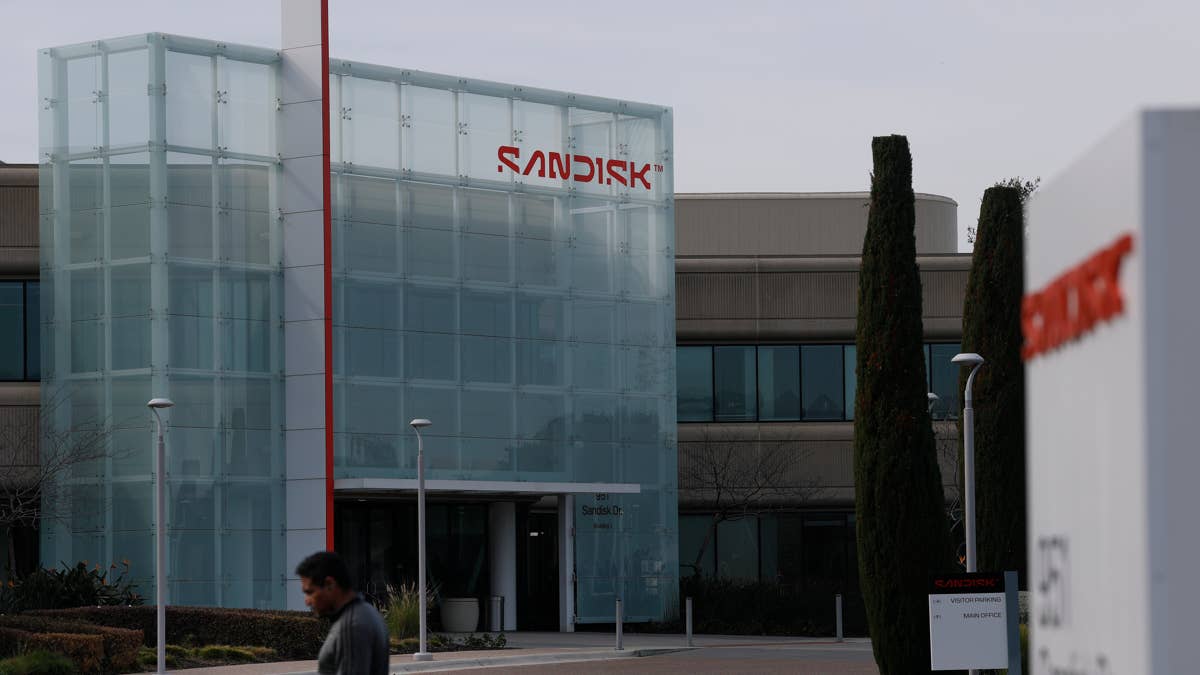
Sandisk was trading near $36 twelve months ago. It has since done something that most stocks never do in a lifetime. And on May 27, one of Wall Street’s major banks looked at that run and decided the story was not finished.
The argument it made for why is more specific than most investors are expecting.
What Barclays changed and the analyst behind the call
Barclays analyst Tom O’Malley upgraded SanDisk (SNDK) to Overweight from Equal-weight and raised his price target to $2,300 from $1,200 on May 27. The new target implies approximately 45% upside from the stock’s close of $1,589.55. Shares jumped 7.5% on the day of the upgrade.
More Wall Street:
- JPMorgan resets S&P 500 price target for the rest of 2026
- Vanguard challenges the S&P 500 as a one-stop strategy
- Goldman Sachs resets Broadcom stock forecast
The 52-week low for SanDisk was $36.21. The stock has gained more than 4,000% in the past twelve months, according to Investing.com. Barclays is saying the move is not over.
Why O’Malley’s thesis centers on contracts, not just pricing
The draft narrative around SanDisk upgrades has focused on memory pricing and supply cycles. O’Malley’s argument is more specific and more structural than that. His core thesis is about SanDisk’s contracting model, not just the market cycle it operates in.
O’Malley said SanDisk has taken an “aggressive and structurally innovative” approach to its New Business Models, highlighted at the company’s most recent earnings call. The NBMs are designed to deliver “demand certainty” for SanDisk while giving customers “supply assurance,” according to TipRanks.
The contracts vary in length, with the longest extending into 2031. They are structured around quarterly volume commitments that scale upward over the life of each agreement. Pricing combines fixed rates in the near term with variable pricing over the longer horizon, allowing SanDisk to capture upside if market prices rise.
The financial scale of those agreements is the most important number in O’Malley’s note: SanDisk has secured $42 billion in minimum contractual revenue and $11 billion in financial guarantees from these deals, TipRanks confirmed. That is not a cyclical trade. It is a contracted revenue floor that reduces the binary risk embedded in most memory stock calls.
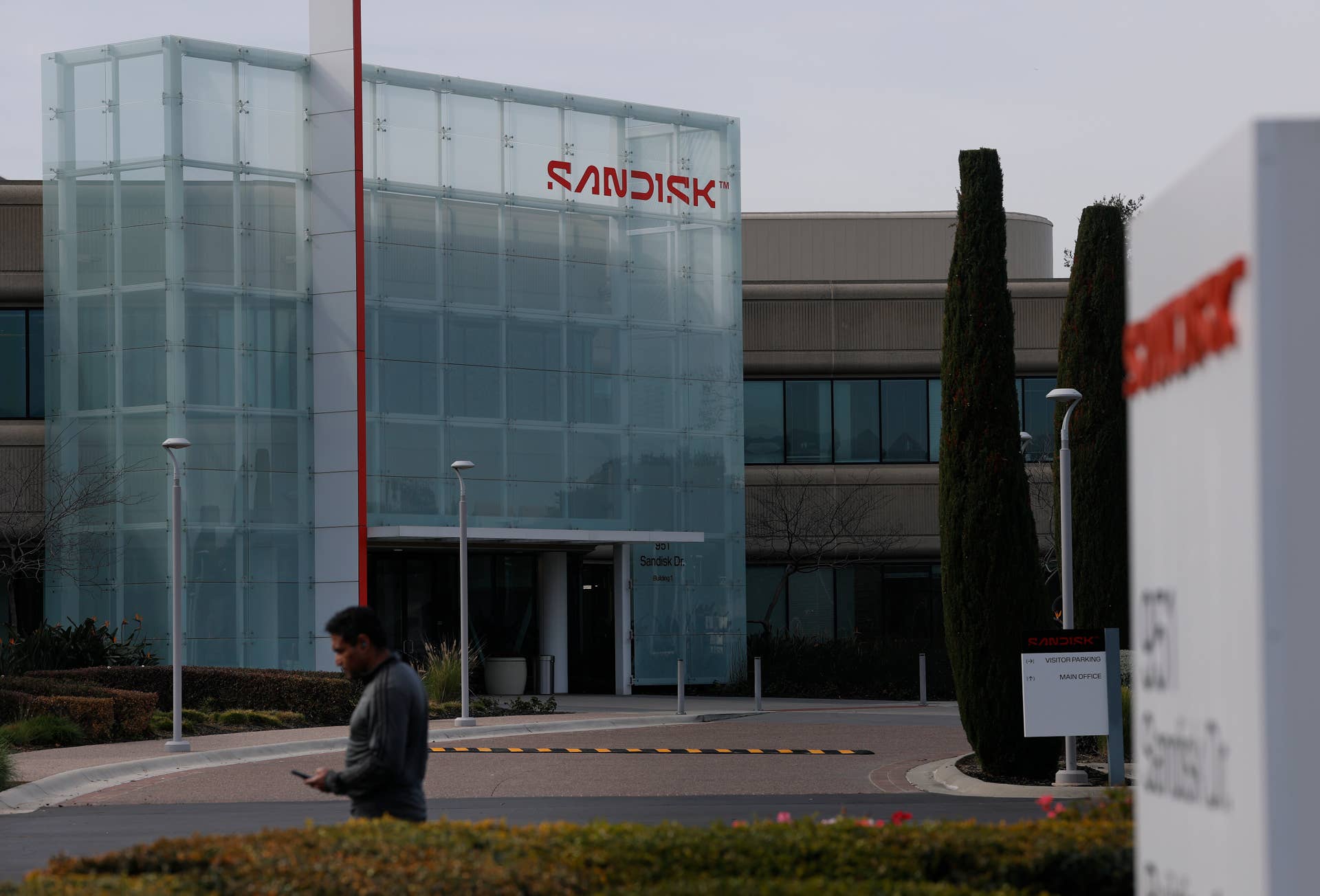
Sullivan/Getty Images
Where Barclays sees SanDisk sitting in the memory market
“We see Memory/Storage as the most attractive vertical below accelerators,” O’Malley said, according to CNBC. That framing positions SanDisk directly behind AI accelerators in terms of secular demand strength, a significant statement given how much investor attention the accelerator segment commands.
Barclays expects the supply-demand imbalance in memory to persist through 2027. The combination of contracted revenue floors, ongoing pricing strength, and AI-driven data growth is what O’Malley believes makes SanDisk’s current valuation defensible even after its extraordinary run.
On the same day, Barclays also raised its Micron price target to $1,175 from $675, maintaining an Overweight rating. The simultaneous moves signal a broad view that the memory upcycle still has duration, not a one-stock call, according to TipRanks.
Key figures from Barclays’ May 27 SanDisk note:
- New target: $2,300, raised from $1,200; upgraded to Overweight from Equal-weight; analyst Tom O’Malley; 45% upside from $1,589.55 close, according to CNBC
- Stock reaction: shares rose 7.5% on May 27; 52-week range $36.21 to $1,643.00; up more than 4,000% over the past twelve months, according to Investing.com
- Contract structure: $42 billion in minimum contractual revenue; $11 billion in financial guarantees; longest contracts extend to 2031, according to TipRanks
- Concurrent Micron call: Barclays raised Micron target to $1,175 from $675, Overweight maintained; O’Malley noted Micron signed its first five-year Strategic Customer Agreement, TipRanks confirmed
- Street comparison: Melius Research holds Street-high target of $2,350; Citi raised to $2,025 from $1,300, implying approximately 27% upside, according to Investing.com
What investors should understand about the risk in this call
The $42 billion revenue floor changes the risk profile of this stock in a way that most memory calls cannot claim. Contracted minimum revenue through 2031 means SanDisk’s earnings visibility is structurally higher than a traditional NAND cycle story. That is what justifies O’Malley’s willingness to nearly double a price target on a stock already up 4,000%.
The remaining risk is execution.
Variable pricing in the back half of those contracts means SanDisk can capture upside if memory prices rise, but the floor pricing in the near term also limits how much of any near-term pricing spike flows through to earnings.
The contracts trade some near-term upside for long-term certainty, which is the right trade if you believe, as O’Malley does, that the cycle has more duration than the market expects.
For investors, the question is whether $2,300 is the right target for a contracted revenue model with $42 billion in guaranteed minimums, or whether that floor was already priced in by the market before Barclays published its note.
The 7.5% rally on the day suggests the market had not fully reflected it. O’Malley’s 45% implied upside from that level suggests there is still room left to run.
Related: Citi revamps SanDisk stock price target for the rest of 2026
#Barclays #resets #SanDisk #stock #price #target #earnings