
You can also listen to this podcast on iono.fm here.
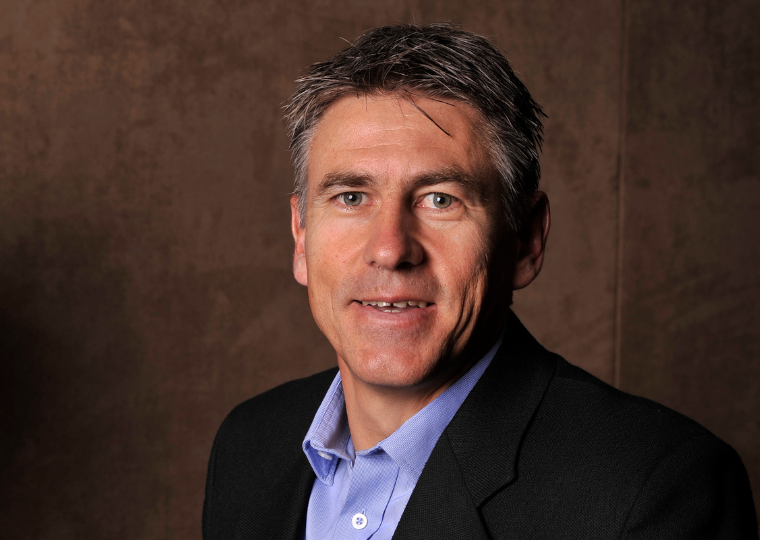
SIMON BROWN: I’m chatting with Ben Pierre Malherbe, CEO Calgro M3. Disclaimer up front – I hold shares in Calgro M3. We had results ending February 2026. Heps off 8.5%, dividend unchanged. Ben Pierre, appreciate the time.
You talk in these results around targeting sales in non-core assets. I want to get to your core assets in a moment. But before we do, how much have you got left in non-core to sell, because a big chunk of it in this period was from that non-core portfolio.
BEN PIERRE MALHERBE: Yes. Thank you, Simon. I think there are two components to the non-core assets. The one side is project we’ve got no intention of developing over the next five years, a project that we’ve owned for a long time and, for example, at the mid to high segment of the market where we’re not active anymore. So we would like to just trade out, sell them.
But I think what we saw this year is we had a big focus on trading out projects that are coming to the natural end of life, like Scottsdene. Scottsdene is a project that we’ve had for years, and we have a small exposure in that project.
But the focus this year was to freeze up the project so we can say we’re done with Scottsdene, move on, and unlock some of our capital that can go into new projects like Bankenveld. And that’s not only capital, financial capital, it’s all our resources internally.
Read: Housing group shifts focus from non-core projects in strategic overhaul
SIMON BROWN: Yes, human capital at the same time. You mentioned the Bankenveld District City [BDC]; you’ve commenced infrastructure build there. This is sort of top infrastructure, which is really great. But of course you’re now incurring costs. When do you start to build buildings, because that’s when the revenue starts to flow.
BEN PIERRE MALHERBE: Yes. So the first step was to get the bulk and link infrastructure. That’s the big infrastructure required to make this land developable. We’re currently building big roads and bridges across the Jukskei and the undercarriage under the N3 highway.
We’re currently doing that bulk and link and that should be completed by February next year, February 2027.
That will allow us to start internal infrastructure on about 5 900 opportunities.
We don’t need to do all 5 900 opportunities at the same time, but by February next year we can start the internal infrastructure that will lead into the construction about six to 12 months after that.
SIMON BROWN: What do you expect to spend this year, then, on that bulk and link and other top infrastructure, as I said, ahead of the revenue opportunities?
BEN PIERRE MALHERBE: Okay. The current existing agreement with the contractor on site is about a R280 million commitment between us and Eris [Property Group]. So it’s quite a substantial amount of money.
And then once we’ve got the internal or that infrastructure, then we start with the internal infrastructure. Then Calgro will do its own and Eris will do theirs required for the industrial, commercial.
Read:
Calgro M3 breaks ground on flagship Bankenveld mega development
Calgro M3 profits dip as it pours capital into Bankenveld District City
SIMON BROWN: The Bankenveld District City is obviously the big unit. This is 20 000-odd units. What are your other core assets you’re going to be focusing on going forward?
BEN PIERRE MALHERBE: Fleurhof stays a core asset. Fleurhof is a project of about 16 000 units that can yield. We’ve completed only about 10 000 of them. And we own land adjacent to that. That’s a project that will keep on growing. So we will see activity in Fleurhof for another 10 years at least.
Then we’ve got South Hills, where we’re doing in partnership with the City of Johannesburg, where there are 5 800 units still available to be constructed.
So if we look at core assets, the integrated projects of scale, that’s what we’re looking at spending our time on over the next five to 10 years.
SIMON BROWN: Fleurhof, South Hills and then of course the Bankenveld. I’m going to break this question into two parts. In the period we’re looking at – to end of February – how was bank lending, and have you seen any sort of change subsequent to that, because of course in the 10 weeks since your period end there have been all sorts of challenges in terms of fuel prices and potential inflation.
BEN PIERRE MALHERBE: Simon, we definitely saw a recovery in the market. The market that recovered first was the rental side. For the man in the street, the interest rates came down so slowly that it was never substantial enough to trigger anything.
So although the market recovered we saw our focus on sales, looking at people buying bulk. So someone will come in and say we’ll take all 464 units. Construct them for us, and we’ll take it to the rental market. So that recovered a lot faster than the man on the street.
Obviously February and the war in the Middle East reset a whole lot of things, and I think this recovery in the market is on the whole, as we said, here.
Listen: Residential market resilience could turn to rate-hike caution, says FNB
SIMON BROWN: I agree and take your point on that.
Elections in November. I know we’ve chatted before around elections. A period of perhaps uncertainty is the right word. Probably you’re looking at it the same way as we head up to that election on the 4th of November.
BEN PIERRE MALHERBE: Yes. Simon, we knew a year ago that we were heading into an election cycle. So during these cycles we try and tend to spend money on infrastructure. We were very fortunate that we could have someone to put infrastructure into and spend money on infrastructure.
Leading up to the election, there’s always uncertainty and, whether we like it or not, that uncertainty lasts a little past the elections with a change of guard.
It’s not the first time we’re going through the cycle. We expected that cycle, and we are ready for that. But the uncertainty is there. And I think that’s something we need to deal with.
Read: Ramaphosa proclaims 4 November for local govt elections
SIMON BROWN: I take your point. Maybe being prepared is all you can do – know that it’s coming and have some points in place.
Memorial Parks – revenue up or 26%, R86 million. It continues to grow. You’ve got the new one in Rustenburg. You now have over 100 000 potential graves. This goes along nicely.
BEN PIERRE MALHERBE: Yes, Simon it’s a good business to be involved in, I think, especially where we find ourselves growing into the Bankenveld project.
The risk profile is completely different. We’re not dependent on a grant fund infrastructure. It’s a different market segment. And this allows us to grow into a project of scale like BDC. We knew we were going to dip deep into cash. We’re going to bleed some capital into it before we turn it around.
And Memorial Parks at this stage is a different risk profile and a good business to have.
SIMON BROWN: Yes, different risk margins. As they say, two certainties – death and taxes.
We’ll leave it there. That was Ben Pierre Malherbe, CEO of Cobra M3. Appreciate the time.
#Calgro #digging #deep #infrastructure #memorial #parks